 Save
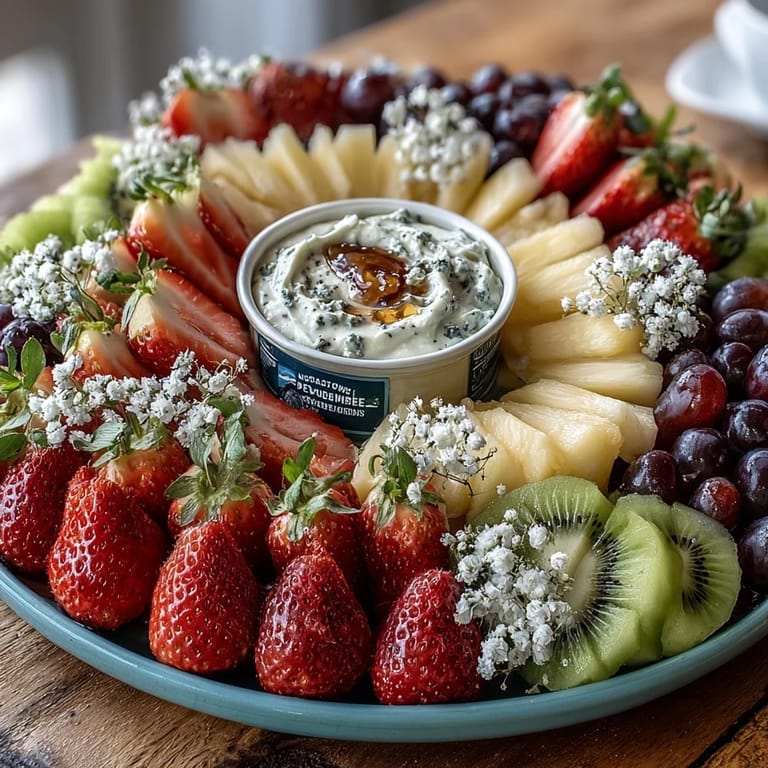
Save My sister texted me a photo of a fruit platter at her friend's baby shower, and I couldn't stop thinking about how the strawberries and kiwi were arranged like petals around a center of bright orange. She asked if I could recreate something similar for her own celebration coming up, and honestly, I was excited to try. That afternoon in the kitchen, arranging fruit in concentric circles while humming along to music, something clicked—this wasn't just about making food look pretty, it was about creating a moment that felt celebratory before anyone even took a bite.
I made this for my cousin's baby shower last spring, and watching a room full of people gravitate toward it like it was something magical made me realize that presentation really does matter. The conversation naturally flowed around that platter—people pointing out their favorite colors, kids giggling as they picked grapes, grandparents sharing stories about which fruits reminded them of their own gardens. By the end of the party, the platter was completely bare, and my cousin asked for the arrangement tips so she could recreate it at home.
Ingredients
- Strawberries: Choose firm, bright ones with no soft spots, as they'll hold their shape and color beautifully in the arrangement.
- Grapes: Mix red and green for visual contrast and keep them whole unless they're very large.
- Blueberries: These pop visually and add a wonderful tart sweetness that balances the honey dip.
- Pineapple: Fresh pineapple tastes so much brighter than canned; the effort is absolutely worth it.
- Cantaloupe or honeydew: A melon baller creates perfect little spheres, but cubes work just as well and are faster.
- Kiwi: The bright green interior and tiny black seeds make it a natural focal point for your flower design.
- Orange: Segmented oranges add sweetness and that gorgeous sunset color that ties everything together.
- Apple: Optional but lovely if you're serving immediately; toss the slices in lemon juice the moment you cut them to prevent browning.
- Edible flowers or mint: These feel like the finishing touch that transforms a fruit platter into something actually special.
- Greek yogurt: The tanginess is key here—it cuts through all that natural fruit sweetness.
- Honey: Drizzle it in slowly while whisking; you can always add more but can't take it back.
- Vanilla extract: Just a teaspoon seems small, but it somehow makes the whole dip taste more sophisticated.
- Lemon zest: Optional but I always add it because that bright citrus note makes people pause and ask what the secret ingredient is.
Tired of Takeout? 🥡
Get 10 meals you can make faster than delivery arrives. Seriously.
One email. No spam. Unsubscribe anytime.
Instructions
- Wash and prep like you mean it:
- Run all your fruit under cool water and pat everything dry thoroughly—wet fruit won't sit nicely on the platter and can make the presentation look sloppy. As you dry each piece, you're mentally planning where it's going to go, so this step isn't just practical, it's when your design actually starts forming.
- Create your bloom from the center out:
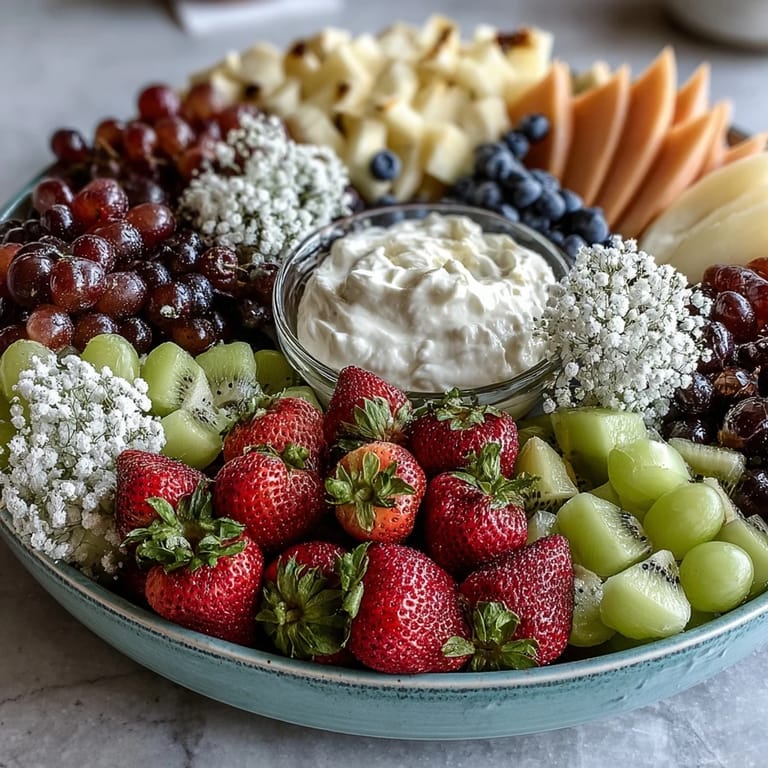
- Start by placing orange slices and kiwi in the very middle of your platter, slightly overlapping them like flower petals. Then work outward in concentric circles, alternating colors—strawberry, then grapes, then pineapple—so your eyes naturally flow around the plate.
- Mix the dip until it whispers:
- Combine the yogurt, honey, vanilla, and lemon zest in a bowl, stirring until the mixture is completely smooth with no streaks of honey remaining. The dip should taste like a gentle balance between tangy and sweet, so taste as you go.
- Find the dip's home:
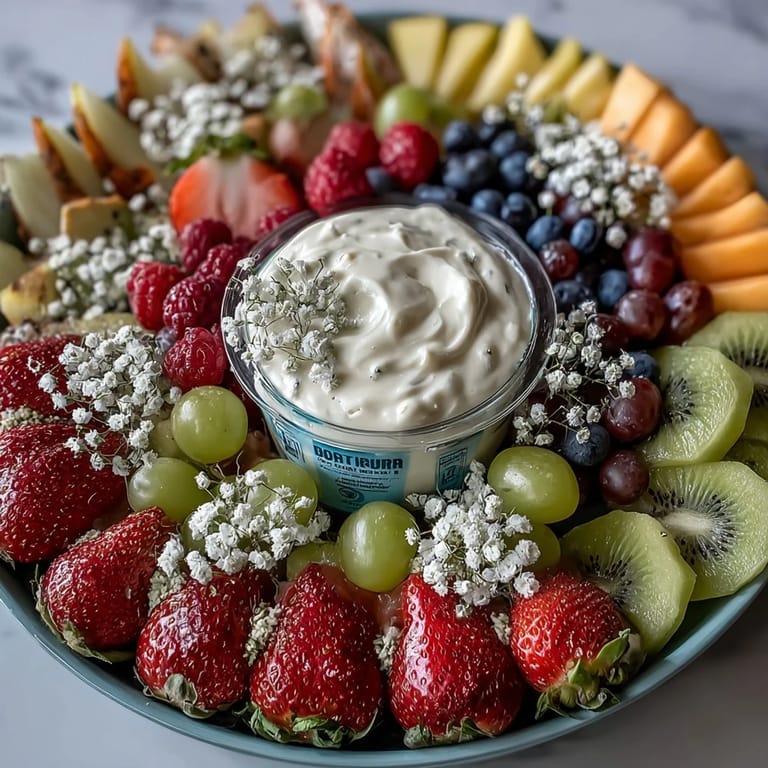
- Pour the finished dip into a small bowl and nestle it either in the center of your arrangement (if you want the fruit to circle it) or off to the side (if you want the fruit to be the undisputed star). Either way, place a small spoon next to it so people know it's there.
- Make it bloom:
- Scatter fresh mint leaves or edible flowers across the platter in the gaps between fruits, letting them settle naturally rather than placing them too deliberately. This is where you're adding that final touch of celebration, so take your time and trust your eye.
- Serve right away or hold it cool:
- This platter is best eaten within a couple of hours, but you can cover it loosely with plastic wrap and refrigerate it until your guests arrive. Just remember to let it sit at room temperature for about ten minutes before serving so the fruit isn't icy cold.
 Save
Save There's something about presenting food this way that shifts the whole energy of a gathering. When people see effort in the arrangement, they slow down and actually taste what they're eating instead of just grabbing and going—and somehow, simple fruit becomes something memorable.
Seasonal Fruit Swaps That Always Work
Spring and early summer are strawberry and pineapple season, which is why this platter feels so natural in that timeframe. But if you're making this in fall, swap in sliced peaches, blackberries, and grapes for a warmer palette. Winter calls for pomegranate seeds, mandarin oranges, kiwi, and pineapple—fruits that naturally feel festive and keep well in your cold kitchen without browning or softening.
The Dip Is Where the Real Magic Happens
That yogurt dip seems simple, but it's actually the reason people keep coming back to the platter. The honey sweetness against Greek yogurt's tanginess, with vanilla adding warmth and lemon zest bringing brightness—it's a flavor combination that somehow makes the fruit taste even fresher. I've experimented with adding cinnamon, cardamom, and even a tiny splash of almond extract, and they all work, but the classic version is genuinely hard to improve.
Making This Platter Your Own
The beauty of a fruit platter is that it's endlessly adaptable to what's in your market and what you're drawn to. You can follow my arrangement exactly, or you can create your own pattern—stripes, sections, or just organized chaos in complementary colors. The important thing is that you're taking a moment to think about how the colors play together, because that's what transforms it from a snack into something genuinely beautiful.
- If you're serving dairy-free guests, coconut yogurt or almond milk yogurt works as a perfect substitute in the dip.
- Small toothpicks or forks next to the platter make grabbing fruit easier and keep people's hands cleaner.
- Trust your eye on the arrangement—there's no wrong way to arrange fruit as long as the colors feel balanced and the dip is easy to reach.
 Save
Save This platter has become my go-to for celebrations because it's generous without being complicated, and it genuinely makes people smile. Make it once and you'll understand why.
Recipe FAQs
- → How do I arrange the fruit for a blooming effect?
Start by placing sliced orange and kiwi pieces in the center as the flower's core. Then fan out strawberries, grapes, pineapple, and melon pieces in concentric circles to mimic petals, alternating colors for vibrancy.
- → Can I customize the fruit selection?
Absolutely. Use any seasonal or favorite fruits you prefer to keep the platter fresh and colorful. Fruits like mango, raspberries, or blackberries also work well.
- → How should I store the platter before serving?
Cover the platter with plastic wrap and refrigerate for up to 2 hours to keep the fruit fresh and the dip chilled.
- → Is there a dairy-free alternative for the yogurt dip?
Yes, substitute plain Greek yogurt with coconut or almond milk yogurt for a dairy-free version, keeping the same honey and vanilla flavors.
- → What is the best way to prevent apple slices from browning?
Brush apple slices lightly with lemon juice to slow oxidation and maintain their fresh appearance on the platter.
- → Can I add extra flavor to the yogurt dip?
Yes, a pinch of cinnamon or a splash of orange juice can enhance the dip’s taste while complementing the fruit flavors.