 Save
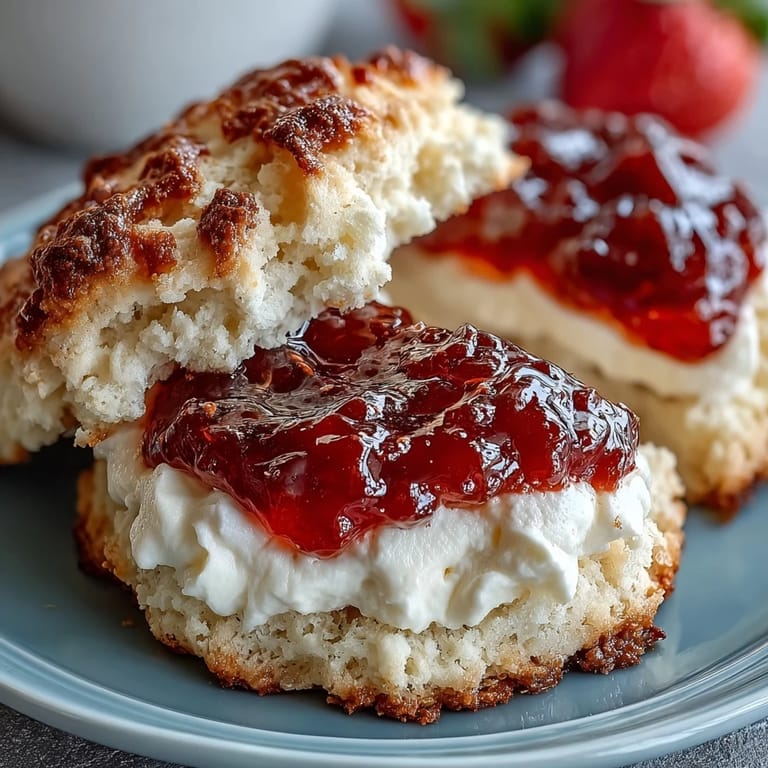
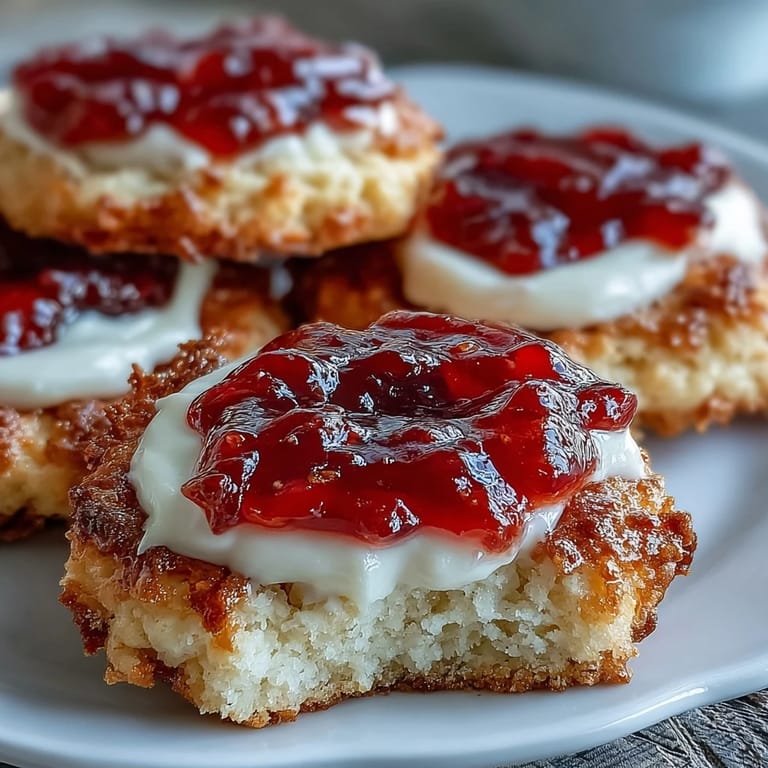
Save There's something almost magical about the moment when a warm thumbprint cookie yields under your thumb, ready to cradle that dollop of clotted cream and jewel-bright jam. I discovered these at a small tea shop in the Cotswolds, where the baker shared that the secret wasn't fancy techniques but respecting the butter and taking time with the cream filling. My kitchen smelled like heaven for hours afterward, and I've been making them ever since.
I'll never forget baking these for my neighbor's book club on a rainy Tuesday afternoon. She opened her door, caught that buttery aroma drifting from my kitchen, and practically followed the scent home like a cartoon character. We ended up sharing them with everyone, and three people asked for the recipe before dessert was even finished.
Ingredients
- All-purpose flour (2 cups/250 g): This is your base, and using good quality matters more than you'd think—it affects how tender your cookies become.
- Fine sea salt (1/4 tsp): Don't skip this; it brings out the sweetness of everything else and prevents the cookies from tasting flat.
- Unsalted butter (1/2 cup/115 g), softened: Room temperature is non-negotiable here—it creams properly and gives you those air pockets that make cookies tender.
- Granulated sugar (1/2 cup/100 g): This sweetens the dough itself, so don't reduce it thinking you'll compensate with the filling.
- Large egg yolk (1): Just the yolk, not the whole egg—the richness matters, and the white would make them cake-like instead of buttery.
- Pure vanilla extract (1 tsp): Real vanilla makes a noticeable difference; the imitation version tastes thin by comparison.
- Clotted cream (1/2 cup/120 g): This is the heart of the recipe; if you can't find it, crème fraîche works but tastes slightly different.
- Strawberry jam (1/3 cup/100 g): Use a good quality jam with actual fruit—the cheap stuff turns thin and glossy when warm.
Tired of Takeout? 🥡
Get 10 meals you can make faster than delivery arrives. Seriously.
One email. No spam. Unsubscribe anytime.
Instructions
- Get your oven and pans ready:
- Preheat to 350°F (175°C) and line two baking sheets with parchment paper. This sounds simple, but having everything prepared means you won't be scrambling when the dough is ready.
- Combine your dry ingredients:
- Whisk together the flour and salt in a medium bowl, breaking up any clumps. This ensures even distribution and prevents dense pockets of flour in your final cookies.
- Cream the butter and sugar:
- Beat them together for about 2–3 minutes until the mixture is pale and fluffy. You're essentially whipping air into the butter, which is what gives these cookies their tender crumb.
- Add the egg yolk and vanilla:
- Beat them in until the mixture looks homogeneous and smooth. This step brings richness and helps bind everything together.
- Bring the dough together:
- Gradually mix in your dry ingredients until just combined—don't overmix or you'll develop gluten and toughen the cookies. The dough should be soft and slightly sticky.
- Shape the cookies:
- Roll the dough into 1-inch (2.5 cm) balls and place them 2 inches apart on your prepared sheets. This spacing matters because the cookies spread slightly as they bake.
- Make your thumbprints:
- Press your thumb or the back of a teaspoon firmly into the center of each ball to create a deep well. Go deeper than you think necessary—the filling will sink as the cookie bakes.
- Fill with care:
- Spoon about 1/2 tsp of clotted cream into each indentation, then top with 1/4 tsp of strawberry jam. The clotted cream acts as a barrier, preventing the jam from seeping into the dough.
- Bake until golden:
- Bake for 13–15 minutes until the edges are lightly golden but the centers still look slightly underbaked. They'll firm up as they cool, so don't overbake.
- Cool with patience:
- Leave them on the baking sheet for 5 minutes before transferring to a wire rack. This resting period lets them set enough to move without breaking apart.
 Save
Save There was one afternoon when my daughter helped me make these, and she insisted on making the thumbprints herself. Her indentations were uneven and some way too deep, but when we pulled them from the oven, they were somehow perfect—rustic and genuine in a way store-bought cookies never are. That batch became the one everyone talked about.
Why the Filling Order Matters
I learned this the hard way by doing it backwards. The clotted cream goes in first because it creates a moisture barrier between the jam and the cookie dough. Without it, the jam soaks into the cookie and turns it soggy within a few hours. The cream stays put, and the jam sits on top, creating layers of texture that feel luxurious on your tongue.
Temperature and Timing Secrets
Room temperature butter isn't just a nice-to-have—it's the entire reason these cookies achieve their tender crumb. Cold butter won't incorporate properly, and you'll end up with dense, cakey results. I once forgot to take my butter out early and tried to soften it in the microwave; the cookies were good but noticeably less delicate than usual. Now I always pull it out when I start preheating the oven, which gives me exactly the right window.
Serving and Storage Wisdom
These cookies are best eaten within two days of baking, though they'll keep for up to four days in an airtight container at room temperature. Refrigerating them actually dries them out faster, which seems counterintuitive but true. Warm them slightly before serving if they've been sitting for a while—a few seconds in the microwave brings back that tender quality.
- Make them a day ahead if you're entertaining, but fill them just a few hours before serving for maximum freshness.
- They also freeze beautifully unfilled, so you can bake a batch, fill them as needed, and enjoy fresh cookies all week.
- Pair them with strong tea, hot chocolate, or even a light dessert wine for a proper teatime experience.
 Save
Save These thumbprint cookies have become my answer to almost every occasion—they're humble enough for an everyday tea break, special enough for unexpected guests, and forgiving enough that even a first-time baker can succeed. Once you understand the basic structure, you'll be improvising with different jams and fillings forever.
Recipe FAQs
- → What can I use if I don’t have clotted cream?
Substitutes like crème fraîche or mascarpone work well to maintain the creamy texture and flavor.
- → How do I achieve the thumbprint indentation?
Press the center of each dough ball gently with your thumb or the back of a teaspoon to create a deep well for the filling.
- → Can I use other jams instead of strawberry?
Yes, raspberry or apricot jam provide delicious variations while complementing the creamy filling.
- → What’s the best way to store these cookies?
Keep them in an airtight container at room temperature to preserve freshness for several days.
- → Are these cookies suitable for vegetarians?
Yes, they contain no meat products and are suitable for a vegetarian diet.