 Save
Save My friend Yuki handed me a plate of these seaweed tempura at a tiny izakaya tucked behind a Tokyo train station, and I was instantly hooked by the shattering crunch that gave way to umami-rich nori inside. The batter was impossibly light, almost ethereal, nothing like the heavy fried foods I'd grown up with. She laughed when I ate four pieces in quick succession, then showed me how to make them myself using the simplest trick: ice-cold sparkling water and a heavy hand with chopsticks instead of proper mixing. Now whenever I fry these at home, that exact moment comes back—the sizzle of the oil, her laughter, and the realization that the best snacks are often the ones nobody thinks to make.
I brought a batch to a potluck last spring, nervous because everyone else had brought elaborate dishes, and these seemed almost too simple. A quiet moment happened when three people simultaneously reached for another piece, caught each other's hands, and laughed—that's when I knew this recipe was special in a way that had nothing to do with complexity.
Ingredients
- Nori sheets (8 large): These are your canvas—make sure they're still fresh and snappy, not limp from sitting open in your pantry, because stale nori becomes papery and bitter when fried.
- All-purpose flour (100 g): This is your batter base, but the real magic happens when you don't overwork it because lumps actually trap tiny pockets of steam that make everything crispier.
- Cornstarch (30 g): This is the secret weapon for shattering crispness; it dries out faster than flour alone and creates that almost glass-like texture.
- Baking powder (1/2 tsp): Just enough to give the batter lift and extra crunch without making it taste like cake, which I learned the hard way by adding too much once.
- Fine sea salt (1/2 tsp): Season your dry mix well because once it hits the oil, seasoning won't penetrate properly—I learned this after making batches that needed salt added afterward.
- Ice-cold sparkling water (200 ml): Cold water is non-negotiable here; the fizz in sparkling water creates tiny bubbles that fry up into those incredible crispy layers, and the temperature keeps everything light and delicate.
- Egg yolk (1 large, chilled): Just the yolk, not the white, because the yolk adds richness and binding power without toughening the batter like whole eggs can.
- Neutral oil (500 ml): Use something with a high smoke point like canola or sunflower; I once tried olive oil and regretted it immediately because the flavor overpowered the delicate nori.
- Soy sauce (3 tbsp): The backbone of your dipping sauce—this is where most of the savory depth lives.
- Mirin (2 tbsp): This sweet rice wine balances the salt and adds a subtle umami depth that makes people wonder what they're tasting.
- Rice vinegar (1 tbsp): A splash of acidity that brightens everything and keeps the sauce from feeling one-note.
- Sugar (1 tsp): Just enough to round out the edges and help the flavors meld together smoothly.
- Toasted sesame oil (1/2 tsp): A few drops go a long way; this is where the final whisper of nuttiness comes from and why the sauce feels complete.
- Spring onion (1, finely sliced): Raw freshness that cuts through the richness and adds a bright textural contrast to every dip.
- Sesame seeds (1/2 tsp, optional): These toast slightly as they sit in the warm sauce and add an extra layer of toasted aroma.
Tired of Takeout? 🥡
Get 10 meals you can make faster than delivery arrives. Seriously.
One email. No spam. Unsubscribe anytime.
Instructions
- Make the dipping sauce first:
- Combine your soy sauce, mirin, rice vinegar, and sugar in a small bowl, stirring gently until the sugar dissolves completely—you'll hear a tiny crystalline sound when it's done. Once it's smooth, stir in the toasted sesame oil, then fold in the raw spring onion and sesame seeds just before serving so they stay bright and fresh.
- Prep your nori:
- Stack all eight sheets and slice them into quarters with a sharp knife or kitchen scissors—you'll have 32 pieces ready to go. This is when you can feel the nori's natural brittleness and know it's still fresh.
- Mix your dry ingredients:
- Whisk together your flour, cornstarch, baking powder, and salt in a mixing bowl, making sure everything is evenly distributed so no little pockets of baking powder surprise you with a soapy taste. This shouldn't take more than a minute of whisking.
- Create the batter:
- In a separate bowl, lightly beat your chilled egg yolk, then pour in the ice-cold sparkling water and stir it together gently—you want it incorporated but still frothy from the carbonation. Pour this wet mixture into your dry ingredients and use chopsticks or a fork to barely combine it, leaving visible lumps throughout because lumpy batter is actually your friend here, creating pockets of crispness.
- Get your oil ready:
- Heat your neutral oil in a deep, heavy-bottomed pan to 180°C (350°F)—use a thermometer if you have one, or test it by dropping a tiny piece of nori in to see if it sizzles instantly and rises to the surface within seconds. The oil temperature is everything; too cool and you'll get soggy greasy tempura, too hot and the outside burns before the inside cooks.
- Fry in small batches:
- Working quickly, dip each nori piece into the batter so it's just coated, let the excess drip off for a second, then slide it into the hot oil immediately—this speed matters because the cold batter against hot oil is what creates that shattering effect. Fry each piece for about 30 to 45 seconds, watching until it turns a light golden color and you can see it puffing up slightly, then scoop it out with a slotted spoon before it darkens further.
- Drain and rest:
- Lay your fried pieces on paper towels while they're still hot—this is when they're at their absolute crispest, so ideally you serve them within minutes while they still have that shatter. If you must hold them, keep them on a warm plate in a low oven, though they'll soften slightly as they cool.
- Serve and share:
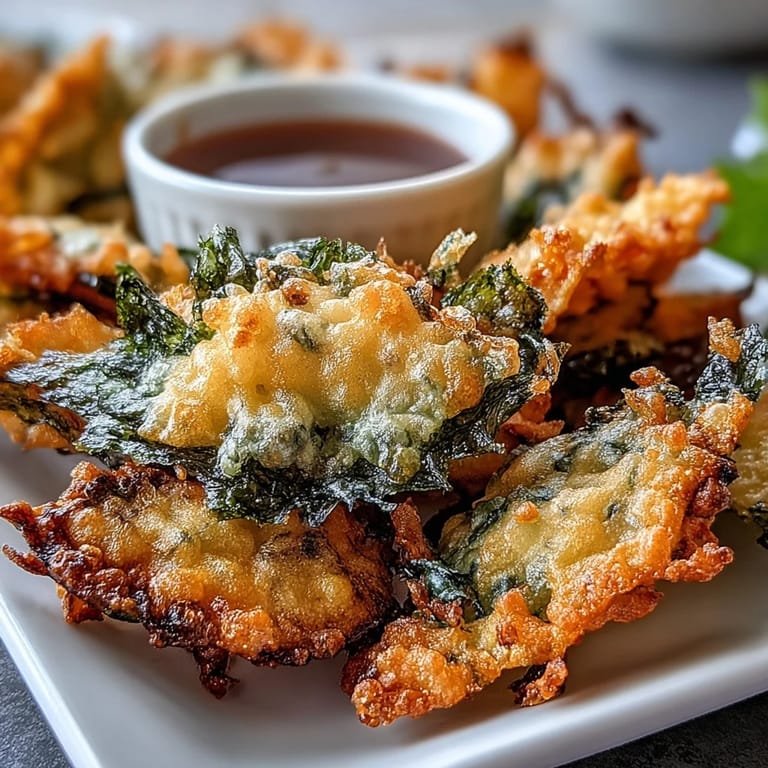
- Arrange your golden seaweed tempura on a plate with the dipping sauce on the side, and watch people's faces light up when they take that first bite. The warmth, the crunch, and that salty-sweet sauce create a moment that tastes far more impressive than the effort it took.
 Save
Save There's a moment after frying these when you bite into one and hear that perfect crack, and the delicate nori inside releases its toasty umami flavor onto your tongue—that's the moment when a simple snack becomes a small, crispy reminder of why cooking is worth doing at all.
The Magic of Sparkling Water
I once tried making tempura batter with regular cold water and got a decent result, but it was heavier and less sparkly than when I switched to sparkling water. The carbonation creates tiny bubbles that expand in the hot oil, leaving behind pockets of air that make the coating almost impossibly crispy. This one simple swap turned my tempura from good to the kind that makes people ask for the recipe before they've even finished chewing.
Timing and Temperature Control
The 30 to 45 second frying window feels short until you realize it's the perfect amount of time for the batter to crisp while the nori inside stays tender. I used to fry longer thinking more time meant more crispy, but I just ended up with dark, bitter pieces that tasted burned. Now I watch for that light golden color and pull them out immediately—this is one of those recipes where patience means knowing when to stop, not how long to keep going.
Customization and Serving Ideas
Once you've mastered the basic technique, this recipe becomes a playground for small variations that keep things interesting. A pinch of chili flakes stirred into the batter creates a subtle warmth without overpowering the nori's delicate flavor, and doubling the batter dip on each piece adds an extra crunch layer that feels luxurious. Some nights I serve these with just the traditional dipping sauce, but other times I offer a squeeze of fresh lime on the side or a tiny dollop of wasabi-mayo for people who want more heat.
- Try drizzling a bit of ponzu sauce alongside the traditional dipping sauce for extra citrus brightness.
- Pair cold Japanese beer or green tea with these—the bubbles or bitterness cut through the richness beautifully.
- Make a double batch and freeze the fried pieces in an airtight container for up to three days, then reheat in a 200°C oven for two minutes to restore crispness.
 Save
Save These seaweed tempura remind me that sometimes the simplest recipes create the most memorable moments—a few humble ingredients, a flash of heat, and suddenly you have something that tastes like restaurant luxury but came from your own kitchen. Whenever I make them, I think of Yuki's laugh and the magic of knowing when to stop frying and serve immediately.
Recipe FAQs
- → What type of seaweed is best for frying?
Large nori sheets are ideal for frying as they hold the batter well and become crisp without falling apart.
- → How to keep the tempura batter light and crisp?
Use ice-cold sparkling water and avoid overmixing the batter to keep it slightly lumpy and cold, ensuring a light, crispy coating.
- → Can the dipping sauce be made in advance?
Yes, preparing the sauce ahead allows the flavors to meld, enhancing the savory umami notes when served.
- → What frying oil is recommended?
Neutral oils with high smoke points like canola or sunflower oil are best for maintaining clean flavors and achieving crispness.
- → How long should each nori piece be fried?
Fry each piece for about 30 to 45 seconds until lightly golden and crisp, cooking in small batches to prevent crowding.