 Save
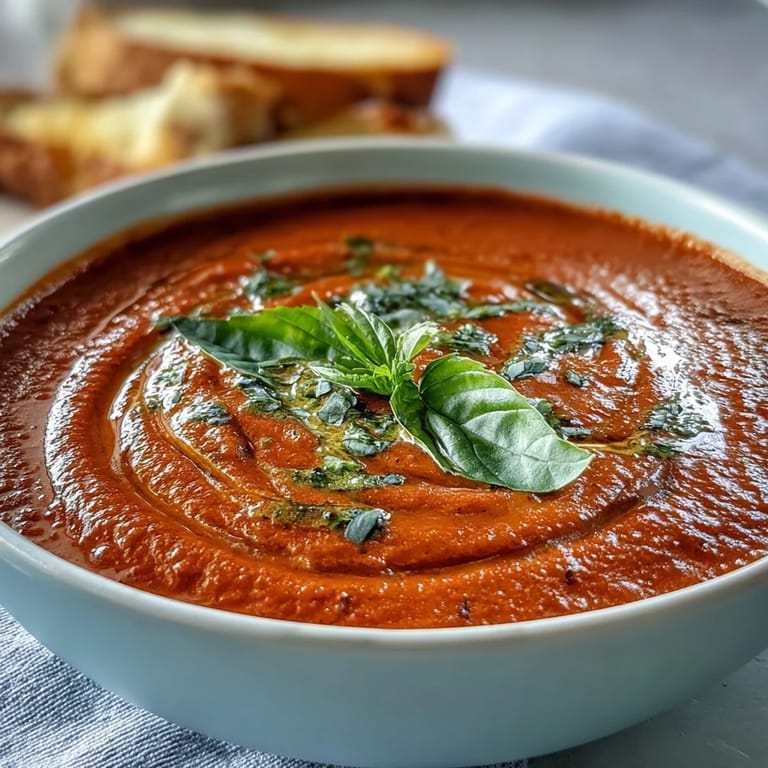
Save There's something about the smell of garlic hitting hot oil that stops me mid-thought, and that's exactly when I knew this tomato soup needed to happen. One autumn afternoon, I had a can of tomatoes staring at me from the pantry and half a basil plant refusing to die on my windowsill, so I decided to build something warm around them. The result was this silky, coconut-enriched soup that tastes like it took hours but actually comes together in less than an hour, served with bread so garlicky and crisp it might as well be the main character.
I made this for a friend who'd just moved into a new apartment with the saddest kitchen setup imaginable—a two-burner stove and a prayer. We sat on her floor eating soup from mismatched bowls, dunking those crispy sourdough strips, and somehow it felt more celebratory than any restaurant meal could have been. She texted me weeks later asking for the recipe again, which meant everything.
Ingredients
- Olive oil: Use a good quality oil you'd actually taste on its own—it forms the flavor foundation and makes a real difference here.
- Yellow onion: The sweetness matters; yellow onions caramelize gently and won't overpower the delicate tomato-basil balance.
- Garlic: Fresh, never from a jar; you want that sharp bite that mellows into sweetness as it cooks.
- Canned whole peeled tomatoes: They're picked at peak ripeness and frozen immediately, so they're often better than fresh in winter months.
- Vegetable broth: Low-sodium lets the tomato flavor lead; you can always add salt, but you can't take it back.
- Unsweetened canned coconut milk: The full-fat version creates that velvety mouthfeel—don't reach for the light version and wonder why it tastes thin.
- Tomato paste: This concentrate deepens the tomato flavor without adding liquid, giving you that restaurant-quality richness.
- Sugar: Optional, but tomatoes can be acidic depending on the brand, and just a teaspoon rounds out the flavor beautifully.
- Sea salt and black pepper: Taste as you go—seasoning happens in layers, not all at once.
- Dried oregano: Adds an herbaceous warmth that fresh basil can't quite replicate alone.
- Red pepper flakes: A whisper of heat if you like it, completely skippable if you don't.
- Fresh basil: Added near the end so it stays bright and doesn't turn into sad brownish leaves; save some for garnish because it looks beautiful and tastes alive.
- Sourdough bread: Thick slices, good crumb structure so they don't fall apart when you dunk them, and honestly the tang of sourdough matches this soup perfectly.
Tired of Takeout? 🥡
Get 10 meals you can make faster than delivery arrives. Seriously.
One email. No spam. Unsubscribe anytime.
Instructions
- Heat your oil and coax the onion into sweetness:
- Pour olive oil into a large saucepan over medium heat and let it warm for a minute—you want that oil to shimmer slightly when you add the diced onion. The sizzle that follows is your signal that everything's working, and after 4 to 5 minutes of gentle cooking, the onion will turn translucent and smell like something good is about to happen.
- Wake up the garlic:
- Add your minced garlic and let it cook for just one minute—this is not a race, and burnt garlic tastes bitter and ruins the whole mood. You're listening for the sizzle to settle into a gentle murmur, and that's when you know it's ready for the next step.
- Build depth with tomato paste:
- Stir in the tomato paste and let it cook for a minute, which concentrates its flavor and takes away any raw edge it might have. This small step makes a huge difference in how rich the finished soup tastes.
- Add everything else and let it simmer:
- Pour in your canned tomatoes with all their juice, the vegetable broth, oregano, salt, pepper, and a pinch of sugar if you're using it. Bring this to a gentle simmer and let it bubble away for about 20 minutes, stirring every few minutes so nothing sticks to the bottom—the kitchen will smell like a trattoria by now.
- Finish with cream and basil:
- Stir in the coconut milk and fresh basil leaves, then simmer for just 5 more minutes to let the basil soften slightly but keep its color. Don't let it boil hard or the basil will turn dark and sullen.
- Blend until smooth and velvety:
- An immersion blender is your friend here—stick it right into the pot and blend until the soup looks like liquid silk. If you don't have an immersion blender, carefully transfer the soup to a regular blender in batches, but let it cool slightly first so it doesn't explode on you (learned that the hard way years ago).
- Taste and adjust the seasoning:
- This is the moment to add more salt, pepper, or even a squeeze of lemon juice if the soup needs brightness. Trust your palate—you know what tastes good to you.
- Toast your sourdough while the soup finishes:
- Preheat your oven broiler or heat a grill pan, brush both sides of thick sourdough slices with olive oil, and toast them until they're golden and crisp, about 2 minutes per side. Watch them—bread goes from golden to burnt in seconds, and you want the former.
- Rub with fresh garlic:
- When the bread is still warm, rub both sides with the cut sides of a garlic clove and watch the garlic paste into those little air pockets. This is when the magic happens—the heat opens up the bread's texture and lets the garlic flavor sink in.
- Slice and serve:
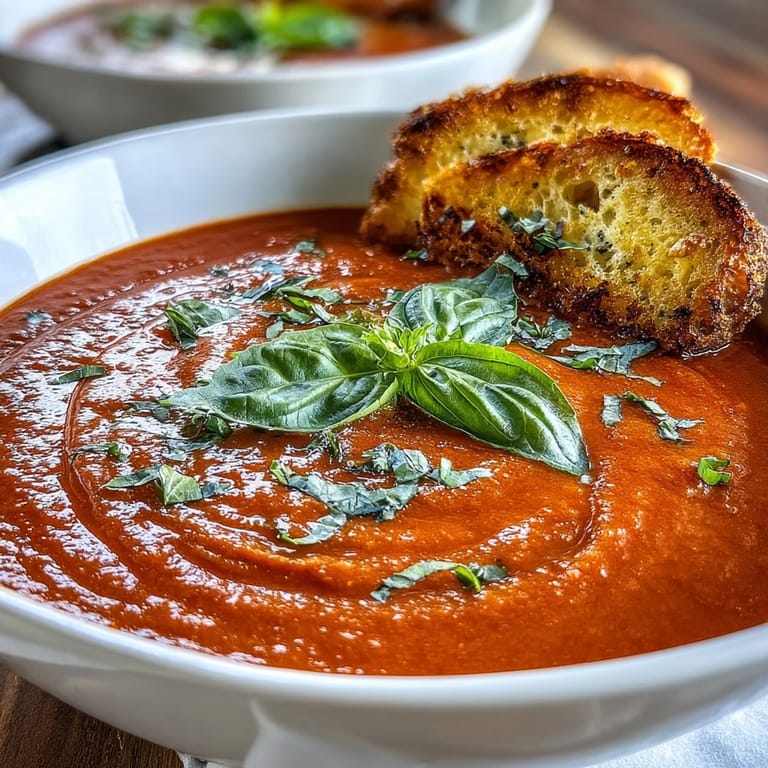
- Cut the toast into strips for dipping, ladle the soup into bowls, top with extra basil, and set those dippers alongside. Watch someone dunk their first piece of that garlicky bread into the creamy red soup and know you've done something right.
 Save
Save This soup appeared on a particularly gray November evening when my roommate came home sick, and I had the soup ready before she even asked. The way she wrapped both hands around the bowl and just closed her eyes for a moment—that's when I understood that cooking is sometimes just about showing up for someone. We didn't talk much that night, just ate soup and dunked bread, and somehow that was exactly what was needed.
Why This Soup Tastes Like More Than It Is
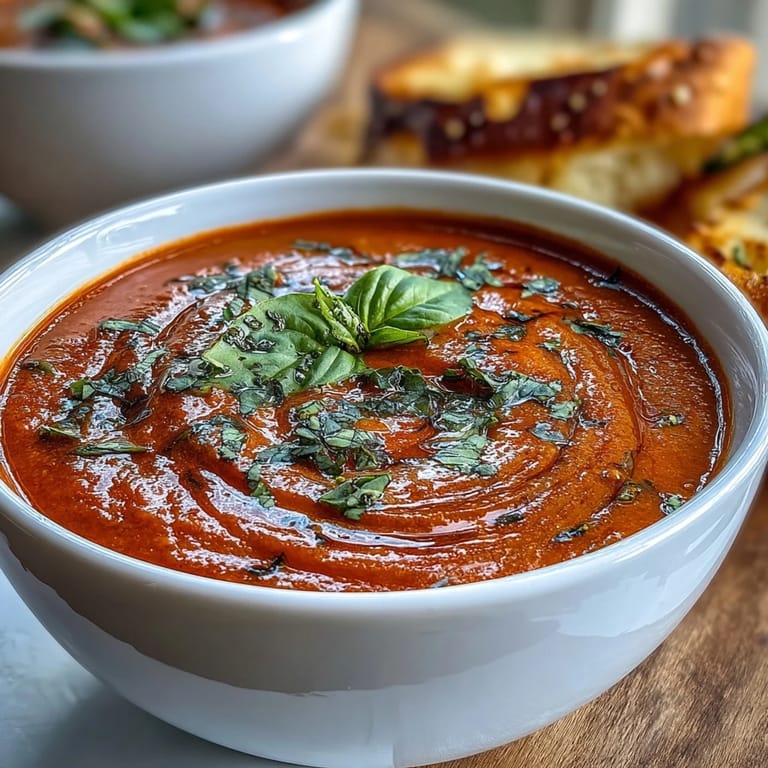
The secret isn't really a secret—it's about treating canned tomatoes with respect instead of treating them like a fallback option. When you build a proper base with onion and garlic, when you let tomato paste caramelize slightly, when you give the whole thing time to simmer and meld, suddenly those pantry staples become something that tastes like you visited a farmers market and spent hours creating magic. The coconut milk isn't trying to replace cream; it's adding its own subtle sweetness and richness that makes the tomato flavor pop rather than muddy it.
The Sourdough Situation
You could serve this soup with regular crusty bread, and it would be fine, but sourdough changes the equation entirely. The fermented tang echoes the acidity of the tomatoes, the crispness provides a textural contrast that makes eating interesting, and the garlic rub transforms a side into a feature. I've learned that people remember the dippers as much as they remember the soup itself, so don't treat them as an afterthought—they're co-stars.
Making This Your Own
This recipe is a foundation, not a formula, and I've learned that the best cooking happens when you adapt things to what's in your kitchen and what your taste buds are telling you. I've made this with roasted tomatoes instead of canned when summer came around, with a splash of balsamic vinegar when the soup needed depth, and even with a pinch of smoked paprika on nights when I wanted something that tasted like a campfire. The basil amount can shift depending on how fresh it is and how much you love it, and the heat from red pepper flakes is entirely optional—make it the way you want to eat it, not the way someone else said it should be.
- Oat cream or cashew cream work beautifully instead of coconut milk if you want a different flavor profile.
- A drizzle of good olive oil or a sprinkle of crispy garlic chips on top takes the presentation from simple to intentional.
- Leftover soup keeps for four days in the refrigerator, and it somehow tastes even better the next day when all the flavors have gotten to know each other.
 Save
Save This soup has become my go-to answer when someone asks what to make on a night that feels like it needs comfort, and I hope it becomes that for you too. Make it once, adjust it to your taste, and then make it again when life asks for something warm and familiar.
Recipe FAQs
- → What type of bread works best for the dippers?
Thick slices of sourdough bread are ideal due to their sturdy texture and tangy flavor, which complement the creamy soup well.
- → Can I substitute coconut milk with another dairy-free option?
Yes, oat cream or cashew cream can be used as alternative bases to maintain a creamy consistency with a slightly different flavor profile.
- → How should I blend the soup for best texture?
Use an immersion blender directly in the saucepan or transfer in batches to a standard blender for a smooth and velvety finish.
- → Are there any suggestions to enhance the soup’s flavor?
Roasting fresh tomatoes beforehand or adding a pinch of smoked paprika can deepen the soup’s flavor and add complexity.
- → What is the recommended serving size?
The recipe yields four servings, making it suitable for sharing or meal prepping for several days.