 Save
Save The first time I made bulgogi, I wasn't trying to be authentic—I was just hungry and had a package of thinly sliced beef sitting in my fridge. I threw together what felt right: soy sauce, brown sugar, some ginger I'd grated that morning, and a pear I'd grabbed without thinking. Twenty minutes later, the smell hit me—sweet, savory, alive—and I knew I'd stumbled onto something that would become a regular rotation in my kitchen. Now, whenever I need dinner that feels restaurant-quality but takes barely longer than ordering takeout, this is what I reach for.
I remember making this for my friend who'd been craving something 'real' after weeks of eating his way through takeout containers. When he took that first bite, he closed his eyes like he was solving a puzzle. Then he asked for the recipe—and the next time we hung out, he'd already made it twice. That's when I realized this wasn't just easy; it was the kind of dish that makes people feel capable in the kitchen.
Ingredients
- Beef sirloin or ribeye, thinly sliced: Look for cuts that are tender enough to cook in minutes—ask your butcher to slice it paper-thin, or freeze the whole piece for an hour and slice it yourself with a very sharp knife.
- Soy sauce: This is your backbone, so don't skimp on quality; it's the difference between flat and complex.
- Brown sugar: The secret ingredient that makes people ask what's in this—it caramelizes beautifully and balances the salt.
- Sesame oil: Use the toasted kind and go easy; a little goes a long way and gives everything that unmistakable depth.
- Rice vinegar: Adds brightness and keeps the marinade from being one-dimensional.
- Garlic and ginger, fresh: These aren't decorative—they're your flavor foundation, so mince and grate them yourself if you can.
- Pear or apple: The pear brings natural sweetness and a touch of enzyme magic that helps tenderize the beef, so it's worth hunting down an Asian pear if your store carries them.
- Gochujang: Spicy and fermented; add as much or as little as you want—it's optional but it's the moment when this goes from good to unforgettable.
- Scallions and sesame seeds: These are your finishing touches; they add crunch and fragrance that changes everything.
- Jasmine or short-grain rice: Something sticky enough to catch the beef marinade as you eat.
- Vegetables: Carrot, cucumber, and bean sprouts give you texture contrast; don't peel everything, just keep it crisp and colorful.
Tired of Takeout? 🥡
Get 10 meals you can make faster than delivery arrives. Seriously.
One email. No spam. Unsubscribe anytime.
Instructions
- Build your marinade:
- In a large bowl, whisk together soy sauce, brown sugar, sesame oil, rice vinegar, minced garlic, grated ginger, the grated pear, gochujang if you're using it, sliced scallions, sesame seeds, and black pepper. Taste it—it should make you pause because it's so good.
- Coat the beef:
- Add your thinly sliced beef to the marinade, toss it gently so every piece gets coated, then cover it and let it sit for at least 15 minutes. If you have time and patience, give it an hour—the flavors deepen and the pear enzymes do their thing.
- Heat and move fast:
- Get a large skillet or wok screaming hot over high heat. Working in batches so you're not crowding the pan, add the marinated beef and stir-fry for 2–3 minutes until it's just cooked through and the edges catch some char.
- Assemble your bowls:
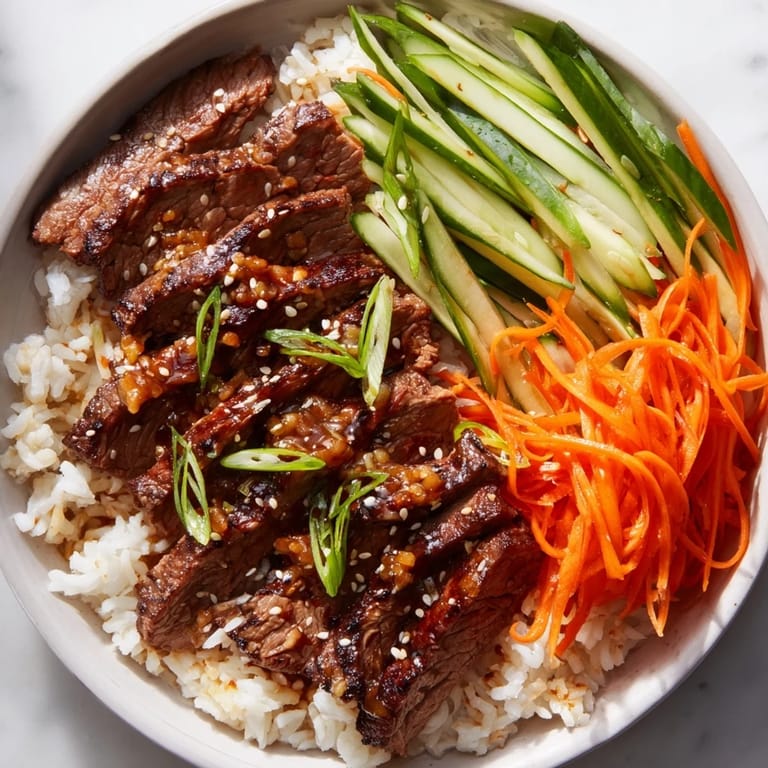
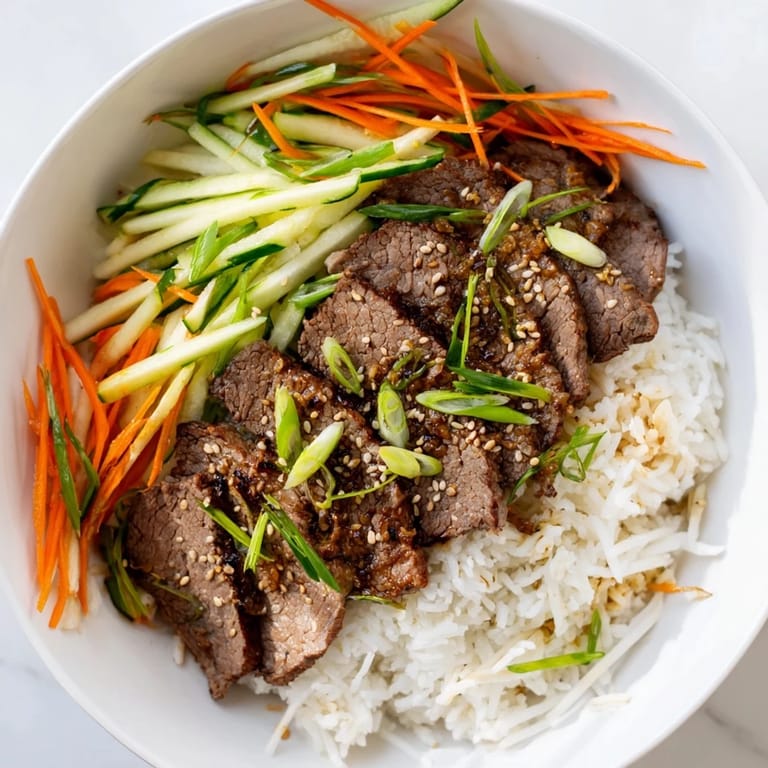
- Divide warm rice among four bowls, then arrange the beef, carrots, cucumber, blanched bean sprouts, and kimchi if you're using it on top like you're building something beautiful.
- Finish and serve:
- Scatter fresh scallions and extra sesame seeds on top, then eat immediately while everything is still warm and the rice is soft.
 Save
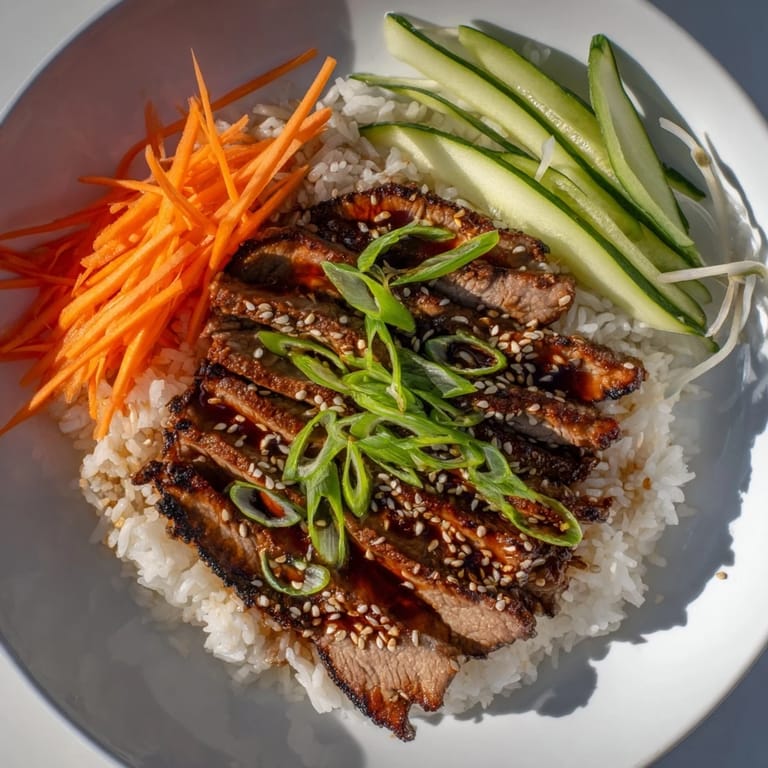
Save There's a moment when the beef hits the hot pan and the kitchen fills with this smell that makes everyone in your house suddenly appear in the kitchen without being asked. That's when you know you've got something good going. This dish has a way of turning a regular Tuesday night into something worth remembering.
The Marinade Is Everything
I've watched people get nervous about marinades, like they're going to mess it up, but this one is forgiving and bold. The combination of soy, sugar, and vinegar creates this three-way balance—salty, sweet, and sharp—and the pear brings something subtle that you can't quite name but you definitely notice it's missing if you skip it. The sesame oil doesn't go in the marinade to cook off; it stays there as a finishing touch that makes the beef glossy and rich.
Vegetables Are Your Canvas
The vegetables aren't an afterthought—they're the cooling counterpoint to the warm, rich beef and rice. Julienned carrots give you sweetness and crunch, thinly sliced cucumber keeps everything light, and blanched bean sprouts add a delicate texture you won't find anywhere else in the bowl. If you want to get fancy with your knife work, do it here; it makes the whole thing feel intentional and restaurant-like.
Why This Meal Works
This is the kind of dish that satisfies every part of you at once—the beef is warming and substantial, the vegetables keep it from feeling heavy, and the rice catches all the marinade so nothing goes to waste. It's flexible enough to swap in what you have, but structured enough that even your first attempt will taste like you know what you're doing. The beauty is in the simplicity, and the magic is in the details.
- Make extra marinade if you want to drizzle it over the finished bowls for extra depth.
- Kimchi is optional, but if you like funky and spicy, it's the moment that elevates everything.
- Leftover beef keeps for three days and reheats beautifully in a hot pan for thirty seconds.
 Save
Save Once you make this once, it becomes part of your regular rotation—it's too easy not to. The kind of meal where you feel both nourished and a little bit proud of yourself.
Recipe FAQs
- → What cut of beef is best for this dish?
Thinly sliced sirloin or ribeye works best as they cook quickly and stay tender.
- → Can I adjust the spice level?
Yes, the gochujang can be omitted or added according to your preferred heat level.
- → What rice types can I use?
Jasmine or short-grain white rice provide the ideal texture and flavor balance.
- → Are there gluten-free options?
Use gluten-free tamari instead of regular soy sauce and ensure gochujang is gluten-free.
- → How can I make it low-carb?
Substitute cooked rice with cauliflower rice for a lower carbohydrate version.