 Save
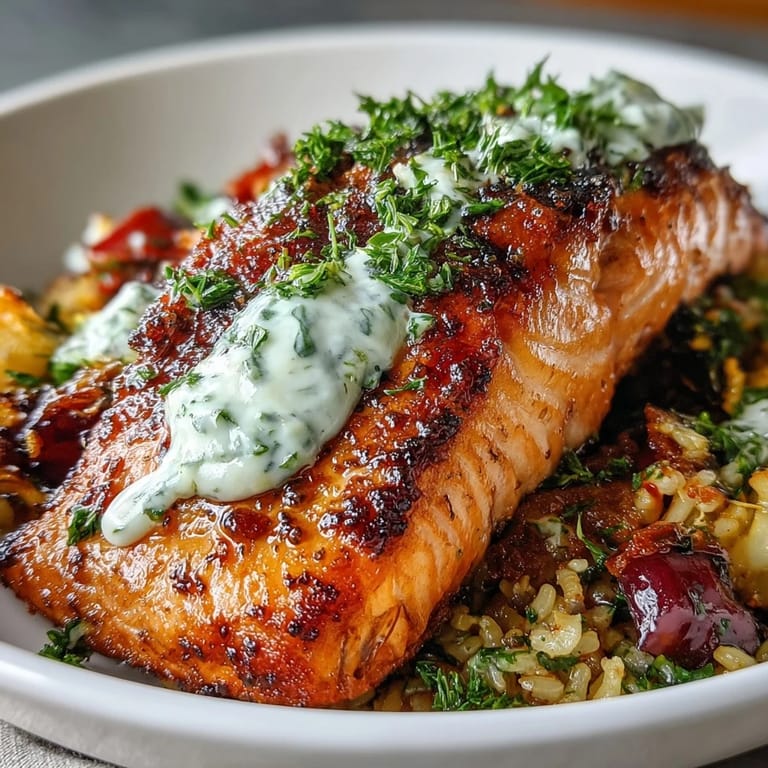
Save Last summer, I was experimenting with leftover rice in my kitchen when I stumbled onto this bowl by accident. The rice got a little too crispy in the pan, and instead of tossing it, I layered it with some pan-seared salmon and roasted vegetables. What emerged was this gorgeous, textured dish that felt both elegant and completely effortless. Now I make it intentionally, always keeping cold rice on hand for that golden, crunchy base.
I served this to a friend who swears he only eats salmon when it's drenched in heavy butter sauces, and he went back for seconds. Watching him discover that crispy rice texture and that tart yogurt drizzle shift his whole perspective on the fish was one of those quiet kitchen victories that sticks with you.
Ingredients
- Salmon fillets (150 g each): The skin-on option works beautifully if you want extra richness, but removing it here keeps the focus on the crispy texture underneath.
- Jasmine or basmati rice (cold, leftover): This is non-negotiable—cold rice fries up golden; warm rice turns mushy and steams instead.
- Olive oil: You'll use about 5 tablespoons total across three components, so don't skimp on quality here since it's doing real flavor work.
- Red bell pepper, zucchini, red onion: These vegetables are chosen because they soften at roughly the same rate and their sweetness balances the salty salmon.
- Cherry tomatoes and Kalamata olives: Add them near the end so they don't collapse into nothing; the olives especially keep their structure better that way.
- Capers: Optional but they give you a little briny punch that makes people lean in and ask what that flavor is.
- Dried oregano: One teaspoon feels like nothing until it blooms in the hot oil and suddenly your kitchen smells Mediterranean.
- Plain Greek yogurt: Full-fat versions drizzle better and taste creamier than the non-fat types which can feel watery and thin.
- Lemon juice and zest: Always zest before juicing or you'll end up squeezing over the zester; I learned this the hard way.
- Fresh dill or parsley: Dill pairs better with the salmon, but parsley works if that's what's hanging around in your crisper drawer.
Tired of Takeout? 🥡
Get 10 meals you can make faster than delivery arrives. Seriously.
One email. No spam. Unsubscribe anytime.
Instructions
- Make the lemon-yogurt sauce first:
- Whisk your Greek yogurt with lemon juice, zest, and fresh herbs in a small bowl, then slide it into the fridge. This gives the flavors time to meld while you're handling the heavier cooking tasks.
- Sauté your vegetables with intention:
- Heat olive oil in a large skillet and add the harder vegetables first—bell pepper, zucchini, and red onion need about 4–5 minutes to soften. Then toss in the tomatoes, olives, and capers for another 2–3 minutes so they keep their texture and don't turn into paste.
- Create the crispy rice foundation:
- In the same skillet (no need to clean it), crank the heat to medium-high and add your cold rice in a thin, even layer with fresh olive oil. Resist the urge to stir—let it sit for 6–8 minutes until you hear and smell that beautiful crackling sound coming from the bottom. You're building crust here, not scrambling.
- Pan-sear the salmon to golden:
- Pat your salmon completely dry with paper towels because any moisture will create steam instead of that golden crust. In a separate nonstick skillet with hot oil, cook skin-side up first for 3–4 minutes, then flip and finish the other side, watching for that moment when it just turns opaque in the thickest part.
- Assemble with intention:
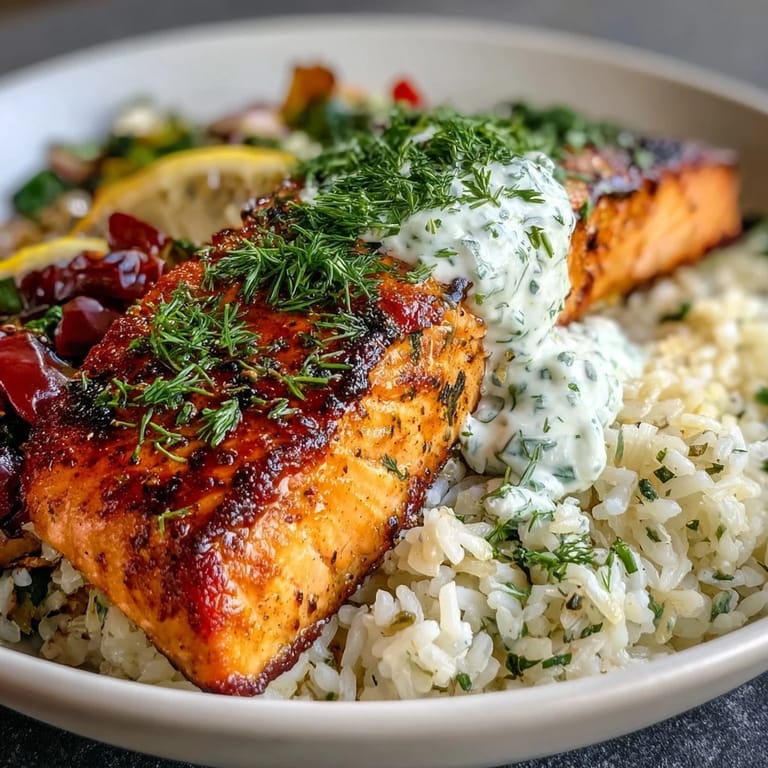
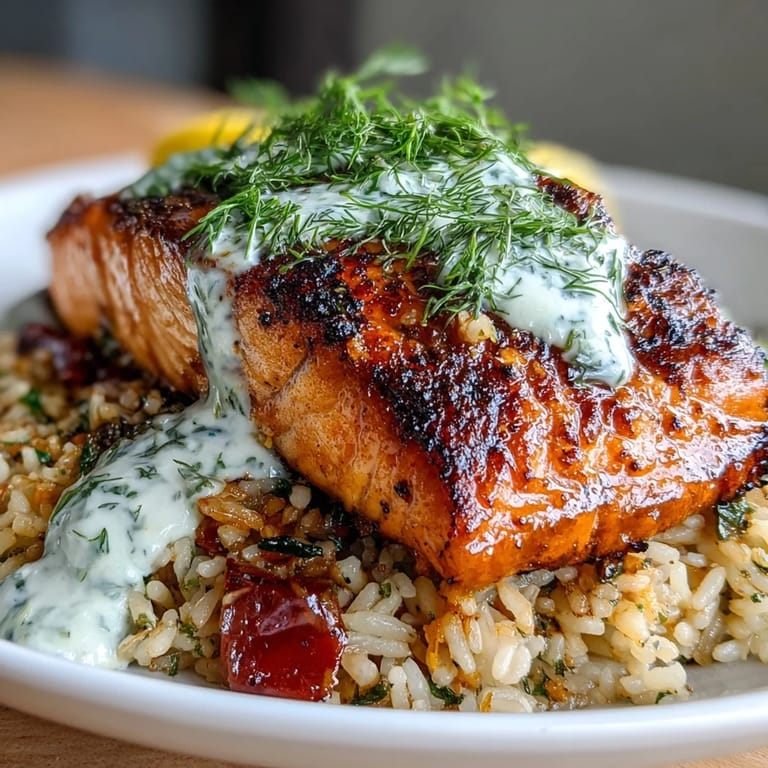
- Start with your crispy rice base in each bowl, layer the warm vegetables on top, then nestle a salmon fillet against one side. Drizzle that lemon-yogurt sauce across everything, finishing with fresh herbs and a lemon wedge on the rim.
 Save
Save The first time someone I cooked for described this bowl as a symphony of textures, I realized how often we rush through eating and never really notice the small details. This dish demands that you actually pay attention—the crunch of the rice, the softness of the salmon, the cool brightness of that yogurt hitting your tongue all at once.
Why Cold Rice Changes Everything
Warm rice is like trying to toast bread that's already steaming—the moisture inside prevents browning and creates a soggy, dense texture instead of crisp layers. Cold rice has already released its steam during storage, so when it hits hot oil, it can actually develop that gorgeous golden crust that makes this bowl worth making. I started saving rice specifically for this dish, treating leftover rice like the ingredient it truly is rather than something to reheat and forget about.
The Timing Dance
This dish teaches you something valuable about kitchen rhythm—you're cooking three components that all need to finish at roughly the same moment but on separate burners. Start the sauce first because it needs no heat, then vegetables because they take the longest, rice because it needs undisturbed time, and salmon last because it cooks the fastest. By the time your salmon is golden, everything else should be warm and ready to assemble.
Making It Your Own
The Mediterranean vegetables here are really a foundation, not a rule set in stone. I've made this with grilled asparagus and roasted cherry tomatoes in spring, and with butternut squash and radicchio in October. The crispy rice stays the salmon stays, but everything else bends to the season and what's actually in your market.
- Swap the salmon for seared scallops, white fish, or herb-marinated chicken if you want to change the protein entirely.
- Add a dollop of harissa-spiced yogurt instead of lemon-yogurt if you're craving something with more heat and depth.
- Top with a fried egg or crispy chickpeas if you want extra richness and something more textural to bite into.
 Save
Save This bowl has become my go-to when I want to feel like I've cooked something impressive without actually stressing about it. Serve it family-style or plated individually, and watch how people genuinely slow down to appreciate the layers.
Recipe FAQs
- → What type of rice works best for crispy rice?
Cold, leftover jasmine or basmati rice works best as the grains stay separate and crisp up beautifully. Freshly cooked rice can become mushy when trying to achieve that golden crunch.
- → Can I use frozen salmon fillets?
Yes, just thaw them completely and pat dry before seasoning. Excess moisture prevents proper searing, so ensure fillets are thoroughly dried with paper towels.
- → How do I know when the salmon is cooked through?
The salmon is done when it flakes easily with a fork and reaches an internal temperature of 145°F. The flesh should be opaque and slightly firm to the touch.
- → Can I make the lemon-yogurt sauce ahead?
Absolutely! Prepare the sauce up to 24 hours in advance and store it in the refrigerator. The flavors actually meld together better after some time chilling.
- → What other vegetables can I add?
Eggplant, artichoke hearts, cucumber, or roasted red peppers work wonderfully. Feel free to use whatever fresh Mediterranean vegetables you have on hand.
- → Is this bowl freezer-friendly?
The components are best enjoyed fresh, but you can meal prep the vegetables and sauce separately. Cook the salmon and rice just before serving for optimal texture.