 Save
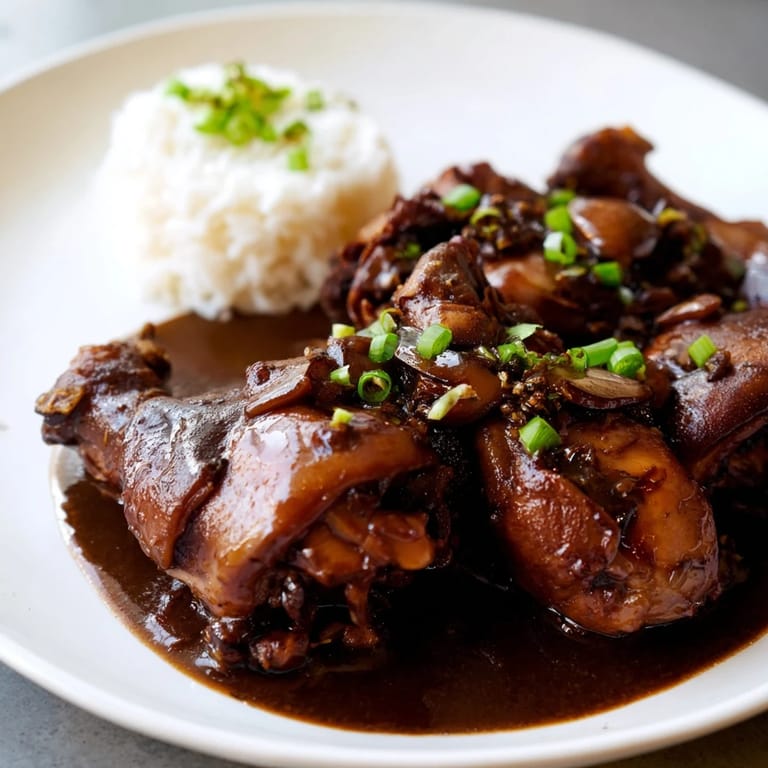
Save The first time I really understood adobo was watching my tita cook it in her tiny Manila kitchen, the vinegar and soy sauce catching the afternoon light in the pot like liquid amber. She didn't measure anything—just tasted, adjusted, tasted again—but there was a confidence in her movements that made me realize this wasn't fancy cooking, it was honest cooking. Now when I make it, I chase that same feeling of comfort and inevitability, like the chicken was always meant to end up this tender.
I once made this for a roommate who'd never had Filipino food, and watching her taste that first spoonful—the way her eyes widened at the balance of salty, tangy, and savory—reminded me why I love cooking this dish. It's unpretentious but speaks for itself, the kind of meal that makes people ask for the recipe before they've even finished eating.
Ingredients
- Bone-in, skin-on chicken thighs and drumsticks (1.5 lbs): Dark meat has more fat and flavor than breast, and the bones enrich the braising liquid into something almost broth-like.
- Soy sauce (1/3 cup): This is your umami backbone—don't skimp on quality, and taste it first so you know how salty your sauce will be.
- Cane vinegar or white vinegar (1/3 cup): Cane vinegar is slightly milder and more complex, but white vinegar works fine; the sourness is what matters here.
- Garlic (6 cloves, smashed): Smashing releases the garlic's oils and lets it soften into the sauce rather than staying as distinct chunks.
- Bay leaves (2): These add a subtle earthiness that ties everything together; fish them out before serving.
- Black peppercorns (1 teaspoon whole): Whole peppercorns stay gentler during the long braise, giving heat without bitterness.
- Brown sugar (1 tablespoon, optional): A tiny bit of sweetness balances the vinegar's sharpness—start with less if you like it more assertive.
- Cooking oil (2 tablespoons): Use something neutral that can handle high heat without smoking.
- Water (1/2 cup): This stretches the marinade and prevents the sauce from being too intense.
Tired of Takeout? 🥡
Get 10 meals you can make faster than delivery arrives. Seriously.
One email. No spam. Unsubscribe anytime.
Instructions
- Marinate the chicken:
- Toss your chicken pieces with soy sauce, vinegar, garlic, bay leaves, peppercorns, and brown sugar in a bowl, making sure everything gets coated. Even 30 minutes makes a difference, but overnight in the fridge builds deeper flavor and tenderizes the meat.
- Dry and sear:
- Pat the chicken dry—this step matters because wet meat steams instead of browns. Lay each piece skin-side down in hot oil and listen for that aggressive sizzle; you want a golden crust that locks in the juices.
- Braise low and slow:
- Pour in that reserved marinade and water, bring to a gentle boil, then drop the heat down so it barely bubbles. Cover and let it simmer, turning once halfway through, until the chicken is falling-apart tender.
- Reduce the sauce:
- Once the chicken is done, uncover the pot and let it bubble away for another 10 to 15 minutes so the liquid becomes glossy and concentrated. Skim any gray foam or excess fat if you like, but some fat is flavor.
 Save
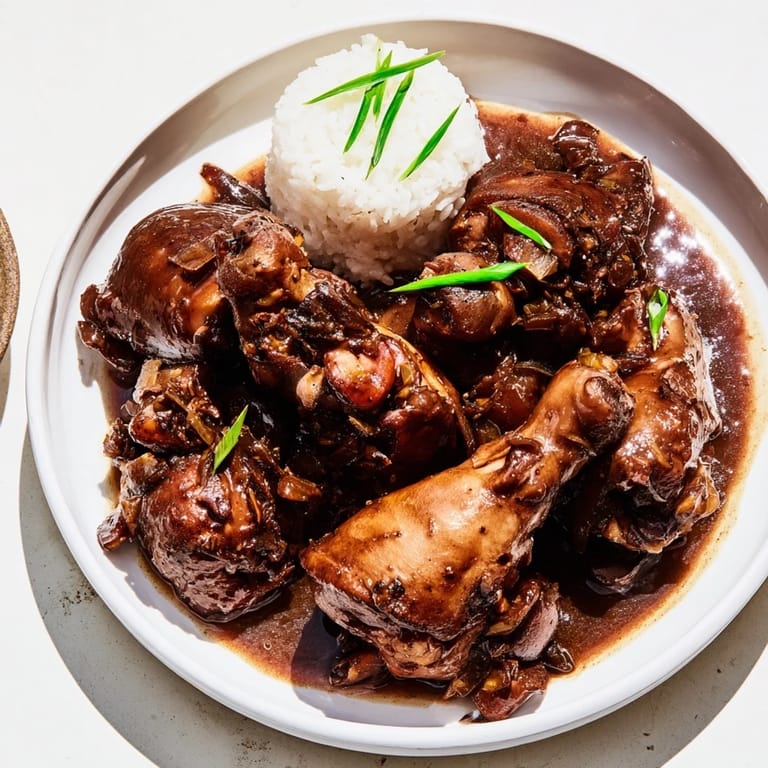
Save There's a moment in every pot of adobo where the house fills with that vinegary-garlicky-savory smell and you know it's going to be good. That's when I remember why this dish has fed families for generations—it's humble, it's reliable, and somehow it always tastes like home.
The Marinade Makes the Magic
Don't rush the marinade step, even if you're hungry. The soy and vinegar start breaking down the chicken's fibers right away, making it tender not just from heat but from the acid itself. I've made this with a quick 20-minute marinade when I was impatient, and while it still tastes good, there's a difference in texture and depth when you give it time. The longer it sits, the more the flavors marry into something that tastes like it's been cooking for hours.
Brown Sugar Is Your Secret Weapon
That tablespoon of brown sugar seems so small it almost doesn't matter, but it does something important—it rounds out the sharp edges of the vinegar and soy without making the dish sweet. It's like it smooths a rough diamond. You can absolutely skip it if you want maximum tang, but if you find yourself adding more salt or sauce at the end because something feels off, a pinch of sugar is often the answer.
Serving and Storage
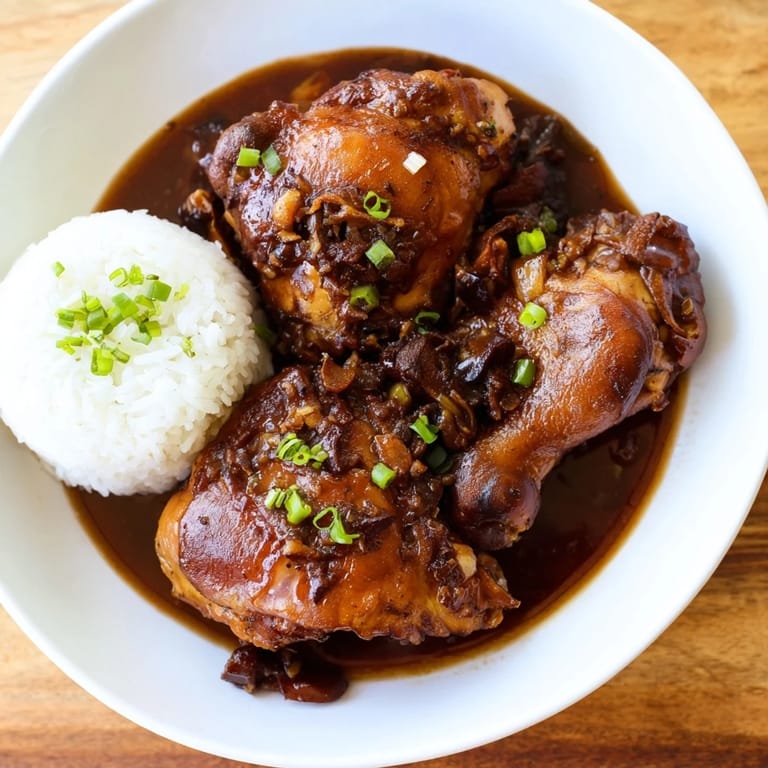
Serve this over steamed white rice so that tender rice can soak up every drop of sauce—that's non-negotiable. The dish actually tastes better the next day after the flavors have settled, so don't hesitate to make it ahead. It keeps beautifully in the fridge for three or four days, and reheats without losing anything.
- Scallions and extra garlic chips are optional but they add a fresh brightness that cuts through the richness.
- Leftover adobo is amazing over fried rice or stuffed into a sandwich with mayonnaise.
- If the sauce seems too salty after reheating, add a splash of water and a pinch of sugar to balance it.
 Save
Save This is the kind of dish that teaches you something every time you make it, even after the hundredth time. Cook it, taste it, adjust it to your liking, and know that you're part of a long tradition of people making something simple into something unforgettable.
Recipe FAQs
- → What cuts of chicken work best?
Bone-in, skin-on thighs and drumsticks are ideal for tender, flavorful results and hold up well during braising.
- → Can I marinate the chicken longer?
Yes, marinating between 30 minutes and up to 8 hours enhances flavor penetration and tenderness.
- → Is it important to brown the chicken first?
Browning adds depth of flavor and helps seal in juices before simmering in the sauce.
- → How can I thicken the sauce?
Simmer uncovered in the final cooking stages to reduce liquid and intensify the sauce’s thickness.
- → What can I serve alongside this dish?
Steamed white rice is traditional and perfect for soaking up the flavorful sauce.
- → Can the dish be modified for different tastes?
Adding coconut milk or dried chilies enriches flavor and adds subtle heat without overpowering.