 Save
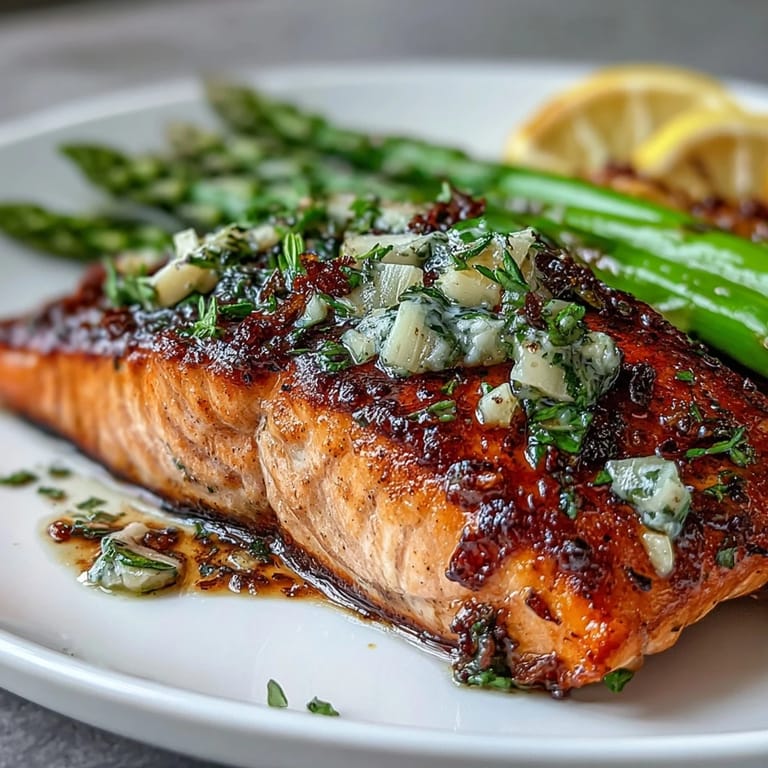
Save The aroma of sizzling garlic mingling with buttery salmon always makes me pause, even on the busiest of weeknights. It’s the kind of meal that feels like a small reward after a long day, crisp asparagus snapping in the skillet as I toss them around. The first time I tried my hand at this, I underestimated just how quickly the salmon would cook—a reminder that dinner can be both impressively quick and deeply satisfying. Nothing says spring to me quite like the bright hit of lemon that ties everything together. The satisfaction is in the simplicity, and maybe just a little in the way my kitchen smells for hours afterwards.
One weekend, friends popped by unexpectedly just as I was prepping salmon fillets. We ended up crowding around the stove, laughing as the asparagus tossed in the pan and the lemon sizzled, everyone sneaking tastes before anything even hit our plates. It turned into one of those evenings where dinner took center stage and nobody wanted to leave the kitchen.
Ingredients
- Salmon fillets: Opt for even thickness so they cook uniformly, and let them sit at room temperature for 10 minutes for a better sear.
- Asparagus: Snapping off the woody ends ensures every bite is tender; look for firm, bright green stalks.
- Lemon: Sliced rounds bring both juiciness and subtle acidity—roll the lemon first to maximize its juice.
- Unsalted butter: Gives you full control over seasoning and contributes richness to the sauce.
- Olive oil: Helps the butter brown without burning, creating golden edges on the salmon.
- Garlic cloves: Freshly minced brings out the best fragrance; avoid the jarred kind for this recipe.
- Fresh thyme: Its gentle floral aroma lifts the whole dish—if using dried, rub it between your fingers to release flavor.
- Salt: I favor kosher salt for even seasoning that sticks to the fillets.
- Black pepper: Freshly cracked adds a little heat and earthiness right at the finish.
- Fresh parsley: A sprinkle just before serving gives freshness and a little color pop.
Tired of Takeout? 🥡
Get 10 meals you can make faster than delivery arrives. Seriously.
One email. No spam. Unsubscribe anytime.
Instructions
- Season and prep:
- Pat the salmon fillets completely dry, then sprinkle both sides generously with salt and pepper; this is what makes the crust.
- Cook the asparagus:
- Heat a slick of olive oil in your largest skillet and tumble in the asparagus, letting the spears blister and char ever so slightly, just until they’re bright and tender.
- Start the salmon:
- Drizzle in the rest of the olive oil and a pat of butter, then slide the salmon in, skin-side down if you have it; listen for the lively sizzle.
- Flip and finish:
- Once the underside is golden with crispy edges, carefully turn the salmon, giving it just a couple minutes on the other side until barely cooked through in the center.
- Add the flavor:
- Lower the heat, add the garlic, thyme, and more butter, swirling everything together as the kitchen fills with savory scent; don’t let the garlic brown.
- Combine and serve:
- Nestle lemon slices and asparagus back in, spooning that garlicky butter over the top before garnishing with parsley and serving right from the pan.
 Save
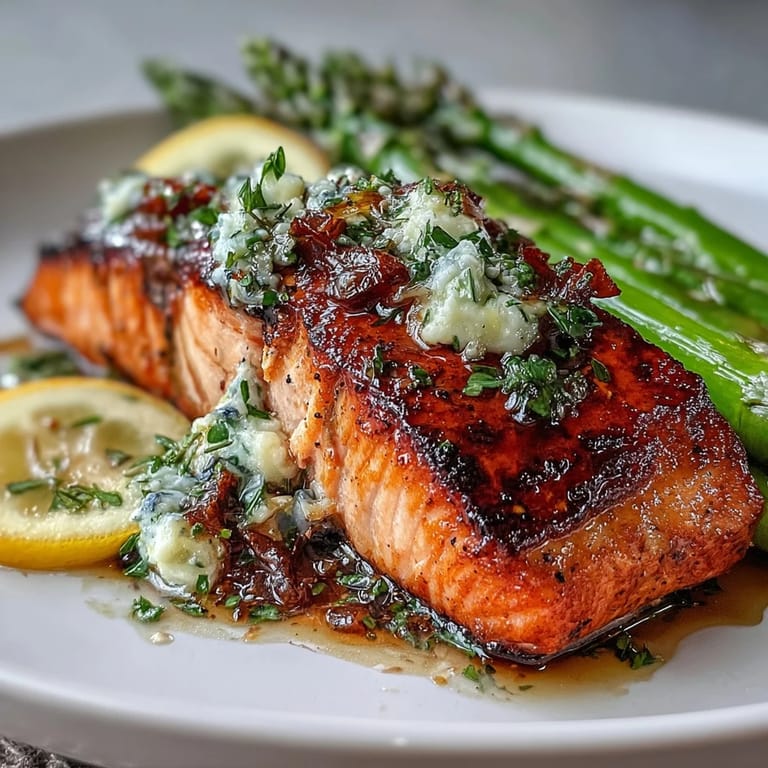
Save My cousin once declared this dish ‘too pretty to eat’—until the scent finally convinced her otherwise, and we wound up standing by the stove, abandoning forks in favor of pinching flaky bites with our fingers. Sometimes the best dinners are the ones where nobody even bothers with chairs.
What to Serve on the Side
Roasted potatoes catch any extra garlic butter and add a comforting heft to the meal, but a peppery arugula salad with shaved parmesan is just as satisfying. For something lighter, try tossing quinoa with lemon zest and fresh herbs—you’ll soak up every last drop of sauce.
Making This Recipe Your Own
Swapping the asparagus for green beans or even broccolini gives a totally different twist, especially as seasons shift. I’ve even tossed in a handful of cherry tomatoes right at the end for a burst of sweetness and a pop of color.
Quick Weeknight Secrets
Keep your salmon fillets in the fridge but set them out a bit before cooking so they don’t go from icy cold to hot pan—this prevents sticking and keeps them tender. Squeeze the lemon just before serving for extra zing, and don’t be shy with that final shower of parsley.
- Use a fish turner for gentle flipping.
- Deglaze with white wine if you want more pan sauce.
- Leftovers are great flaked onto salad the next day.
 Save
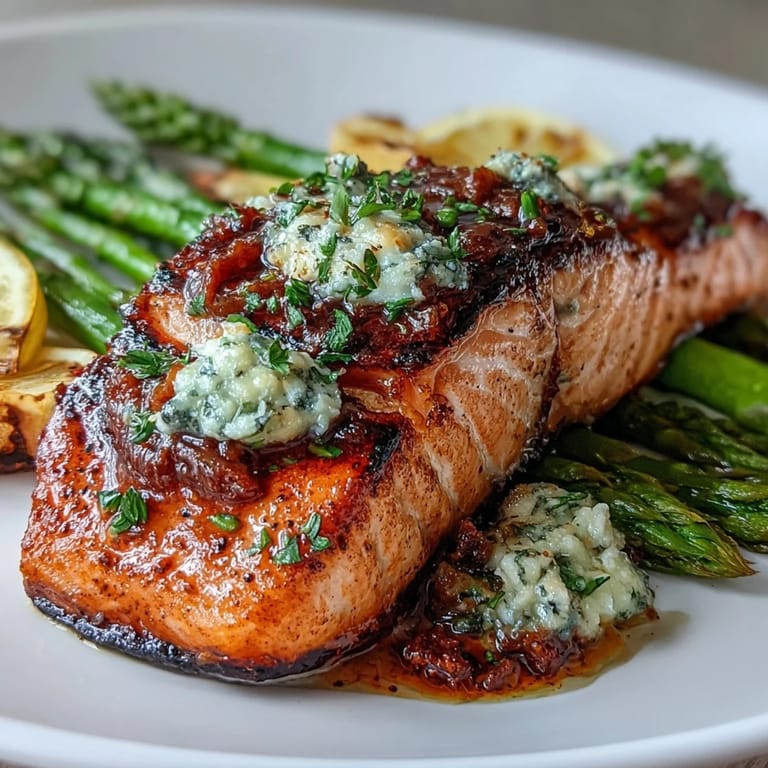
Save This dish always delivers more than just dinner—it brings together flavors, friends, and that irresistible buttery aroma that lingers warmly in the kitchen. I hope you get to enjoy it with good company and maybe even a little laughter over the stove.
Recipe FAQs
- → How do I know when salmon is cooked through?
Salmon is done when it flakes easily with a fork and the center is just opaque. Aim for 4–5 minutes skin-side down, then 2–3 minutes after flipping.
- → Can I use frozen salmon fillets?
Yes. Thaw completely and pat dry before seasoning and searing for best texture and flavor.
- → What can I substitute for asparagus?
Green beans or broccolini work well. Adjust sauté time for desired tenderness.
- → Is this dish suitable for a low-carb diet?
Yes, both salmon and asparagus are naturally low in carbohydrates, making this meal ideal for low-carb plans.
- → How can I make this dairy-free?
Use olive oil instead of butter to maintain rich flavor while avoiding dairy ingredients.
- → Can I make this ahead of time?
It's best enjoyed fresh, but you can prep ingredients ahead. Reheat gently to preserve moisture and texture.