 Save
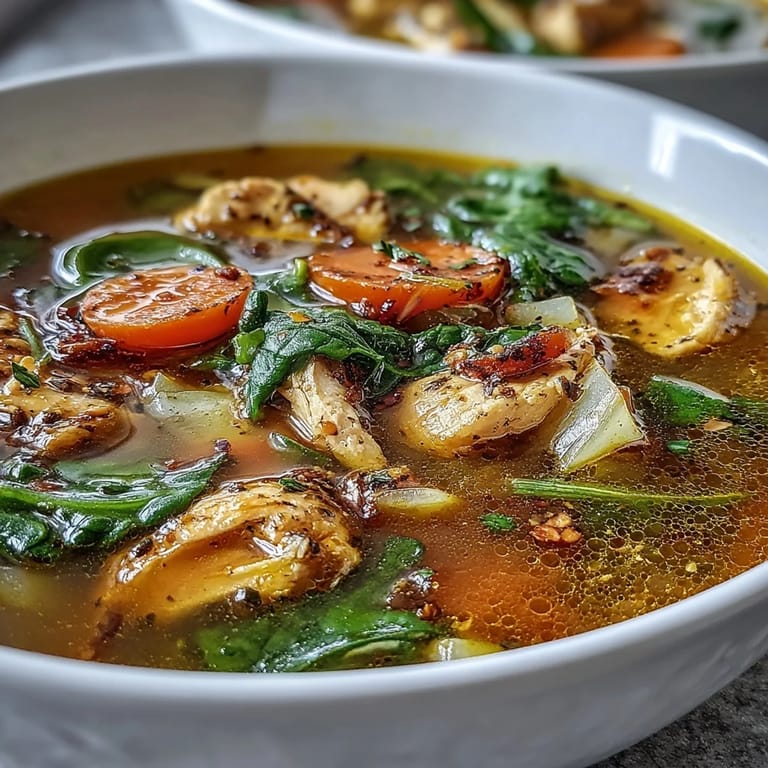
Save My sister called me one gray Tuesday afternoon asking if I knew how to make something that wouldn't upset her stomach but would actually taste good. She'd been under the weather for days, and I remembered my neighbor mentioning a golden soup she made whenever anyone in her family felt run down. That conversation led me to experimenting with turmeric and aromatics, and somehow this soup became the thing I reach for whenever someone needs comfort that feels like medicine.
I made this for my neighbor Elena the morning after she mentioned her arthritis was flaring up. She took one spoonful and her whole face softened, and she came back the next day asking if I could teach her how to make it. Now whenever I see her, she tells me she makes it weekly, and somehow that matters more to me than any recipe review ever could.
Ingredients
- Boneless skinless chicken thighs or breasts (500 g): Thighs stay juicier and more forgiving than breasts, but both work beautifully when cut into bite-sized pieces so they cook evenly.
- Onion, carrots, and celery (1 medium onion, 2 medium carrots, 2 stalks): This trio is the foundation that makes everything taste richer and more grounded, so don't skip or rush chopping them finely.
- Garlic and ginger (3 cloves, 1-inch piece): Fresh ginger makes all the difference here; it adds brightness that ground ginger simply cannot match.
- Baby spinach or kale (150 g): Either works, though spinach wilts faster and becomes almost invisible, while kale holds its texture better if you prefer something you can actually see in your bowl.
- Low-sodium chicken broth (1.5 liters): The quality of your broth matters because it's essentially the soul of this soup, so taste it first and adjust salt accordingly.
- Olive oil (1 tbsp): Use something you don't mind heating, nothing fancy or expensive for this step.
- Ground turmeric (1.5 tsp): This is what gives the soup its golden color and subtle earthy warmth, so measure it generously.
- Ground cumin, black pepper, and sea salt (½ tsp, ½ tsp, ½ tsp): These three create balance and prevent the turmeric from tasting flat or one-dimensional.
- Crushed red pepper flakes (¼ tsp, optional): Add this only if you want a gentle heat that sneaks up on you rather than hits you immediately.
- Fresh lemon juice (1 lemon): The acidity at the end brightens everything and makes the soup taste more alive and fresh.
- Fresh parsley or cilantro (2 tbsp): Cilantro has more personality; parsley is milder, so choose based on your mood.
Tired of Takeout? 🥡
Get 10 meals you can make faster than delivery arrives. Seriously.
One email. No spam. Unsubscribe anytime.
Instructions
- Heat your oil and build the base:
- Pour olive oil into your pot over medium heat and let it shimmer for just a moment. Add your chopped onion, carrots, and celery all at once, then listen for that satisfying sizzle as you start stirring them around—this is where the magic begins.
- Wake up the aromatics:
- After five minutes when your vegetables have softened and smell sweet, add the garlic and ginger. You'll notice the entire kitchen transforms within seconds as these release their oils and fragrance.
- Let the spices bloom:
- Stir in your turmeric, cumin, black pepper, and salt, then let everything cook together for just 30 seconds while you breathe in that golden, warming aroma. This blooming step is crucial because it distributes the flavors evenly and prevents any raw spice taste.
- Seal in the chicken:
- Add your chicken pieces and let them sit undisturbed for a minute or so before stirring, which gives them a chance to start cooking on one side. Stir after a couple minutes until the pieces are just opaque on the outside, about 2–3 minutes total.
- Simmer everything together:
- Pour in your broth and bring it to a boil—you'll see steam rising and things really coming to life. Once it boils, reduce the heat down to a gentle simmer, cover your pot, and let it cook for 20 minutes so the chicken becomes completely tender and the flavors meld together.
- Add the greens:
- Stir in your spinach or kale and let it wilt for 5 more minutes—the greens will shrink dramatically and add earthiness. Make sure your chicken is cooked all the way through by cutting into a piece and checking that there's no pink inside.
- Finish with brightness:
- Squeeze in your lemon juice and taste the soup carefully, adjusting salt or spice if needed. Sometimes you'll find it needs just a touch more salt or warmth, and that's your moment to make it exactly right.
- Serve and celebrate:
- Ladle your soup into bowls and scatter fresh parsley or cilantro on top. Serve it hot, and watch how people slow down when they taste it.
 Save
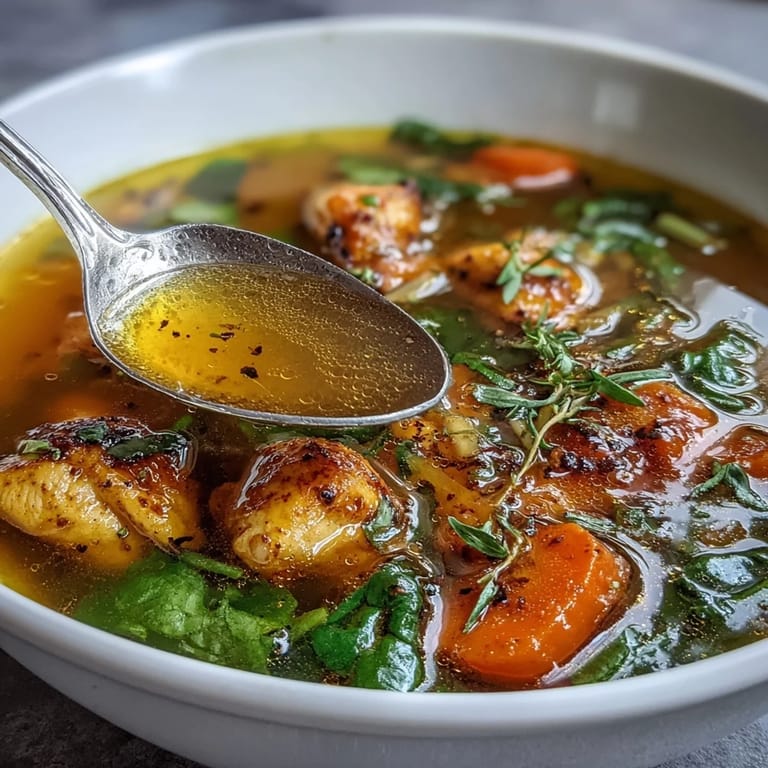
Save My mom tasted this soup one evening and became so quiet I thought something was wrong, but then she looked up and said it reminded her of something her own mother used to make decades ago. She couldn't quite remember the exact recipe, but this soup captured that same feeling of being taken care of, and now she makes it for her book club every month.
Why This Soup Heals
Turmeric has been used for thousands of years in traditional medicine, and modern science is starting to agree that it really does have anti-inflammatory properties worth paying attention to. The combination of fresh ginger, garlic, and turmeric together creates something greater than any single ingredient could achieve alone, which is why this soup tastes like it's doing something beneficial beyond just filling your stomach.
Making It Your Own
This soup is forgiving in the best possible way, which means you can adjust it based on what's in your kitchen or how you're feeling that day. I've added rice to make it more substantial, swapped the chicken for chickpeas when friends visiting were vegetarian, and even thrown in a cinnamon stick once just to see what would happen—and it was glorious, like eating autumn in a bowl.
Storage and Serving
This soup keeps beautifully in the refrigerator for up to four days, and it often tastes even better the next day after all the spices have had time to get to know each other. You can also freeze it in individual containers and pull it out on days when cooking feels like too much, though I'd add fresh lemon juice and herbs after reheating rather than before freezing.
- Serve it alongside warm crusty bread for something to soak up every last drop of golden broth.
- A simple green salad on the side balances the richness and adds a fresh contrast.
- If you have leftover rice or quinoa sitting around, stir some in during the last few minutes and suddenly you have an entirely different meal.
 Save
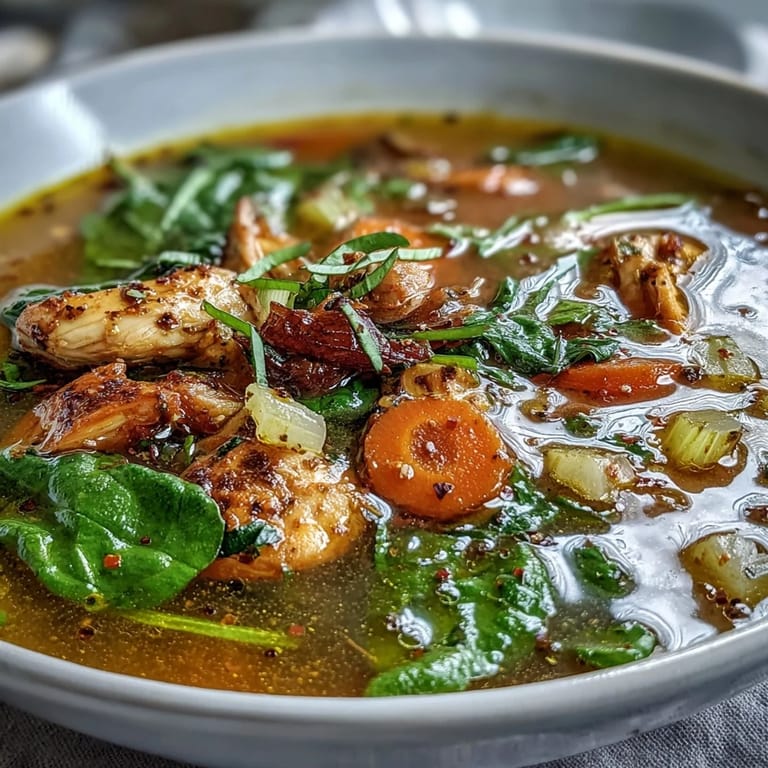
Save This soup has become my answer to so many moments—a friend's bad day, a family member recovering from illness, a morning when I need comfort that doesn't come from the outside world. Make it, share it, and watch what happens when people taste something made with actual care.
Recipe FAQs
- → Can I make this soup vegetarian?
Yes, substitute chicken with chickpeas or extra vegetables and use vegetable broth instead of chicken broth. The spices and flavors work beautifully with plant-based proteins.
- → How long does this soup keep in the refrigerator?
Store in an airtight container for up to 4 days. The flavors actually develop and deepen over time, making it excellent for meal prep. Reheat gently on the stovetop.
- → Can I freeze this soup?
Absolutely! Cool completely before transferring to freezer-safe containers. It keeps well for up to 3 months. Thaw overnight in the refrigerator before reheating. Skip adding spinach if freezing; add fresh when reheating.
- → What can I serve with this soup?
Warm crusty bread, naan, or crackers make perfect accompaniments. A simple side salad with vinaigrette adds freshness. For a more substantial meal, add cooked rice or quinoa directly to the soup.
- → How can I make it spicier?
Increase the crushed red pepper flakes to ½ teaspoon or add fresh chili peppers when sautéing the aromatics. You can also serve with hot sauce on the side for individual customization.
- → Can I use dried herbs instead of fresh?
Yes, use 1 teaspoon of dried parsley or cilantro in place of the fresh 2 tablespoons. Add dried herbs earlier during simmering to allow their flavors to rehydrate and meld with the broth.