 Save
Save There's something about the sharp smell of Brussels sprouts hitting a hot pan that makes me feel like I'm actually cooking something worthwhile. My neighbor passed over a bag of them from her garden one autumn, and I was skeptical until I realized roasting completely transforms them into something crispy and almost sweet. The first time I tossed them with fresh herbs and lemon, my kitchen filled with this bright, nutty aroma that had everyone asking what was happening. That's when I understood these humble little vegetables weren't a chore to prepare, but a quiet showstopper.
I made this for my sister's potluck last spring when everyone else brought heavy casseroles, and watching people actually fight over the Brussels sprouts was honestly hilarious. She asked for the recipe three times that night, insisting I must have done something secret to them. The truth was simpler than she expected, but there's always something satisfying about a dish so straightforward that the quality of each ingredient shines through without apology.
Ingredients
- Brussels sprouts: Look for ones that feel heavy and firm with tightly packed leaves, about the size of a walnut, as these roast more evenly and stay tender inside while crisping at the edges.
- Fresh parsley: Flat-leaf parsley has a more robust flavor than curly, and finely chopping it by hand lets you control the texture better than a food processor ever could.
- Fresh thyme: Strip the leaves from the woody stems right before using, or you'll find yourself chewing on splinters, which I learned the hard way.
- Lemon: Choose a heavy lemon that yields slightly to pressure, as these tend to have more juice and a brighter, less bitter zest.
- Sliced almonds: Toast them yourself if you can, as pre-toasted varieties often taste stale by the time they reach your kitchen, and the few extra minutes make a real difference.
- Extra-virgin olive oil: This is the one ingredient where quality truly matters, so don't skimp or use anything refined.
- Sea salt and freshly ground black pepper: Pre-ground pepper loses its volatile oils within weeks, so invest in a pepper mill and grind just before cooking for that sharp, alive flavor.
Tired of Takeout? 🥡
Get 10 meals you can make faster than delivery arrives. Seriously.
One email. No spam. Unsubscribe anytime.
Instructions
- Heat your oven and prepare:
- Set your oven to 220°C (425°F) and line a baking sheet with parchment paper while it preheats. This simple step prevents sticking and makes cleanup something you won't dread later.
- Coat the Brussels sprouts:
- Toss the halved sprouts in a bowl with olive oil, salt, pepper, parsley, thyme, and lemon zest, making sure every piece gets a light coating of the herb mixture. The zest should be distributed evenly so you get flecks of bright lemon flavor in every bite.
- Arrange for roasting:
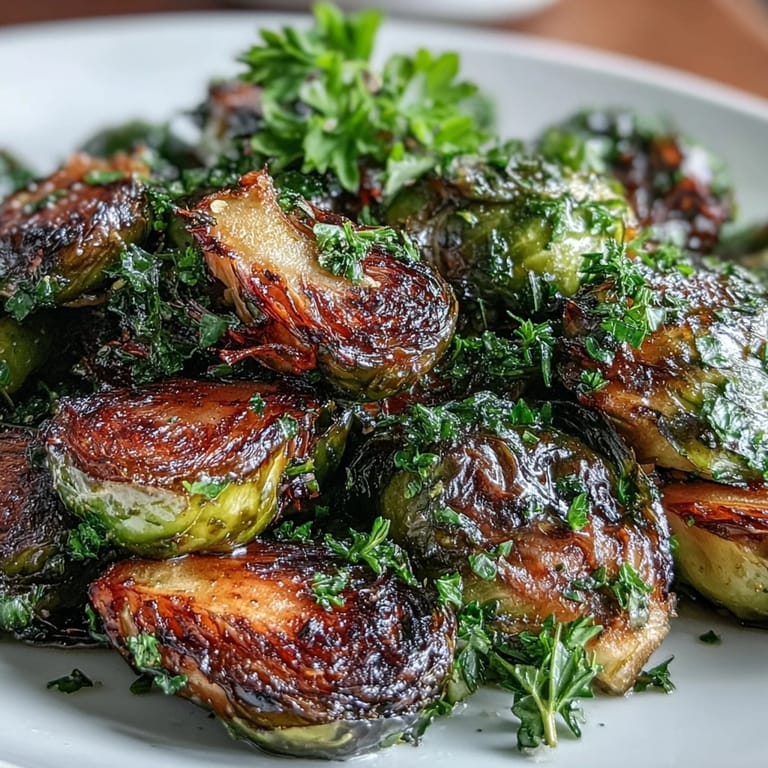
- Lay the sprouts cut-side down on the prepared sheet in a single layer, leaving some space between them so heat can circulate and create that golden, crispy exterior. Crowding the pan steams them instead of roasting them, which is the biggest mistake you can make here.
- Roast and stir:
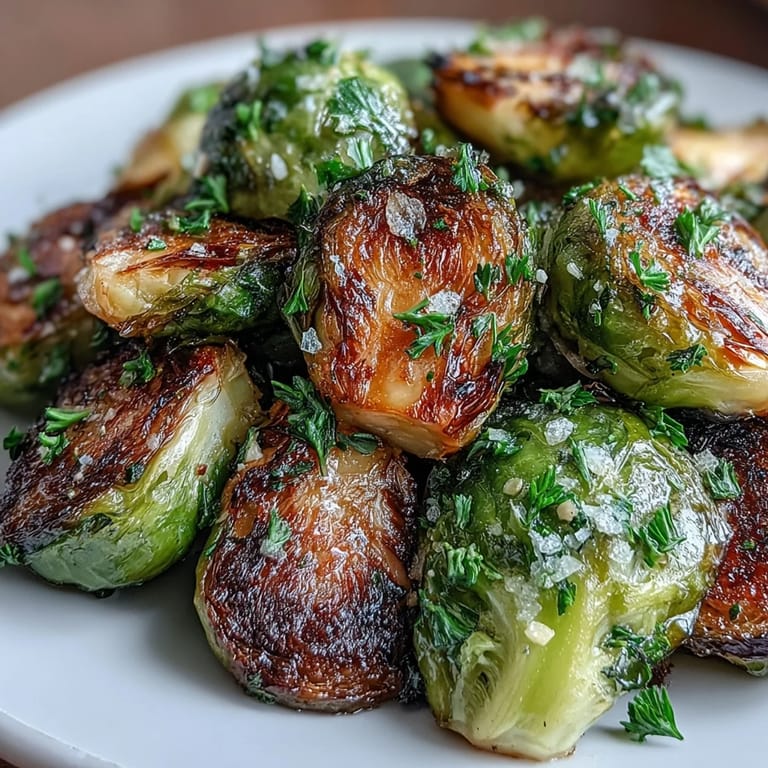
- Roast for about 20 minutes, stopping halfway to give the pan a good shake so nothing sticks or burns unevenly. You'll know they're ready when the flat sides are deep golden brown and the leaves at the edges have darkened to the color of toasted bread.
- Toast the almonds:
- While the sprouts finish roasting, place sliced almonds in a dry skillet over medium heat and stir constantly for 2 to 3 minutes until they smell fragrant and turn a light golden color. Watch them carefully because they go from golden to burnt in about 30 seconds once they start to darken.
- Finish and serve:
- Transfer the roasted sprouts to a serving bowl, drizzle with fresh lemon juice, and scatter the toasted almonds over the top. A gentle toss brings everything together, and serving while still warm lets the lemon juice soak into the crispy edges.
 Save
Save My father, who claims to hate vegetables with the stubbornness of someone who grew up eating overcooked frozen peas, ate nearly half the pan and asked if I could make them for Thanksgiving. That moment taught me that there's no such thing as a vegetable person or a vegetable hater, just a matter of finding the right preparation and respecting the ingredient enough to let it taste like itself.
Why Fresh Herbs Matter So Much
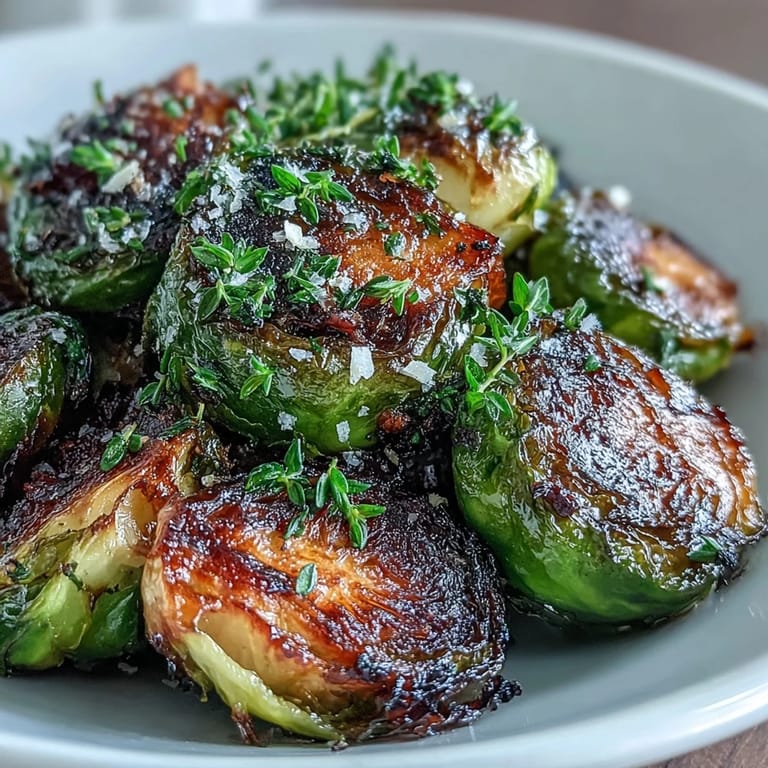
The difference between dried and fresh herbs here is the difference between eating Brussels sprouts and actually enjoying them. Fresh thyme carries a subtle earthiness that dried thyme, with its musty concentration, can't replicate, and the parsley adds a clean, almost peppery note that ties the whole dish together. I once tried this with dried herbs because I was lazy, and the result was flat and one-dimensional, like eating something made from a recipe card instead of with intention.
Timing and Temperature Control
Getting the oven temperature right is crucial because too cool and they steam instead of roast, while too hot and the outside burns before the inside finishes cooking. The halfway stir matters more than you'd think, as it ensures even browning and prevents any sprouts from getting stuck or scorched on the bottom. I learned this by burning at least three batches before I stopped treating the pan like a set-it-and-forget-it situation and actually paid attention.
Customizing Your Roasted Sprouts
While the recipe as written is already perfectly balanced, this dish welcomes gentle variations depending on what you have on hand or what you're serving alongside. A small pinch of red pepper flakes adds a subtle heat that complements the brightness without overwhelming it, and hazelnuts or walnuts work beautifully if almonds aren't available. Consider these small tweaks, though, and not complete overhauls, as the beauty of this dish lies in its simplicity and restraint.
- Add a tiny pinch of red pepper flakes to the coating mixture for a whisper of heat.
- Swap the almonds for toasted hazelnuts or walnuts if that's what you have.
- A small drizzle of aged balsamic vinegar over the finished dish adds subtle sweetness and depth.
 Save
Save This recipe has quietly become the dish I make when I want to feel like I'm actually cooking, not just reheating or following instructions. It's one of those meals that reminds you why spending time in the kitchen, even for something simple, matters.
Recipe FAQs
- → How do I ensure Brussels sprouts are crisp-tender?
Roast halved sprouts at high heat (around 220°C/425°F) for about 20 minutes, stirring halfway, to achieve a caramelized exterior and tender interior.
- → Can other nuts be used instead of almonds?
Yes, hazelnuts or walnuts can replace almonds, adding their distinctive flavors and textures when toasted similarly.
- → What herbs complement the lemon in this dish?
Parsley and thyme are used here for a fresh, earthy balance that enhances the lemon’s brightness without overpowering it.
- → Is it necessary to zest the lemon separately from the juice?
Yes, zesting provides aromatic oils that add depth, while the juice delivers acidity and bright flavor when drizzled after roasting.
- → How can I add a spicy kick to the dish?
Sprinkling a pinch of red pepper flakes before roasting introduces a subtle heat that pairs well with the citrus and herbs.