 Save
Save The first time I made okonomiyaki at home, I was standing in my tiny kitchen on a rainy Sunday afternoon, trying to recreate that perfect savory pancake I'd eaten at a small stall in Osaka. The vendor there had this quiet rhythm—layering cabbage, pouring batter, flipping with such ease—and I was convinced I could never replicate it. But then I realized the magic wasn't in the technique alone; it was in how the dashi made the batter taste alive, and how those thin cabbage shreds got tender and sweet as they cooked. That first pancake came out surprisingly golden, and when I drizzled the sauce and watched the bonito flakes dance from the heat, I understood why this dish had stayed with me for months.
I remember making these for my partner one night when they mentioned missing street food from Tokyo, and there was this moment when we both went quiet, watching the bonito flakes move on their own from the heat radiating off the fresh pancake. No words needed—just that little motion, that slight umami smell filling the kitchen, made it feel like we'd traveled somewhere together without leaving home.
Ingredients
- All-purpose flour: The foundation that becomes wonderfully tender when mixed with dashi instead of milk alone.
- Dashi stock: This is the secret—it brings an umami depth that makes these pancakes taste authentically Japanese and impossibly savory.
- Eggs: Just two large ones bind everything while keeping the texture light and custardy inside.
- Baking powder: Use fresh powder so your pancakes rise with an open, slightly airy crumb.
- Finely shredded green cabbage: The star vegetable—it should be thin enough to soften quickly but textured enough to stay a little crisp.
- Green onions: Thinly sliced for bright pops of flavor that don't overpower the cabbage.
- Julienned carrot: Optional but I've found it adds a gentle sweetness that rounds out the savory notes.
- Cooked shrimp or bacon: Both work beautifully; I lean toward shrimp for authenticity, but bacon makes it feel like a breakfast-dinner hybrid.
- Okonomiyaki sauce: Bottled is fine and saves time; it's slightly sweet and tangy, almost like a Japanese barbecue sauce.
- Japanese mayonnaise: Kewpie's richness and slight sweetness matter here—regular mayo feels bland by comparison.
- Bonito flakes: Fresh ones actually move from the heat, which is half the fun and proof of the pancake's warmth.
- Aonori: This dried seaweed powder adds an earthy, slightly oceanic note that ties the whole dish together.
- Pickled ginger: Optional but a few slices between bites cut through the richness like a palate cleanser.
Tired of Takeout? 🥡
Get 10 meals you can make faster than delivery arrives. Seriously.
One email. No spam. Unsubscribe anytime.
Instructions
- Make the batter base:
- In a large bowl, whisk together flour, dashi, eggs, salt, and baking powder until you have something smooth and silky—no lumps allowed. The dashi should make it smell savory and inviting already.
- Fold in the vegetables:
- Gently add shredded cabbage, green onions, carrot, and your protein of choice, stirring until everything is evenly distributed. The mixture will feel voluminous and a little shaggy, which is exactly right.
- Heat your skillet:
- Get a nonstick skillet to medium heat with a half tablespoon of oil. You want it hot enough that a drop of batter sizzles immediately but not so hot that the outside burns before the inside cooks.
- Shape and cook the first side:
- Pour about a cup of batter onto the skillet and use a spatula or the back of a spoon to gently shape it into a thick round pancake about six inches wide. Let it cook untouched for four to five minutes until the bottom is golden and smells toasty.
- Flip with confidence:
- Use a wide spatula and slide it underneath, then flip in one smooth motion. The second side cooks another four to five minutes and will be just as golden.
- Repeat with the remaining batter:
- Make sure to add a little more oil to the skillet between pancakes so nothing sticks. Each one deserves the same golden treatment.
- Dress it up:
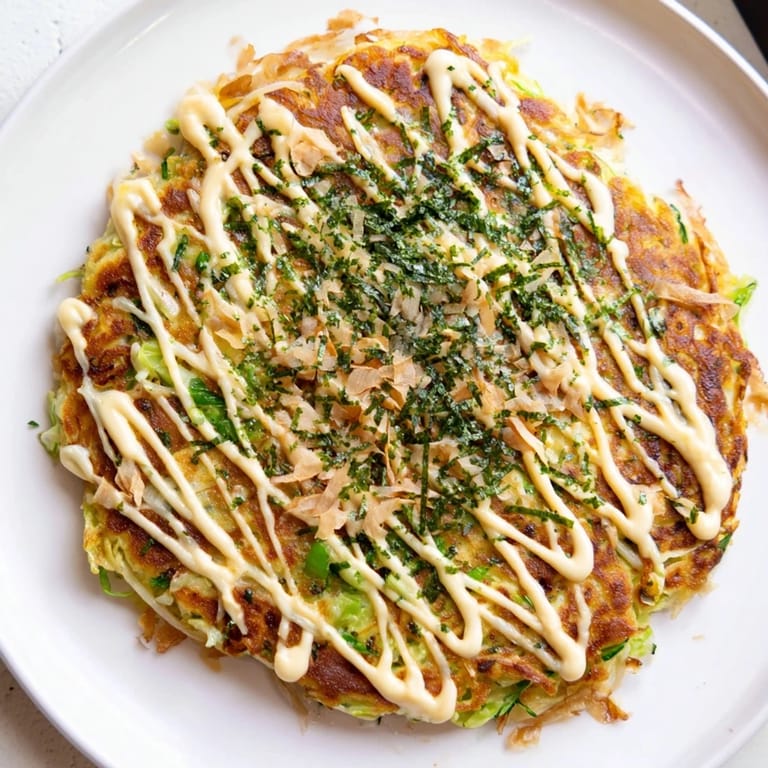
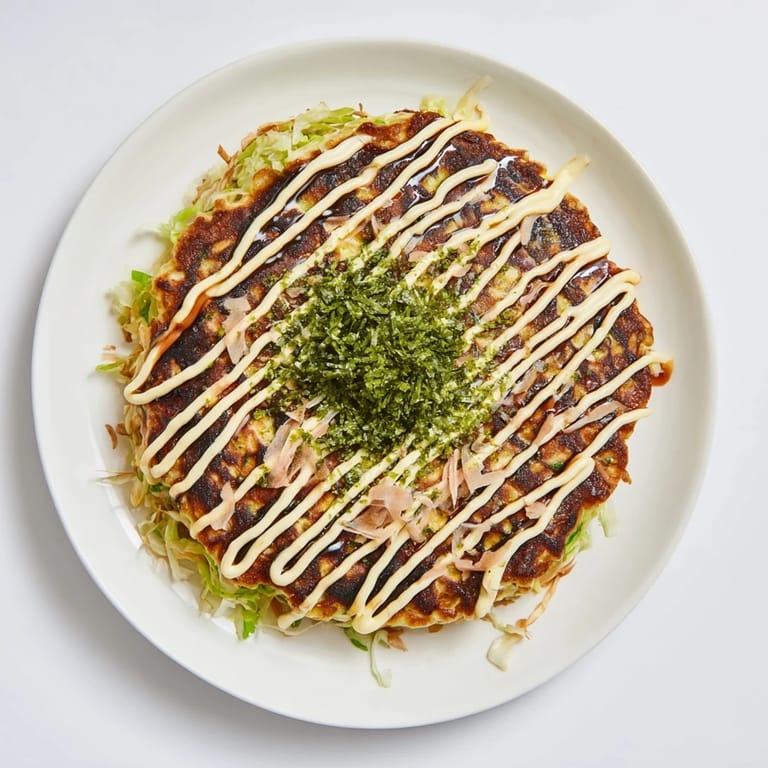
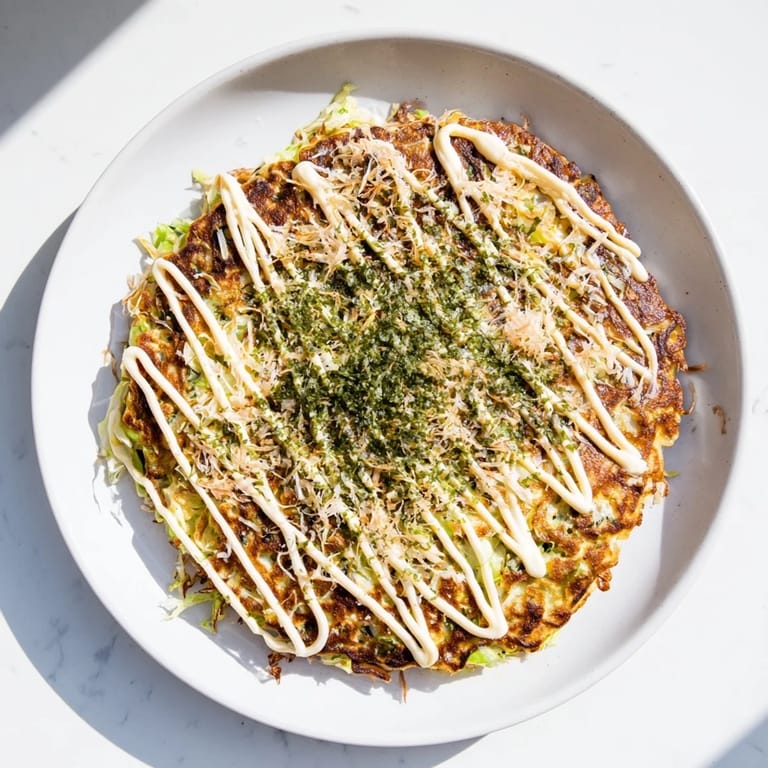
- Transfer each hot pancake to a plate and drizzle generously with okonomiyaki sauce and mayo in a zigzag pattern—this is where precision gives way to personality. Sprinkle the bonito flakes, aonori, and a few threads of pickled ginger on top while everything is still steaming.
 Save
Save There's something about watching someone take their first bite of okonomiyaki that you've made for them—they always pause, always close their eyes for a second. In that moment, you realize it's not just food; it's a little edible gift that says you cared enough to get the technique right and the flavors honest.
The Art of the Toppings
The toppings aren't just decoration; they're the finale that transforms a good pancake into something memorable. I've learned to always have them prepped and ready before the first pancake finishes cooking, because once you plate it hot, you have maybe two minutes before the steam starts to fade and the bonito flakes lose their magic flutter. The zigzag pattern of sauce and mayo isn't just pretty—it ensures every bite gets both the tangy sweetness and the creamy richness.
Making It Your Own
The beautiful thing about okonomiyaki is that it invites improvisation. I've made versions with mushrooms and mozzarella for vegetarian friends, and once I added a fried egg on top at the last minute because I was hungry and it was still warm enough to cook it slightly. Some nights I use bacon instead of shrimp, and it becomes this savory-smoky-sweet thing that feels almost Western while staying fundamentally Japanese.
Timing and Temperature
Medium heat is your friend here; too high and the outside will char while the inside stays doughy, too low and the edges won't crisp properly. I learned this the hard way, and now I always do a small test pancake first to get the heat dialed in. It takes maybe two minutes to know if you're in the right zone, and it's worth that small investment.
- Make sure your dashi is room temperature or cold before mixing so it doesn't cook the eggs prematurely.
- Let each pancake rest on the plate for just a minute after flipping so it sets slightly before topping.
- Squeeze bottles work beautifully for the sauce and mayo if you want those perfect zigzags, but a spoon does the job too.
 Save
Save Every time I make okonomiyaki, I'm reminded that some of the best dishes are the ones that don't take hours but somehow feel like you've traveled somewhere special. It's comfort and adventure on the same plate.
Recipe FAQs
- → What ingredients give these pancakes their unique flavor?
The combination of shredded cabbage, green onions, okonomiyaki sauce, creamy Japanese mayonnaise, bonito flakes, and dried seaweed flakes creates a rich and layered taste.
- → Can I substitute seafood in the batter?
Yes, cooked shrimp or bacon can be added depending on preference, or omitted for a vegetarian-friendly version.
- → How do I achieve the perfect pancake texture?
Mix the batter until smooth and cook on medium heat, allowing each side to become golden brown before flipping.
- → What sauces pair well with these pancakes?
A savory blend like okonomiyaki sauce, which can be replaced by Worcestershire, ketchup, and soy sauce mix, pairs beautifully, enhanced by Japanese mayonnaise.
- → Are there recommended accompaniments?
These pancakes go well with cold Japanese beer or iced green tea, balancing richness with refreshing notes.
- → Can I prepare these pancakes gluten-free?
Traditional flour contains gluten; consider using gluten-free flour alternatives, though texture and flavor may vary.