 Save
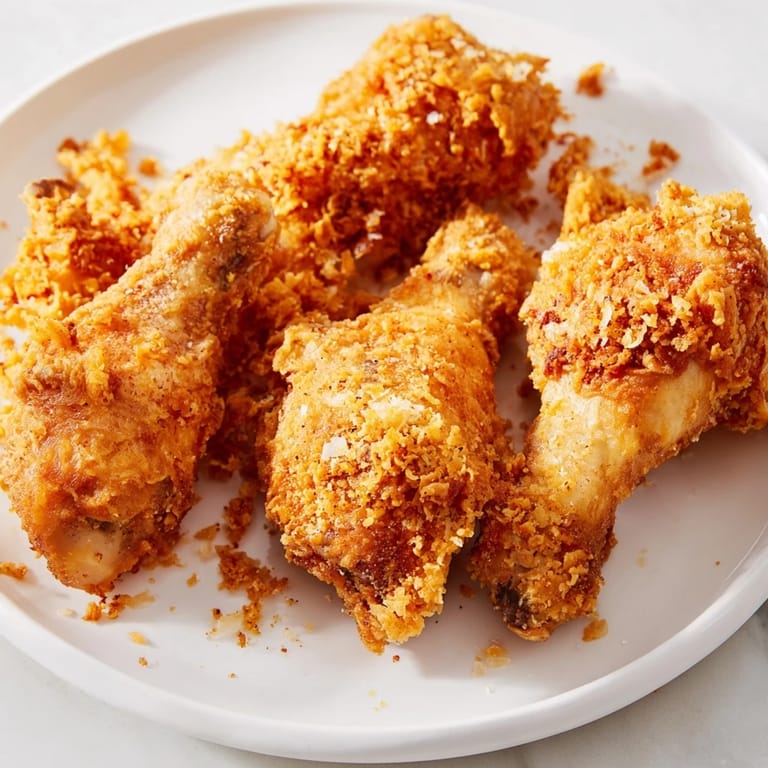
Save My neighbor brought home a bucket of KFC one Saturday evening, and I was transfixed by how the chicken stayed perfectly crispy even after sitting in a paper-lined box for half an hour. That night, I became obsessed with reverse-engineering that golden coating, spending weeks tweaking spice ratios in my kitchen until I cracked something pretty close to the original. The breakthrough came when I realized the real secret wasn't just the spices—it was respecting the marinating time and that crucial resting period before frying.
I made this for a small gathering last summer, and my sister actually put down her phone mid-dinner—that's when I knew I'd nailed it. She kept asking what restaurant I'd ordered from, and when I admitted I'd fried it myself that afternoon, she demanded the recipe on the spot. It became the thing I'm now known for bringing to potlucks, which is both a blessing and a responsibility.
Ingredients
- Chicken (8 pieces, skin-on, bone-in preferred): Bone-in chicken absorbs the seasonings better and stays juicier during frying—skip the boneless breasts if you can help it.
- Buttermilk (250 ml): This isn't just a marinade; it tenderizes the meat and creates a slightly acidic environment that helps the coating stick like it means business.
- All-purpose flour (200 g): The foundation of your coating, and it needs to be fresh—old flour won't crisp the same way.
- Paprika (2 tsp): This gives you that warm color and a subtle sweetness that balances the sharper spices.
- Garlic powder, onion powder, dried thyme, basil, oregano (1 tsp each): Together these create that savory depth you remember from the real thing.
- Celery salt, white pepper, black pepper, mustard powder, ginger, cayenne, sage (1/2 tsp each, salt 1 tsp): Each one plays a specific role—the ginger adds a whisper of warmth, the mustard powder deepens the savory notes, cayenne brings the heat.
- Vegetable oil (1 liter): Use something neutral and heat-stable; avoid olive oil or anything with a low smoke point.
Tired of Takeout? 🥡
Get 10 meals you can make faster than delivery arrives. Seriously.
One email. No spam. Unsubscribe anytime.
Instructions
- Make your marinade and soak the chicken:
- Whisk buttermilk with salt and black pepper in a large bowl, then submerge all your chicken pieces and refrigerate for at least an hour—overnight is even better if you have time. This step is non-negotiable; it softens the meat and helps the seasoning penetrate.
- Build your spice blend:
- In a separate bowl, combine all the flour and spices and whisk thoroughly for at least a minute so every speck of seasoning is evenly distributed. Uneven spice distribution is the difference between restaurant-quality and mediocre.
- Coat the chicken and let it rest:
- Pull each piece from the marinade, let the excess buttermilk drip off, then dredge it in the seasoned flour, pressing firmly so the coating adheres. Lay the pieces on a wire rack for 10 minutes—this drying time is what gives you that crispy shell.
- Heat your oil to the right temperature:
- Use a thermometer and bring the oil to exactly 170°C (340°F). This temperature is the sweet spot where the outside crisps before the inside dries out.
- Fry in batches without crowding:
- Don't rush this; overcrowding the pan drops the temperature and makes the coating greasy instead of crispy. Fry for 12–15 minutes, turning occasionally, until golden brown and the internal temperature hits 75°C (165°F).
- Drain and rest:
- Transfer to a wire rack (it lets air circulate underneath, preventing sogginess) or paper towels, and give it 5 minutes before serving so the residual heat finishes cooking the interior.
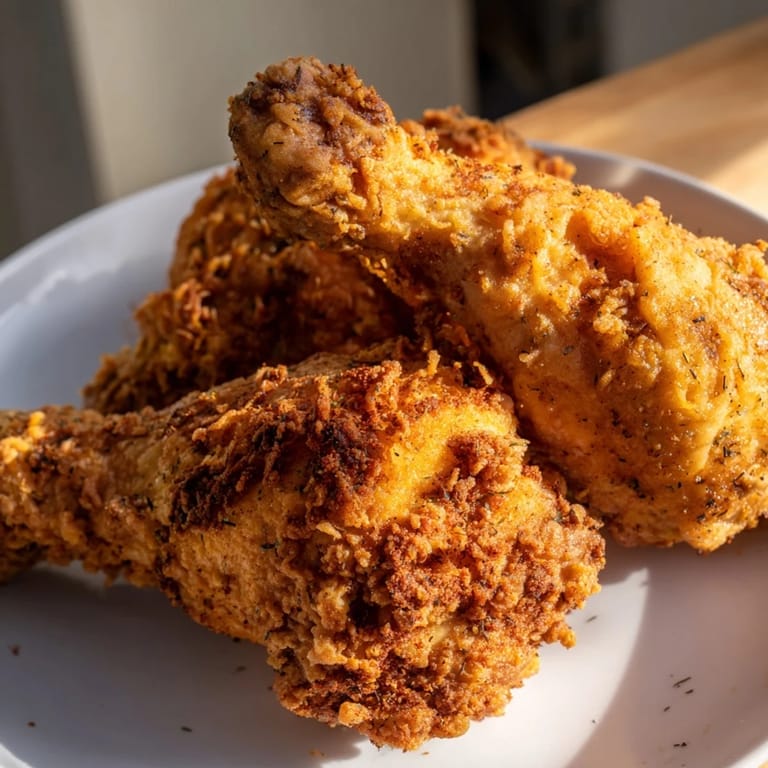 Save
Save There was a moment last month when my teenage nephew bit into a piece and his eyes genuinely widened—he'd been eating drive-thru versions his whole life and didn't know it could taste this good. That's when it clicked for me that this recipe is about more than just chasing a flavor memory; it's about creating your own kitchen legacy that people actually look forward to.
The Double-Dip Difference
If you want to push this recipe into the realm of obsessive perfection, the double-dip is your shortcut to textural bliss. After your first flour coating sits for 10 minutes, dip the chicken back into the buttermilk for just 10 seconds, then coat it in seasoned flour one more time and let it rest another 5 minutes. The result is a shell so crispy it shatters slightly when you bite into it—the kind of texture that makes people stop talking and just eat.
Seasoning Adjustments and Heat Levels
The cayenne pepper in this blend is restrained on purpose, giving you a warm undertone without overwhelming heat, but taste your spice mixture before you commit all of it to the chicken. If you're cooking for people who avoid spice, dial the cayenne back to 1/4 teaspoon or skip it entirely—the other seasonings are flavorful enough to carry the dish on their own.
Serving and Storage Wisdom
This chicken is best eaten within an hour of frying when the contrast between the crispy coating and juicy meat is at its peak, though it reheats decently in a 180°C oven for about 10 minutes if you need to make it ahead. I've learned the hard way that microwaving turns the coating to rubber, so resist the temptation.
- Serve it alongside coleslaw and soft biscuits for that classic experience, or over a salad for something lighter.
- Store leftovers in an airtight container in the fridge for up to 3 days, and always bring them to room temperature before reheating.
- If you're feeling adventurous, try air-frying this at 190°C for 18–20 minutes for a lighter version that's still respectably crispy.
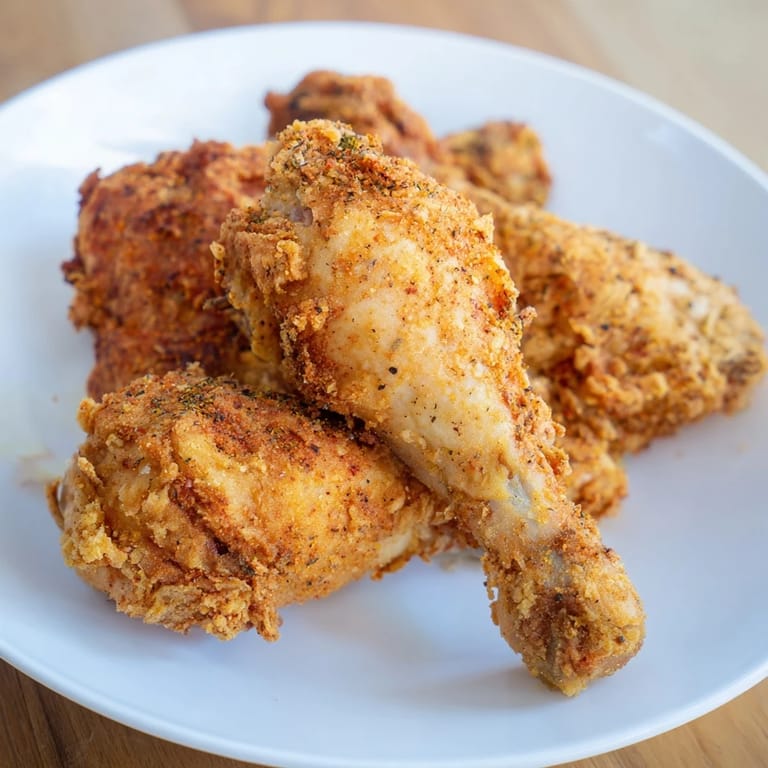 Save
Save This recipe taught me that sometimes the best food isn't about complexity—it's about respecting each component and executing the fundamentals with care. Once you make it once, you'll understand why people line up at drive-throughs, and you'll never look at fried chicken the same way again.
Recipe FAQs
- → What key spices create the crispy coating?
A blend of paprika, garlic, onion powders, thyme, basil, oregano, celery salt, mustard, ginger, cayenne, sage, and black and white pepper gives the coating its distinctive flavor.
- → How long should the chicken marinate?
Marinate in buttermilk with salt and pepper for at least 1 hour, or up to overnight for deeper flavor and tenderness.
- → What is the recommended oil temperature for frying?
Heat oil to 170°C (340°F) for even cooking and crispy texture without burning.
- → Can I make the coating extra crispy?
Yes, double-dipping the chicken: dredge once, dip back in buttermilk, then coat again in seasoned flour enhances crispiness.
- → Are there alternatives to deep frying?
Air-frying can be used as a lighter option while still achieving a satisfying crunch.
- → What cuts of chicken work best?
Skin-on, bone-in pieces like drumsticks, thighs, or breasts give the best balance of flavor and juiciness.