 Save
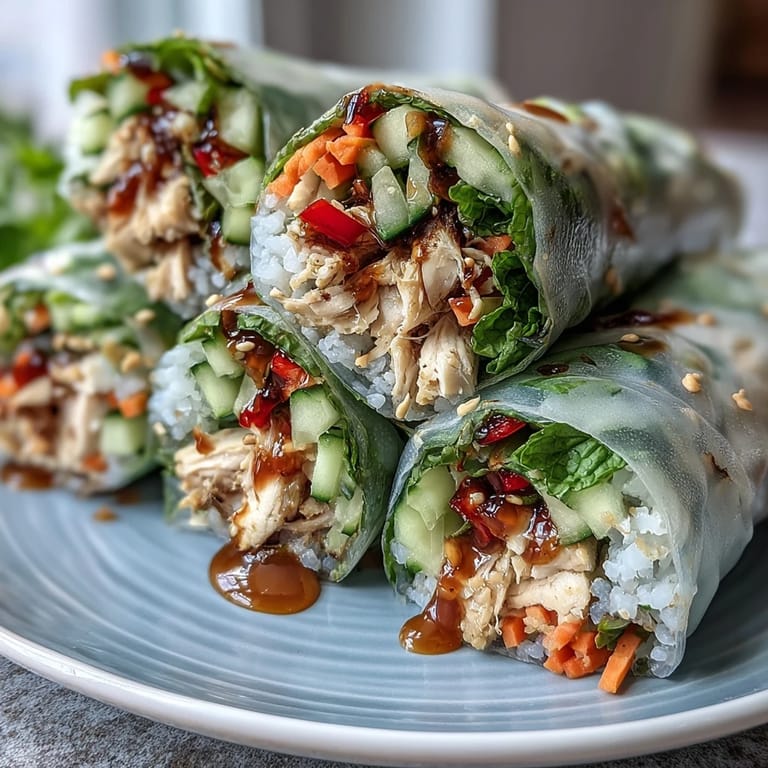
Save There's something almost meditative about assembling spring rolls on a lazy Sunday afternoon when a friend texted asking what I was making for lunch. I pulled out what I had—some leftover rotisserie chicken, a farmers market haul of vegetables still in their crisper bags, and a block of time to slow down. What started as "let me just throw something together" became this ritual of dipping, filling, and rolling that felt more intentional than any recipe I'd followed in months. The kitchen filled with the bright smell of fresh herbs, and by the time I'd finished the eighth roll, I understood why people get excited about these things.
I made these for a potluck once where I thought I'd be bringing the most boring thing in the room, and instead people kept asking for the recipe while sneaking extra rolls from the platter. That moment when someone closes their eyes after taking a bite because they're tasting something that transported them somewhere—that's when you know you've gotten it right. It's comfort food that doesn't weigh you down, which is honestly the best kind.
Ingredients
- Rice paper wrappers: These are the delicate, translucent sheets that hold everything together—they soften quickly in warm water, so work with confidence and don't overthink it.
- Cooked chicken breast, shredded: Use a rotisserie chicken if you're short on time, or poach and shred your own for control over seasoning.
- Fresh vegetables (carrots, cucumber, red bell pepper): Cut them into thin, even strips so they stay tender when you bite through the wrapper and don't poke holes.
- Fresh herbs (mint and cilantro): These are non-negotiable—they're what make spring rolls taste alive instead of just filled.
- Creamy peanut butter: The foundation of your sauce; a good-quality one without added oils makes all the difference in texture.
- Soy sauce or tamari: This brings the umami depth that balances the sweetness of honey and brightness of lime.
- Fresh lime juice: Never use bottled here—the fresh acidity is what makes the sauce sing.
- Sesame oil: Just a teaspoon adds a warm, nutty undertone that ties the whole sauce together.
- Ginger and garlic: Minced fresh is essential; use a microplane for ginger so it distributes evenly without chunks.
Tired of Takeout? 🥡
Get 10 meals you can make faster than delivery arrives. Seriously.
One email. No spam. Unsubscribe anytime.
Instructions
- Prep like you mean it:
- Arrange all your vegetables and herbs on a large platter in the order you'll use them—this takes the scrambling out of assembly and keeps your hands dry while you work. It sounds fussy, but it changes everything when you're elbow-deep in rice paper.
- Wake up the rice paper:
- Fill a shallow dish with warm (not hot) water and submerge one wrapper for about 10 to 15 seconds until it's just soft and pliable, like a whisper. Lay it flat on a damp kitchen towel so it doesn't stick to itself.
- Build with intention:
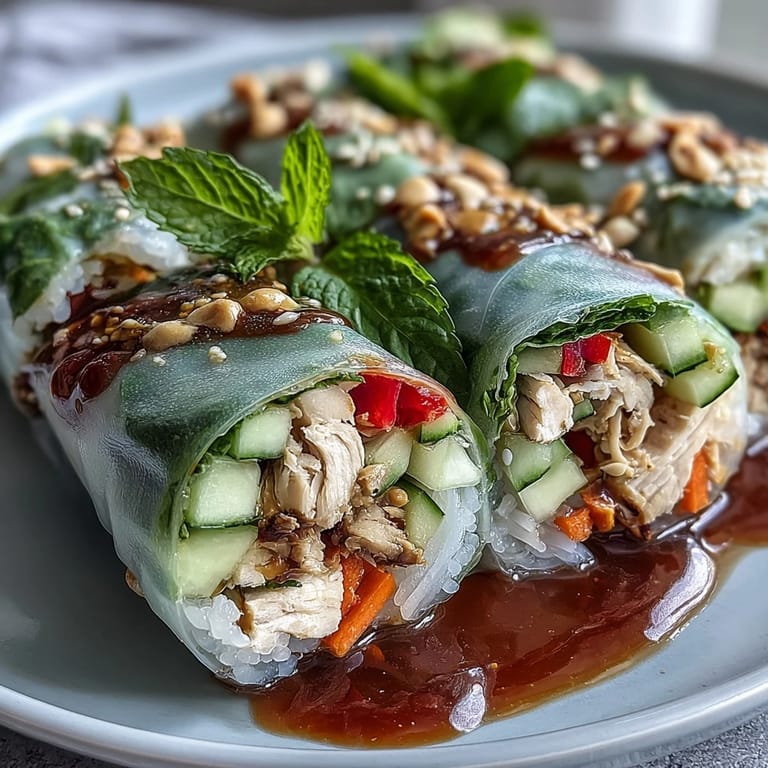
- Place a small handful of lettuce first as a base, then layer chicken, carrots, cucumber, bell pepper, a few mint and cilantro leaves, and green onion along the bottom third of the wrapper. Less is more—overstuffing is the enemy of a tight roll.
- Roll like a burrito:
- Fold the bottom edge up and over your filling, tuck in the sides snugly, then roll upward with steady, gentle pressure until it's sealed. The wrapper will cling to itself if you've got the moisture right.
- Make the peanut sauce:
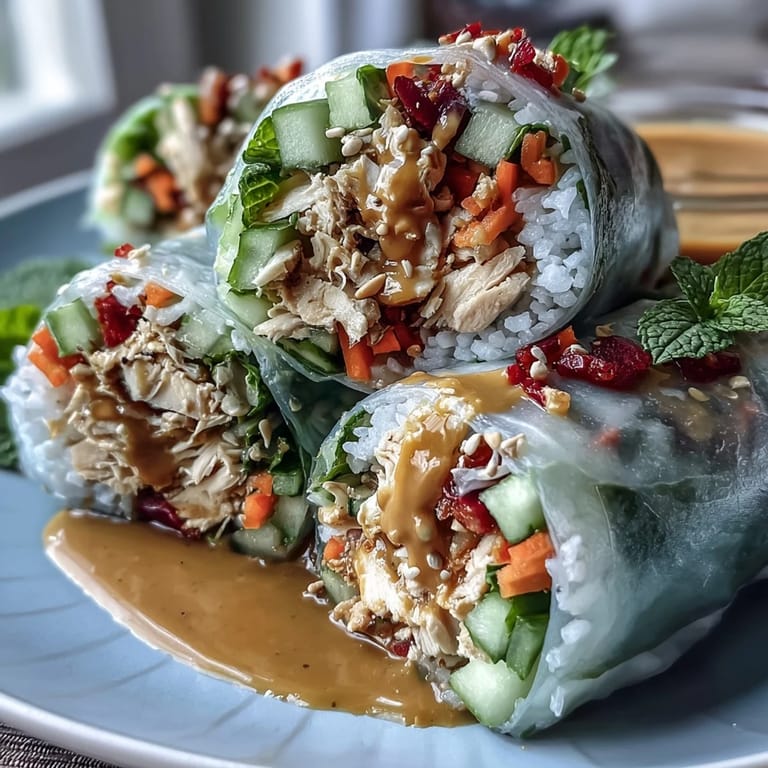
- Whisk together peanut butter, soy sauce, lime juice, honey, sesame oil, garlic, and ginger in a small bowl until smooth, then add warm water a splash at a time until you reach a dipping consistency—thick enough to cling but loose enough to flow. Taste as you go; lime juice and soy sauce are your seasoning levers.
- Serve with confidence:
- Serve the rolls whole or slice them in half on a bias for a prettier presentation, with the sauce alongside for dipping. Do this right when you finish rolling, because the wrappers will start to firm up as they sit.
 Save
Save What made this recipe stick with me wasn't just the eating, but the moment my mom tried one and said, "This tastes like you learned how to cook while I wasn't looking." It's the kind of dish that bridges the gap between healthy and indulgent, light and satisfying, simple and elegant—and somehow tastes like you spent all day preparing it when you really didn't.
The Secret to Crispy, Not Soggy Rolls
The biggest mistake I made the first time was thinking that if a little water was good, more water was better—I ended up with wrappers so soft they fell apart. I learned to pat my vegetables completely dry before filling, and to handle the wrapper with the confidence of someone who knows it's more resilient than it looks. The damp kitchen towel isn't just a stage for assembly; it's the insurance policy that keeps everything from getting soggy.
Why Fresh Herbs Matter More Than You'd Think
A week ago I made these with dried herbs because I was in a hurry and out of cilantro, and they tasted like I'd wrapped up lettuce and vegetables with nothing else. Fresh mint and cilantro aren't garnishes here—they're the flavor that makes people remember what they're eating instead of just eating because they're hungry. The herbaceous, bright notes are what separate a spring roll you forget about from one you think about the next day.
Building Your Peanut Sauce to Taste
The sauce is where you get to play around and make this recipe yours—I've had it spicy with extra Sriracha, extra creamy with a splash more water, and so gingery-forward that it almost made my eyes water. Start with the recipe as written, then adjust with your hand on the wheel; lime juice and soy sauce are your controls for bright and savory, while honey and sesame oil smooth out the edges. The warmth of the water actually helps the peanut butter dissolve into something silky rather than thick and pasty.
- Whisk the sauce right before serving so it stays loose and glossy rather than separating.
- If you make it ahead, store it separately from the rolls and stir in a touch more warm water right before dipping.
- A tiny pinch of cayenne or fresh ginger can transform the sauce depending on what mood you're in.
 Save
Save These spring rolls are the kind of thing that remind you why cooking for yourself or for others matters. They're simple enough to come together on a Tuesday night, but they taste like you care about what people are eating.
Recipe FAQs
- → What is the best way to soften rice paper wrappers?
Submerge each wrapper briefly in warm water for 10–15 seconds until it becomes just soft and pliable, then lay flat on a damp towel for rolling.
- → Can I make these spring rolls vegetarian?
Yes, omit the chicken or substitute it with tofu for a vegetarian version that still offers great texture and flavor.
- → How can I adjust the peanut sauce consistency?
Whisk in warm water gradually until the peanut sauce reaches your desired thickness, making it easier for dipping or drizzling.
- → What herbs complement the flavors in these rolls?
Fresh mint and cilantro add bright, aromatic notes that enhance the overall freshness and complexity of the rolls.
- → How should spring rolls be served for best texture?
Serve them immediately after assembling to keep the wrappers tender and avoid hardening from refrigeration.
- → Are these spring rolls suitable for gluten-free diets?
Yes, rice paper wrappers are typically gluten-free, and using tamari instead of soy sauce ensures a gluten-free peanut dipping sauce.