 Save
Save I discovered Malaysian laksa on a humid afternoon in a small Penang street stall, watching steam rise from bowls of this vibrant, golden-red soup. The vendor moved with such ease, ladling the aromatic broth over rice noodles while the fragrance of lemongrass and coconut wrapped around everything. Years later, I still chase that same feeling when I make it at home—that perfect balance of creamy, spicy, and impossibly fresh all at once.
The first time I made this for friends, I was nervous the broth wouldn't taste right, but the moment that coconut milk hit the laksa paste, the kitchen filled with such an intoxicating aroma that everyone gathered around the stove. By the time we sat down to eat, the conversation naturally quieted—that's when you know you've made something worth making.
Ingredients
- Vegetable oil: Use a neutral oil that won't compete with the bold spices; it's your canvas for blooming the aromatics.
- Onion, garlic, ginger, and lemongrass: These four create the foundation—mince them fine so they dissolve into the broth rather than float around.
- Laksa paste: This is your secret weapon; a good paste carries the soul of the dish, so don't skimp on quality.
- Coconut milk: Full-fat is essential—it's what makes this creamy rather than watery, and it softens the heat beautifully.
- Vegetable broth: A light, clean broth lets the laksa shine; avoid anything heavily seasoned.
- Soy sauce and sugar: These balance the richness and spice, so taste as you go.
- Rice noodles: Thick ones hold up better in the hot broth; soaking them beforehand prevents them from becoming mushy.
- Firm tofu: Press it gently and pan-fry until the edges turn golden—that crispy exterior against the creamy broth is the real magic.
- Fresh vegetables: Carrots, bell pepper, and snow peas add color and crunch; add them at the end so they don't turn into mush.
- Cilantro and lime: These finish the bowl with brightness that cuts through the richness.
Tired of Takeout? 🥡
Get 10 meals you can make faster than delivery arrives. Seriously.
One email. No spam. Unsubscribe anytime.
Instructions
- Bloom the aromatics:
- Heat oil in your pot and add the onion, garlic, ginger, and lemongrass together, stirring often until the kitchen smells like a Southeast Asian market and the onions turn translucent. This takes about 3 to 4 minutes, and you'll know it's ready when the raw edge is gone from the aromatics.
- Awaken the laksa paste:
- Stir in the laksa paste and let it cook for 2 minutes, moving it around constantly so it releases its oils and deepens in color. The aroma will shift from fresh to warm and complex—that's your signal it's ready.
- Build the broth:
- Pour in the coconut milk first, stirring to break up any lumps, then add the vegetable broth slowly while whisking to combine everything smoothly. Bring the whole pot to a gentle simmer, which should take about 3 to 4 minutes.
- Season and meld:
- Add soy sauce, sugar, and salt, then let the broth sit at a bare simmer uncovered for 10 minutes. This resting time is when the flavors actually marry rather than just sitting next to each other.
- Prepare the noodles:
- While the broth mellows, soak or cook your rice noodles according to package instructions, then drain and divide them among your serving bowls. Cold noodles keep their texture better than cooking them ahead and letting them sit.
- Crisp the tofu:
- Heat a nonstick skillet over medium-high heat and pan-fry the tofu cubes until all sides are golden and slightly crunchy. This takes about 5 to 6 minutes total, and the texture contrast is worth the extra step.
- Finish with vegetables:
- About 4 minutes before serving, add the carrots, bell pepper, and snow peas to the simmering broth. They should be just tender but still with a whisper of resistance when you bite them.
- Assemble and serve:
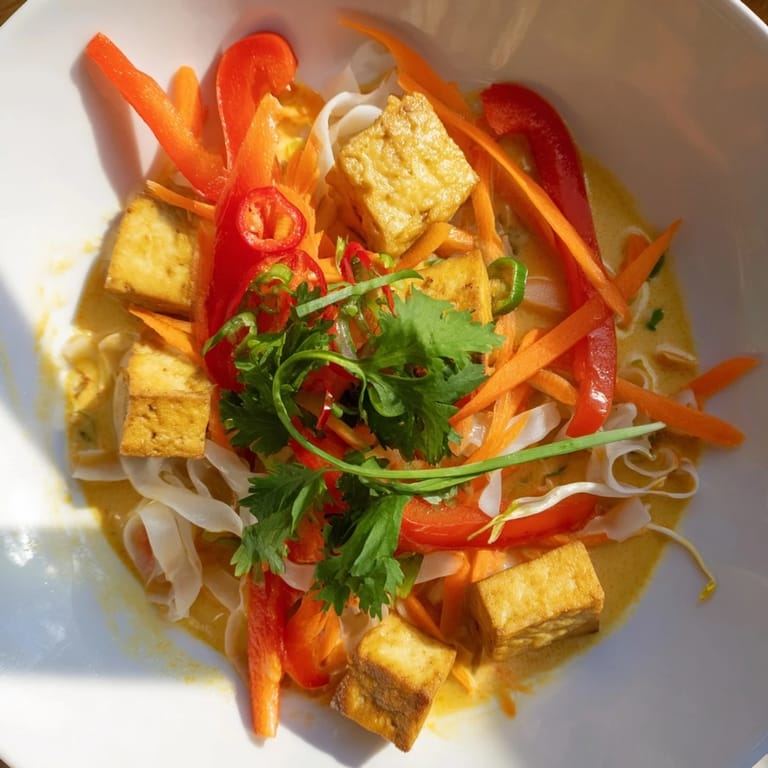
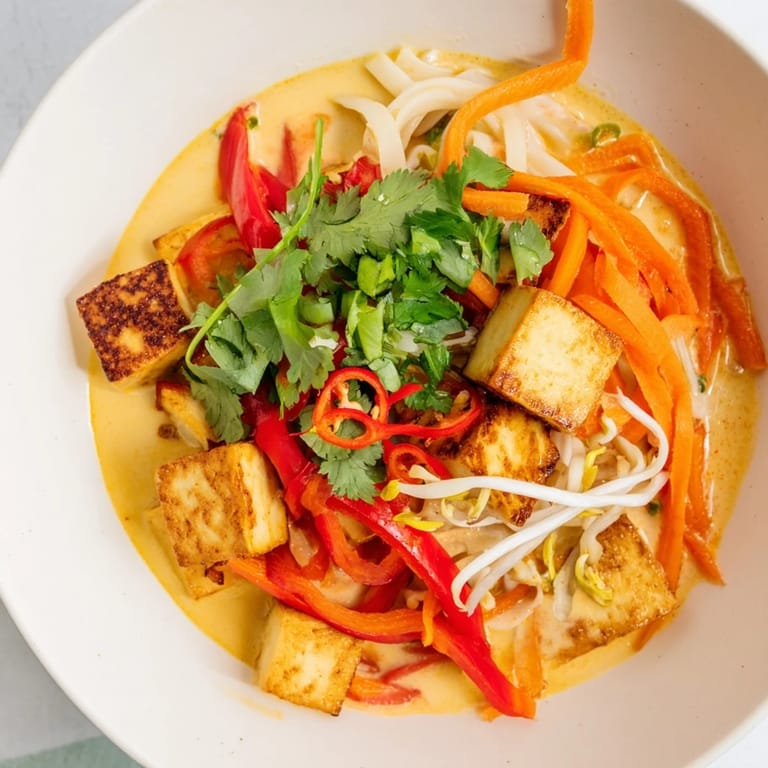
- Ladle the hot broth and vegetables over the noodles in each bowl, top with fried tofu, bean sprouts, spring onions, cilantro, and a few chili slices if you like heat. Serve with lime wedges and squeeze one over the top just before you eat—that's not optional.
 Save
Save There's a moment when you bowl up laksa and someone takes that first spoonful—their eyes widen, and they pause. That's the instant when food becomes more than sustenance; it becomes a small window into another place, another tradition. That's what keeps me making this.
Tofu: The Quiet Star
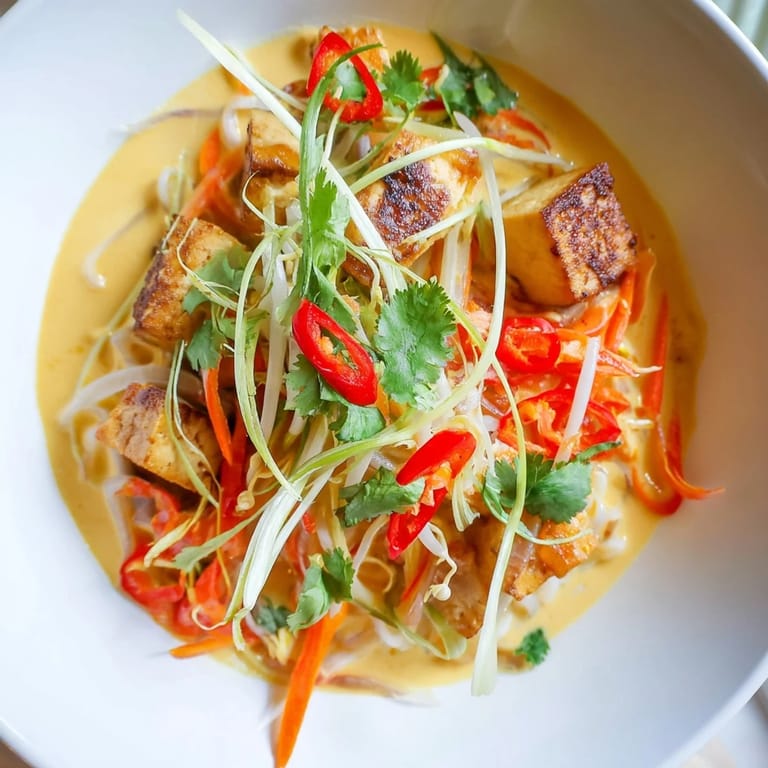
Tofu often gets a bad reputation in Western cooking, but in laksa it's the perfect vehicle for carrying the creamy, spiced broth. The key is treating it gently and with intention—press it without being brutal, cut it into pieces large enough to hold their shape, and pan-fry it long enough that it develops a light golden skin. When you scoop a piece of tofu into your spoon alongside noodles and broth, it should feel substantial and satisfying, not like an afterthought.
Building Layers of Flavor
Laksa's richness comes from layers rather than from long cooking times. The laksa paste brings depth, the coconut milk brings body and sweetness, the soy sauce and sugar bring balance, and the fresh vegetables and lime bring life back to each spoonful. None of these layers work alone, but together they create something that tastes like it took hours to develop. The real trick is letting the broth rest for those final 10 minutes so the flavors actually integrate instead of just floating alongside each other.
Serving and Customization
Laksa is forgiving in the best way—you can swap vegetables based on what's in season or your refrigerator without breaking the spell. Mushrooms, baby corn, and bok choy all work beautifully; asparagus and zucchini less so because they fall apart. The real beauty is that you build the bowl at the table, so everyone gets to customize the heat level, the lime, the cilantro to their taste. That's the magic of eating from a shared pot.
- For non-vegetarians, slip a soft-boiled egg into the bowl just before serving—the runny yolk mingles with the broth in the most delicious way.
- Make a batch of laksa paste at home if you want even more control, though store-bought versions are genuinely excellent.
- Pair this with a crisp white like Riesling that cuts through the richness, or simply serve with iced water and let the lime do the work.
 Save
Save Every time I make this, I'm reminded that the best meals are the ones that connect us to places we've been or people we love. This laksa does both.
Recipe FAQs
- → What type of noodles work best for this dish?
Rice noodles, either thick or vermicelli, soaked or cooked according to package instructions, work well to absorb the rich broth.
- → Can I make this dish vegan?
Yes, by ensuring the laksa paste contains no shrimp paste or fish sauce, it becomes suitable for vegan diets.
- → What vegetables complement the laksa curry broth?
Carrots, red bell peppers, snow peas, bean sprouts, and spring onions add great texture and brightness to the broth.
- → How do you achieve the creamy texture in the broth?
The creaminess comes from coconut milk, which blends with the aromatic spices and broth to create a rich, silky base.
- → What garnishes enhance the final dish?
Fresh cilantro, lime wedges, and optional red chili slices add freshness, acidity, and heat to finish the bowl perfectly.