 Save
Save There's something about the way miso paste transforms in heat that caught me off guard the first time I really paid attention to it. I was standing in my kitchen on a quiet Tuesday evening, whisking together that savory-sweet glaze, when the aroma hit me all at once—umami-rich and almost floral. That night, I realized this bowl wasn't just another weeknight dinner; it was the kind of meal that made me slow down and actually taste what I was eating.
I made this for my mom when she was visiting last spring, and I'll never forget how she closed her eyes after that first bite. She said it tasted like someone had bottled up umami and poured it over salmon, which made me laugh because that's exactly what we'd done. It became our ritual that week—every evening, the smell of jasmine rice and miso glaze filled the house, and suddenly we had an excuse to sit together longer than usual.
Ingredients
- Salmon fillets (4 pieces, about 150 g each, skinless): Look for salmon that smells fresh and oceanic, never fishy or ammonia-like; if you can only find skin-on, that's fine—just pat it dry and it'll crisp up beautifully under the broiler.
- White miso paste (3 tbsp): This is the soul of the glaze, and it's worth buying from an Asian market where it's fresher; white miso is milder and slightly sweeter than darker varieties, which is exactly what we want here.
- Mirin (2 tbsp): This sweet rice wine adds a subtle gloss and depth that regular sugar can't quite match, so don't skip it or substitute unless you really have to.
- Soy sauce (2 tbsp): Use tamari if you're going gluten-free, and taste as you go because some brands run saltier than others.
- Honey (1 tbsp): This rounds out the glaze with a gentle sweetness that balances the salt and umami of the miso.
- Rice vinegar (1 tbsp): The acidity cuts through the richness and brings everything into focus, much like a squeeze of lemon juice would.
- Toasted sesame oil (1 tsp): A little goes a long way here; this stuff is liquid gold and adds a nutty undertone that transforms the entire marinade.
- Fresh ginger (1 tsp grated) and garlic (1 clove minced): These form the aromatic backbone and help wake up your palate as you eat.
- Jasmine rice (1 1/2 cups): Its fragrant, delicate nature pairs perfectly with the bold glaze; rinsing it removes excess starch and keeps each grain distinct.
- Water (3 cups): Always use fresh, cold water for rice to ensure even cooking.
- Fresh spinach (300 g): Buy it loose if possible so you can choose leaves that look vibrant and crisp; baby spinach works too and wilts even faster.
- Vegetable oil (1 tbsp): A neutral oil like canola or grapeseed keeps the focus on the spinach and ginger.
- Green onions, toasted sesame seeds, nori, and lime: These garnishes aren't just pretty; they add layers of texture and brightness that make each bite feel intentional.
Tired of Takeout? 🥡
Get 10 meals you can make faster than delivery arrives. Seriously.
One email. No spam. Unsubscribe anytime.
Instructions
- Build Your Miso Magic:
- Whisk together the miso paste, mirin, soy sauce, honey, rice vinegar, sesame oil, ginger, and garlic in a small bowl until the mixture is smooth and glossy. I like to really work the miso into the liquid until there are no lumps, which usually takes about a minute of focused whisking.
- Marry the Salmon with the Glaze:
- Lay your salmon fillets in a shallow dish or zip-top bag and pour that gorgeous marinade over them, making sure each fillet gets coated on both sides. Pop it into the fridge for 15 to 30 minutes while you get everything else ready—this short soak lets the flavors start their work without overmarinating the delicate fish.
- Coax the Rice to Perfection:
- Rinse your jasmine rice under cold running water until the water runs mostly clear, which washes away excess starch and prevents gumminess. Combine the rinsed rice, 3 cups of water, and a pinch of salt in a saucepan, bring it to a boil, then immediately drop the heat to low, cover with a lid, and let it simmer undisturbed for 12 to 15 minutes.
- Wake Up the Spinach:
- Heat your oil in a large skillet over medium heat and add the ginger and garlic, letting them sizzle for about 30 seconds until the kitchen smells incredible. Toss in all that spinach with a pinch of salt and keep it moving for just 1 to 2 minutes—you want it tender but still bright green, not dark and collapsed.
- Caramelize That Salmon:
- Preheat your broiler or oven to 220°C (425°F), line a baking sheet with foil, and give it a light oil. Arrange your marinated salmon on the sheet and slide it under the broiler for 8 to 10 minutes, watching as the glaze deepens and the edges just start to caramelize—this is when you'll know it's done.
- Compose Your Bowl Like You Mean It:
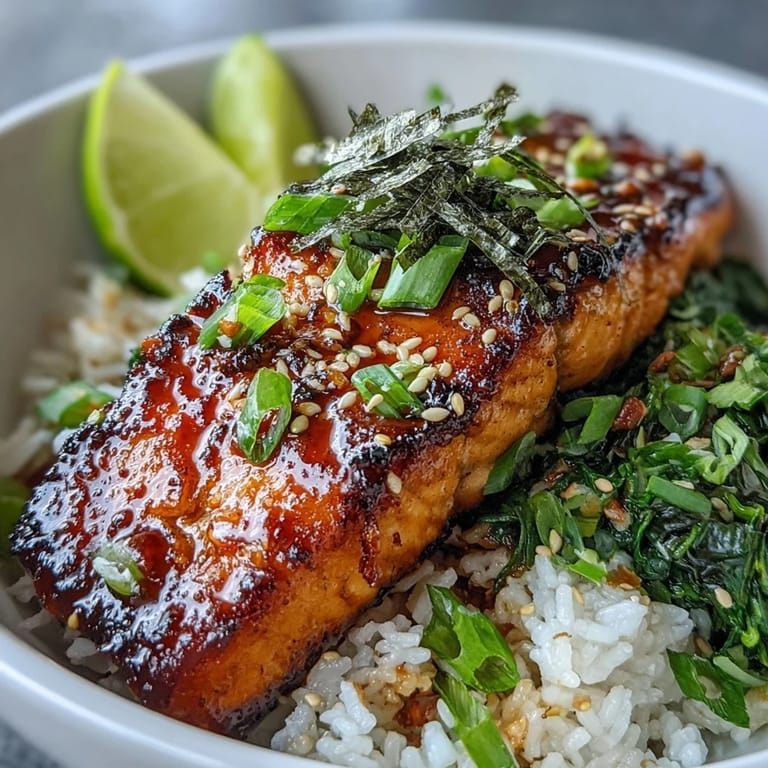
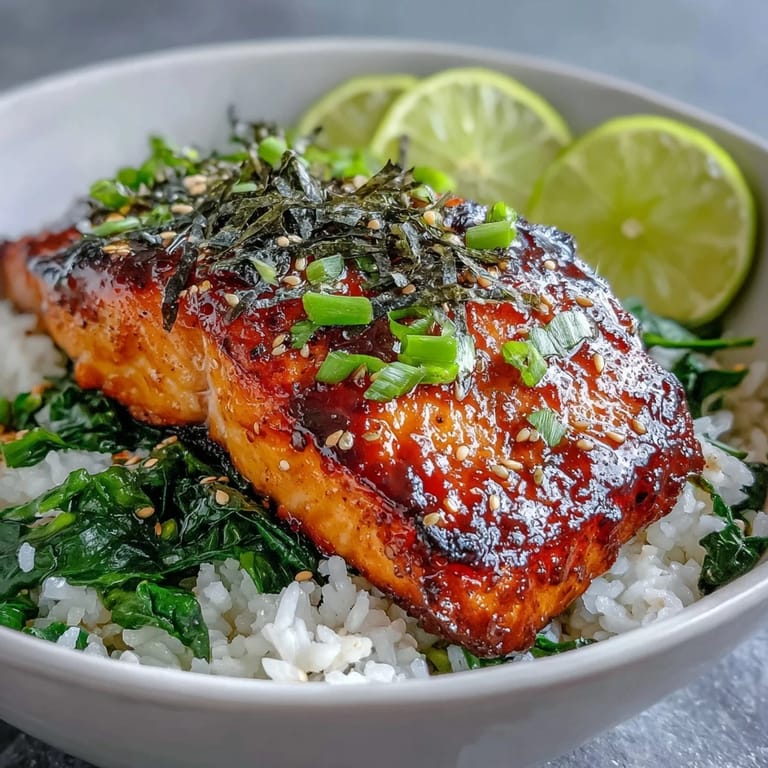
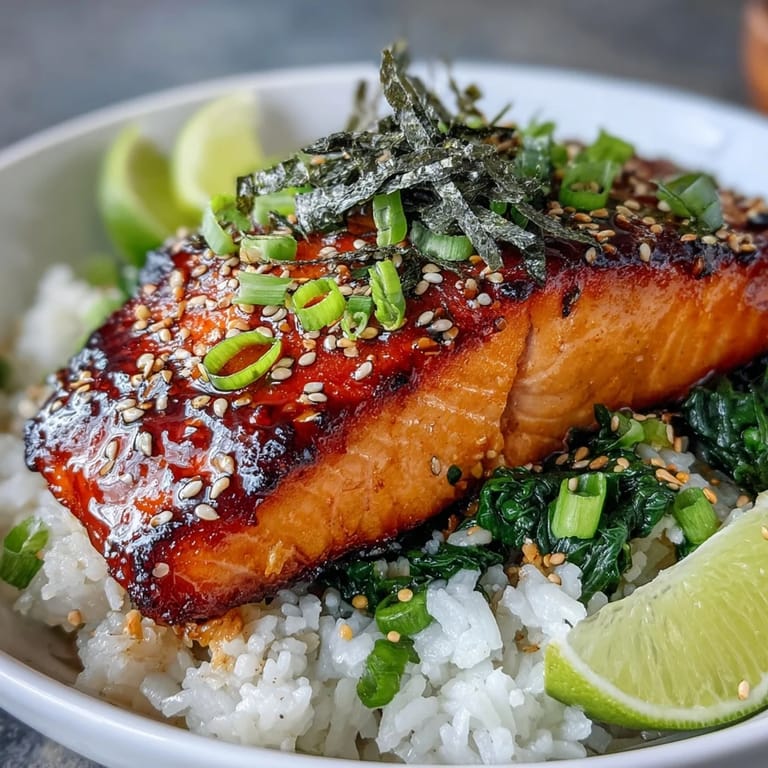
- Divide the fluffy rice among four bowls, nestle a portion of wilted spinach on top of each, and crown it all with one golden, glazed salmon fillet. Scatter green onions and sesame seeds over everything, add some nori strips if you're feeling fancy, and offer lime wedges on the side for anyone who wants to brighten things up.
 Save
Save One evening, a friend who usually orders takeout tried this bowl and asked if I'd made the salmon at home myself. When I said yes, they looked genuinely surprised—turns out this dish has that special quality of making people feel cared for, even when it's just weeknight cooking. That moment shifted something for me about why I cook at all.
The Story Behind Miso Salmon
Japanese home cooks have been glazing fish with miso for centuries, recognizing that the umami depth of fermented soybeans creates a flavor that's both ancient and somehow contemporary. When I discovered this technique, it felt like finding a shortcut that actually made food taste better, not cheaper or faster—just genuinely improved. The balance of sweet mirin, salty soy, and that fermented earthiness is what transforms plain salmon into something memorable.
Building Flavor Through Texture
What makes this bowl work isn't just flavor but the conversation between different textures: the fluffy give of rice, the silky flake of salmon, the tender delicacy of spinach, and the crunch of sesame seeds and nori. I started paying attention to this after reading that Japanese cuisine values textural contrast as much as taste, and suddenly every element of this bowl made sense. The lime wedges aren't just pretty; they're there to brighten everything and bring it into sharper focus.
Timing and Temperature Mastery
The beauty of this recipe is that everything finishes at almost the same moment if you're intentional about it—rice in 15 minutes, spinach in 2, salmon in 8 to 10. The key is starting your rice first while you whip up the marinade, then getting the salmon into the oven just as the rice needs its final minutes to rest. Once you've cooked this a couple of times, you'll develop a rhythm that feels almost meditative, and suddenly you're not following steps—you're conducting a small kitchen symphony.
- Start your rice while the salmon marinates so everything comes together without rush or stress.
- Taste your spinach right as it wilts to catch that perfect moment between tender and vibrant.
- Let your rice rest covered for 5 minutes after cooking; this final step makes grains fluffy and distinct instead of dense.
 Save
Save This bowl tastes like care, efficiency, and the kind of cooking that reminds you why eating well matters. Make it once, and you'll make it again—probably on a night when you need something that feels both simple and special.
Recipe FAQs
- → Can I prepare the salmon marinade ahead of time?
Yes, the miso marinade can be mixed up to 3 days in advance and stored in an airtight container in the refrigerator. You can also marinate the salmon overnight for deeper flavor penetration, though 15-30 minutes is sufficient for a well-glazed result.
- → What's the best way to tell when the salmon is perfectly cooked?
The salmon is done when it flakes easily with a fork and the internal temperature reaches 145°F (63°C). The glaze should appear slightly caramelized and bubbly. Avoid overcooking, as the salmon will continue to cook slightly after leaving the oven due to residual heat.
- → Can I use other types of fish for this bowl?
While salmon works beautifully with miso glaze, you can substitute with other fatty fish like black cod, Chilean sea bass, or mackerel. Leaner fish such as cod or halibut also work but may require a shorter cooking time and careful attention to prevent drying out.
- → Is there a way to make this bowl gluten-free?
Absolutely. Simply replace regular soy sauce with gluten-free tamari and verify that your miso paste is labeled gluten-free, as some traditional varieties contain barley or wheat. The remaining ingredients are naturally gluten-free, making this an easy adaptation.
- → What vegetables can I add or substitute for the spinach?
Bok choy, Swiss chard, or kale make excellent substitutes for spinach with similar cooking times. For added variety, consider steamed broccoli, roasted sweet potato cubes, or sautéed shiitake mushrooms. These additions complement the miso flavors while adding extra nutrients and color to your bowl.