 Save
Save I bought scallops on a whim one Tuesday, thinking they'd be fussy. Instead, they took less time than boiling pasta and tasted like something from a restaurant I couldn't afford. The kitchen smelled like browned butter and the ocean, and I stood there with my fork, stunned that something so simple could feel this special. I've made them dozens of times since, and they still surprise me.
The first time I made these for friends, I panicked halfway through because I thought I'd ruined them. The scallops looked too dark, the butter smelled too garlicky, and I was convinced I'd served burnt seafood. Then everyone went silent and started scraping their plates with bread. One friend asked if I'd been hiding this recipe, and I realized sometimes you just have to trust the heat and let things get golden.
Ingredients
- Large sea scallops: Look for dry scallops, not the wet kind that release water and steam instead of sear. Pat them aggressively with paper towels, even if they seem dry already.
- Unsalted butter: You need it twice, once for searing and once for the sauce. Salted butter can make the whole thing taste like the ocean in a bad way.
- Olive oil: Keeps the butter from burning when the pan gets screaming hot. Don't skip it or your butter will turn bitter.
- Kosher salt and black pepper: Season right before they hit the pan. If you salt too early, moisture seeps out and ruins the crust.
- Garlic: Mince it fine so it melts into the butter instead of sitting in chunks. Three cloves is plenty, more and it fights with the scallops.
- Fresh parsley: The flat-leaf kind tastes better here. Dried parsley is sad and dusty, don't bother.
- Lemon zest and juice: Zest first, then juice. The zest adds perfume, the juice cuts through the butter and wakes everything up.
Tired of Takeout? 🥡
Get 10 meals you can make faster than delivery arrives. Seriously.
One email. No spam. Unsubscribe anytime.
Instructions
- Dry the scallops:
- Press them between paper towels like you're trying to squeeze out every drop of water. Any moisture left behind will steam them instead of searing them, and you'll end up with pale, rubbery discs. Season both sides with salt and pepper right before they go in the pan.
- Heat the pan:
- Use medium-high heat and wait until the butter and oil shimmer like a mirage. If the pan isn't hot enough, the scallops will stick and weep instead of crisping up.
- Sear the scallops:
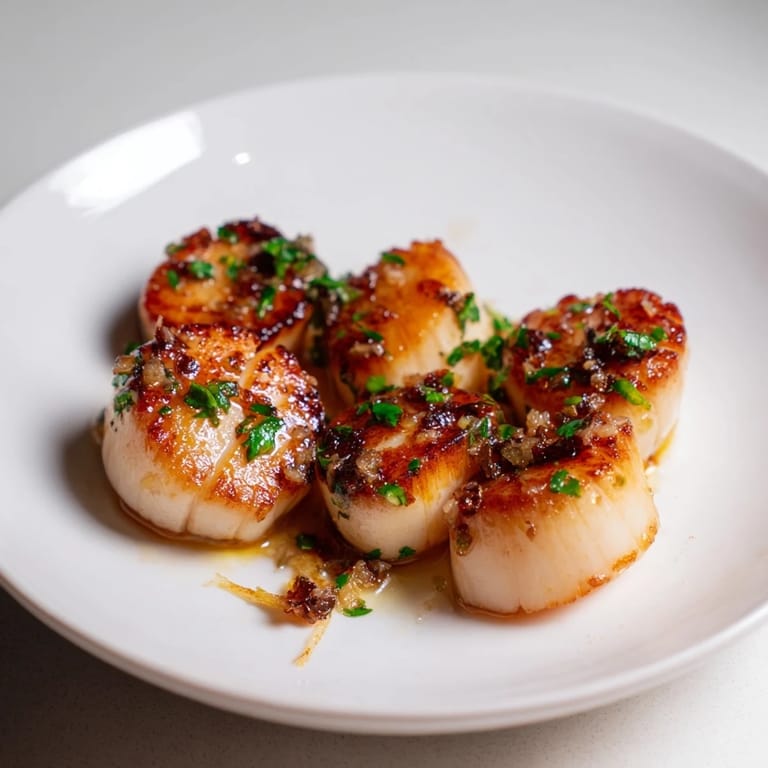
- Lay them in the pan with space between each one, like they're strangers on a bus. Don't touch them for 2 to 3 minutes, even if you're nervous. When you flip them, they should release easily and show a deep caramel crust.
- Finish the second side:
- They only need 1 to 2 minutes on this side. The center should be just opaque, still tender and slightly translucent in the very middle.
- Make the garlic butter:
- Lower the heat, add the second batch of butter, and let it melt. Toss in the garlic and stir for 30 seconds until it smells like heaven but hasn't turned brown.
- Add the brightness:
- Stir in parsley, lemon zest, and lemon juice. The sauce will foam and smell like summer and butter and something you want to drink with a spoon.
- Coat and serve:
- Return the scallops to the pan and swirl them around for a minute to coat. Serve immediately while they're still hot and the butter is glossy.
 Save
Save I served these once with a bowl of buttery orzo and a cheap bottle of Sauvignon Blanc, and my neighbor said it was the best thing she'd eaten all year. I didn't tell her it took less than 20 minutes. Some things are better left mysterious.
What to Serve Them With
I like them over risotto or creamy polenta, anything that'll soak up the garlic butter and turn into a sauce. Crusty bread works too, the kind you can tear with your hands and use to mop up every last drop. If you want vegetables, roasted asparagus or sautéed spinach won't compete with the scallops but will make the plate look less lonely.
How to Pick Good Scallops
Look for scallops that smell like clean seawater, not fishy or sour. They should be firm and slightly sticky, not slimy or sitting in a puddle of liquid. If the label says treated with sodium tripolyphosphate, put them back, those are wet scallops and they won't sear right. Dry scallops cost more but they're worth every penny when you see that crust form.
Little Tricks That Matter
I learned the hard way that crowding the pan makes them steam instead of sear, so I cook them in batches if I'm feeding more than four people. The pan has to stay hot between batches, so I wipe it out and add fresh butter and oil each time. If I'm feeling fancy, I'll add a splash of white wine to the garlic butter and let it reduce for a few seconds before adding the lemon juice.
- Let the scallops sit at room temperature for 10 minutes before cooking so they sear evenly.
- Use a stainless steel or cast iron pan, nonstick won't get hot enough for a real crust.
- Save any leftover garlic butter and toss it with pasta the next day.
 Save
Save These scallops taught me that fancy food doesn't have to be complicated, it just has to be made with attention and good ingredients. I hope they make you feel like a chef in your own kitchen, even if it's just a Tuesday.
Recipe FAQs
- → How do I achieve a perfect sear on scallops?
Pat scallops completely dry and ensure your skillet is hot before adding them. Sear without moving for 2-3 minutes to develop a golden crust.
- → What is the best butter to use for the garlic sauce?
Unsalted butter works best to control seasoning and create a rich, creamy garlic sauce without overpowering the scallops.
- → Can I prepare the garlic butter sauce ahead of time?
It's best to prepare the garlic butter sauce fresh to maintain the bright flavors of garlic, parsley, and lemon zest.
- → What can I serve with scallops for a complete meal?
Serve with risotto, pasta, or crusty bread to soak up the flavorful butter sauce for a satisfying meal.
- → How do I store leftovers safely?
Store scallops and sauce separately in airtight containers in the refrigerator and consume within 1-2 days.