 Save
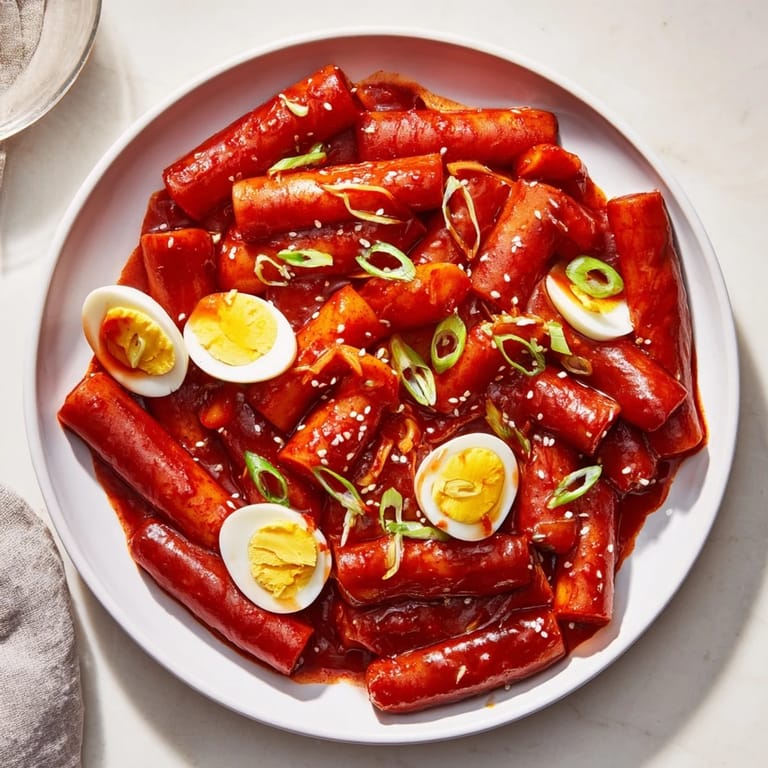
Save The first time I tasted tteokbokki, I was standing in a Seoul night market, steam rising from a vendor's cart while she stirred a pot of glowing red sauce with practiced speed. There was something magnetic about those chewy rice cakes bobbing in the gochujang sauce, and I watched her crack an egg into the pot without even looking. Years later, I finally recreated that moment in my own kitchen—and realized it wasn't just the flavors I was chasing, but that feeling of warmth and comfort in a bowl.
I made this for my roommate on a cold Wednesday night when she came home looking completely defeated by her day. Watching her face light up at the first spoonful—that moment when the heat and sweetness hit all at once—reminded me why comfort food exists. She asked for seconds, then thirds, and we ended up sitting on the kitchen floor eating straight from the pot like we were back in that Seoul market together.
Ingredients
- Korean cylindrical rice cakes (tteok), 500 g: These aren't like regular rice, so don't substitute—they have a distinct chewiness that's essential to the dish.
- Gochujang (Korean chili paste), 3 tablespoons: This is the soul of the sauce; buy it from a Korean market for the real deal, as quality varies wildly.
- Gochugaru (Korean chili flakes), 2 tablespoons: This adds heat and a subtle depth that straight chili powder can't replicate.
- Soy sauce, 2 tablespoons: Use good quality soy sauce—it makes a surprising difference in the final balance.
- Sugar, 1 tablespoon: Trust this sweetness; it's not dessert, it's a counterpoint to the spice that makes people ask for your recipe.
- Honey or corn syrup, 1 tablespoon: This gives the sauce its glossy, slightly sticky finish that clings to every rice cake.
- Garlic, 2 cloves minced: Fresh garlic is non-negotiable; the paste mellows into the sauce beautifully.
- Toasted sesame oil, 1 teaspoon: A little goes a long way—this adds a warmth that rounds out all the spicy and savory notes.
- Water, 3 cups: This is your canvas for the sauce, so use clean, good tasting water.
- Dried kelp (kombu), 1 piece 10x10 cm: This infuses the broth with umami; remove it before serving so it doesn't get mushy.
- Dried anchovies, 8 with heads and guts removed: These add a depth of flavor that vegetable broth can never quite match—but they're entirely optional.
- Onion, 1 small sliced: The onion softens and sweetens as it simmers, becoming almost caramelized at the edges.
- Green onion, 1 sliced: Keep this for garnish; the fresh bite at the end cuts through the richness perfectly.
- Fish cake, 1 sheet sliced (optional): This is traditional but not necessary; it adds a slightly bouncy texture if you want it.
- Toasted sesame seeds, 1 tablespoon: These are your final flourish—they catch the light and add a subtle nuttiness.
- Large eggs, 4: Soft-boiled eggs add richness and a gorgeous contrast to the spicy sauce.
Tired of Takeout? 🥡
Get 10 meals you can make faster than delivery arrives. Seriously.
One email. No spam. Unsubscribe anytime.
Instructions
- Prepare the rice cakes:
- If your tteok feels stiff or cold from the fridge, soak it in warm water for 10 minutes to soften it—this makes them cook more evenly and become that perfect chewy texture. Cold rice cakes will resist and stay a bit grainy otherwise.
- Build your broth:
- Add water, kombu, and anchovies to your saucepan and bring everything to a gentle boil. Let it simmer for 10 minutes so the kelp and anchovies can whisper their umami into the water, then fish them out with a slotted spoon and discard them.
- Boil the eggs:
- While the broth is infusing, drop your eggs into boiling water for 8 to 9 minutes—this gives you that perfect jammy yolk. Drop them into cold water immediately to stop the cooking, then peel them gently under running water to avoid tearing the soft whites.
- Make the sauce:
- Stir the gochujang, gochugaru, soy sauce, sugar, honey, minced garlic, and sesame oil into your warm broth. The mixture will look thick and separated at first, but keep stirring and it will come together into a silky, deep red sauce.
- Cook the rice cakes:
- Add your drained tteok, sliced onion, and fish cake if you're using it, then bring everything to a medium simmer. Stir occasionally so nothing sticks to the bottom, and let it go for 10 to 12 minutes until the sauce thickens and the rice cakes are soft enough to bite through with no resistance.
- Finish with eggs:
- Gently nestle the peeled eggs into the pot and let them warm through for 2 to 3 minutes, allowing them to absorb some of that incredible sauce. Be gentle so you don't crack them.
- Serve with flair:
- Transfer everything to a bowl, scatter green onions and sesame seeds over the top, and serve immediately while the sauce is still glossy and warm.
 Save
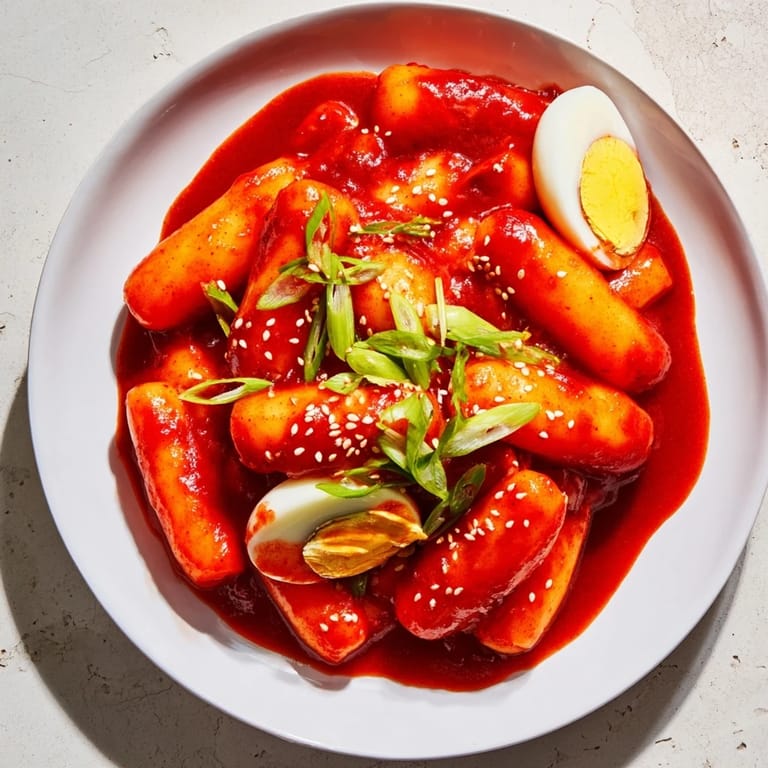
Save I realized halfway through making this one evening that I'd forgotten to soak the rice cakes, and I was about to run out the door. Out of desperation, I microwaved them in water for three minutes and it worked like a charm—sometimes the shortcuts teach you the most. Now I actually prefer that method because it's faster and the rice cakes somehow absorb the sauce even better.
Adjusting the Heat Level
Not everyone loves spice the way I do, and that's where this dish gets flexible. I've learned that starting with less gochujang and gochugaru, then tasting as you go, is smarter than diving in at full strength—you can always add more heat, but you can't take it back. The sweetness from the sugar and honey also plays a big role in how the spice feels on your palate, so don't skip those elements thinking they're not serious ingredients.
Add-Ins That Change Everything
The best version of this dish I ever made had thin slices of cabbage and carrot that I threw in during the last few minutes of simmering. The vegetables softened just enough to soak up sauce but stayed crisp enough to add texture, and suddenly it felt like a more complete meal. I've also seen people add ramen noodles or even fresh mozzarella cheese, which sounds wild but somehow works—the creaminess cuts the heat in an unexpected way.
Why This Tastes Like Home
There's something about the combination of spicy, sweet, savory, and nutty that just hits all your comfort buttons at once. The eggs add a richness that makes you feel like you're getting something special, and the chewy rice cakes give you something to bite into that's almost meditative.
- Serve this in a shallow bowl so the sauce pools around everything and doesn't get lost.
- If you're cooking for someone who's never had tteokbokki before, warn them about the spice level so they're ready for it.
- Leftover sauce is gold—keep it in the fridge and use it as a base for ramen, stir-fries, or anything that needs a bold kick.
 Save
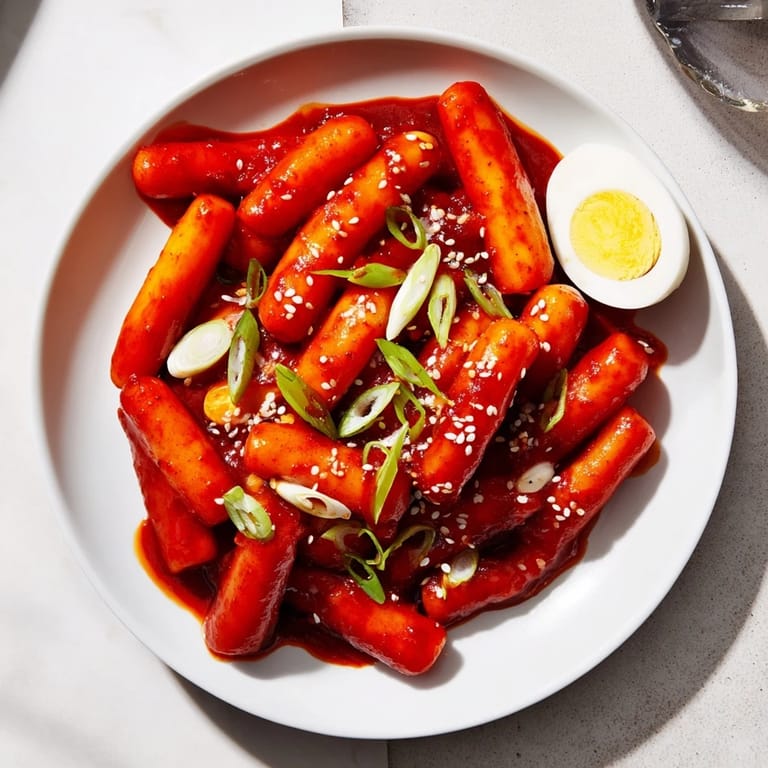
Save Tteokbokki is one of those dishes that tastes like it took hours but makes you look like a magician when it's done. Serve it hot, gather around with people you care about, and watch their faces when they taste the sauce for the first time.
Recipe FAQs
- → How do I soften the rice cakes before cooking?
Soak the rice cakes in warm water for about 10 minutes if they are hard or refrigerated. This ensures they become tender and chewy when cooked.
- → Can I make this dish vegetarian?
Yes, omit anchovies and fish cake, and substitute the broth with vegetable stock to keep it vegetarian-friendly.
- → What gives the dish its characteristic spiciness?
The spiciness comes from gochujang (Korean chili paste) and gochugaru (Korean chili flakes), balanced with a hint of sweetness from sugar and honey.
- → How long should I boil the eggs for best texture?
Boil the eggs for 8–9 minutes to achieve a firm yet tender yolk, then cool them in cold water before peeling.
- → What are some suggested garnishes?
Sliced green onions and toasted sesame seeds add a fresh, nutty finish to the dish.
- → Can I add other ingredients to this dish?
Yes, cabbage, carrots, or ramen noodles can be added for extra texture and variety.