 Save
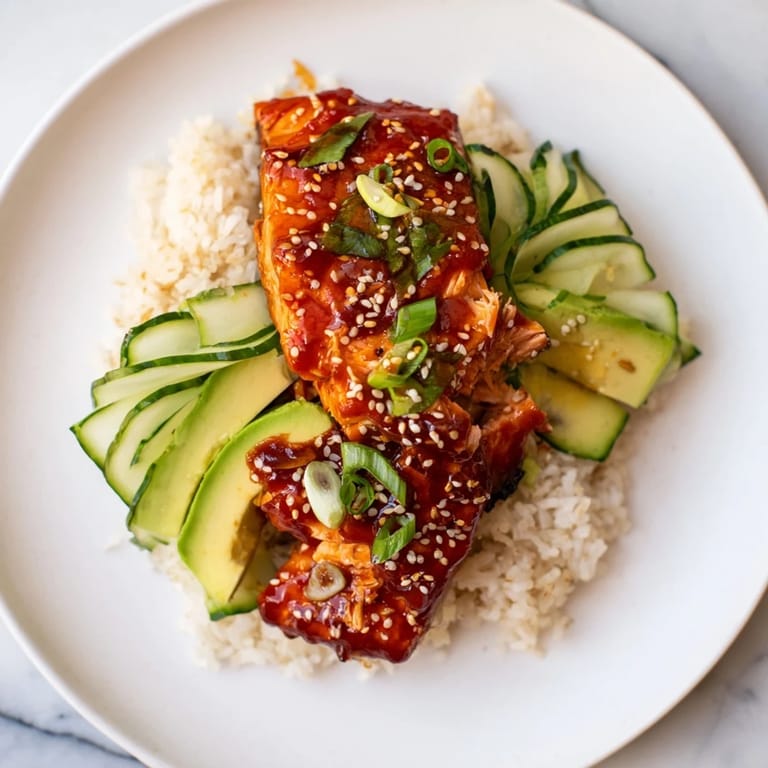
Save One afternoon, I was scrolling through a recipe video and noticed how effortlessly the cook glazed salmon with this glossy orange-gochujang mixture—the kind of move that made it look like pure magic. I had gochujang in my pantry and an orange sitting on the counter, so I thought, why not? Twenty minutes later, my kitchen smelled incredible, and I realized I'd stumbled onto something that would become a regular in my rotation. The balance of sweet, spicy, and citrus felt like a small revelation. Now, every time I make this bowl, I'm transported back to that moment of happy accident.
I made this for my roommate on a Thursday night when she came home exhausted, and watching her face light up at the first bite made me understand why people become obsessed with cooking for others. She kept asking what was in the glaze, skeptical that something so good came from my tiny kitchen. The orange-gochujang combination became our inside joke—proof that sometimes the simplest ideas, when executed with care, feel like a luxury.
Ingredients
- Salmon fillets (150 g each): Look for fillets with vibrant color and a firm texture; the skin-off versions save you prep time and feel less intimidating if you're new to cooking fish.
- Gochujang: This Korean chili paste is the backbone of the glaze—pungent and complex with just the right amount of heat, no substitutes needed.
- Fresh orange juice: Squeezed right before mixing brings brightness that bottled juice simply cannot deliver; it cuts through the richness beautifully.
- Soy sauce: The umami anchor that makes every flavor pop and feel intentional.
- Honey: A touch of sweetness that balances the heat and helps the glaze caramelize in the final moments of cooking.
- Rice vinegar: A small amount adds necessary acidity and prevents the glaze from becoming one-dimensional.
- Toasted sesame oil: Use the real stuff—it adds a nutty depth that transforms the entire bowl.
- Fresh ginger and garlic: These awaken your senses and anchor the glaze in reality rather than letting it drift into pure sweetness.
- Short-grain rice: Warm rice is essential; it soaks up every drop of glaze and creates the perfect base.
- Cucumber, avocado, nori, sesame seeds, and scallions: These toppings provide contrast in texture and freshness, making each bite interesting.
Tired of Takeout? 🥡
Get 10 meals you can make faster than delivery arrives. Seriously.
One email. No spam. Unsubscribe anytime.
Instructions
- Warm your oven and prep your stage:
- Set your oven to 200°C (400°F) and line a baking tray with parchment paper—this small step prevents sticking and makes cleanup effortless. Everything moves faster when you're ready.
- Season the salmon with intention:
- Pat the salmon dry with paper towels, then sprinkle salt and pepper on both sides with a gentle hand. This simple seasoning lets the fish shine without overpowering it.
- Build the glaze that changes everything:
- Whisk together gochujang, fresh orange juice, soy sauce, honey, rice vinegar, sesame oil, ginger, and garlic in a bowl until the mixture is completely smooth and glossy. Taste it with a small spoon—you should taste sweetness, heat, and brightness in equal measure.
- Begin the bake with half the glaze:
- Place salmon on the prepared tray and brush generously with half the glaze, reserving the rest for the final moment. Bake for 12–14 minutes, watching until the flesh turns opaque and flakes gently under a fork.
- Prepare while the oven does the work:
- While the salmon bakes, cook your rice if you haven't already, slice the cucumber paper-thin, halve and slice the avocado, and cut the nori into strips. This quiet moment of prep lets you stay present.
- Finish with the sticky glaze:
- Once the salmon is cooked through, brush with the remaining glaze and broil for 1–2 minutes until it becomes sticky and caramelized around the edges. This optional step transforms texture and deepens flavor in seconds.
- Assemble with care:
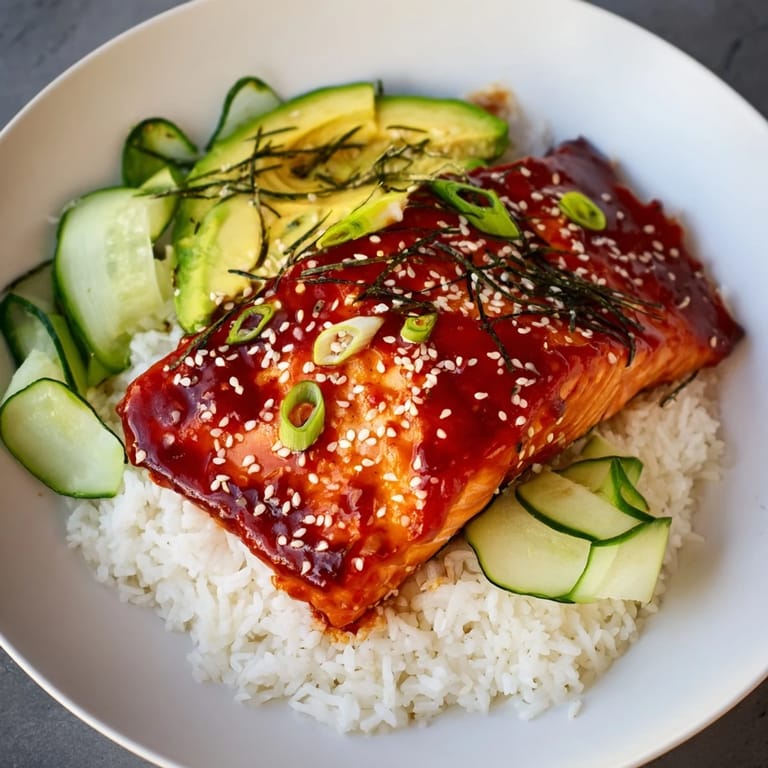
- Divide warm rice between two bowls, placing a salmon fillet at the center of each. Arrange cucumber, avocado, nori, sesame seeds, and scallions around the salmon in whatever way makes you happy.
- Serve immediately and enjoy:
- Eat this bowl while everything is still warm and the textures are crisp, allowing flavors to meld with each bite.
 Save
Save There's something deeply satisfying about bringing all these elements together into one bowl—the warm rice cradling a piece of perfectly cooked salmon, the cool crunch of fresh vegetables, the umami hit of nori. It reminds me that weeknight dinner doesn't have to be complicated to feel special.
The Secret Behind the Glaze
The magic happens when gochujang meets orange juice and honey. This combination creates a glaze that is neither purely sweet nor purely spicy, but something in between that somehow feels more interesting than either alone. I learned this through trial and error, once making the glaze too sweet (a mistake I won't repeat) and once too salty (learned that lesson too). Now I taste as I go, adjusting until that moment when all the flavors snap into focus.
Why This Bowl Becomes Addictive
Every element serves a purpose beyond just filling your plate. The warm rice absorbs the glaze, the cold avocado provides richness, the cucumber brings clean crispness, and the nori adds a subtle brininess that ties everything together. It's not a random assortment of toppings—it's a conversation between flavors and textures. Once you understand why each piece matters, you stop thinking of this as a recipe and start thinking of it as a formula you can riff on endlessly.
Ways to Make This Your Own
This bowl is flexible enough to bend to whatever you have on hand or whatever you're craving that day. Swap in pickled ginger for bright acidity, add shredded carrots for earthiness, toss in edamame for extra protein, or crumble tofu if you want a vegetarian version. The glaze works with all of these, adapting rather than demanding perfection.
- If you can't find gochujang, you can substitute with sriracha mixed with a tiny pinch of soy sauce, though the depth won't be quite the same.
- Make the glaze up to two days ahead and store it in the fridge—this means weeknight assembly becomes almost effortless.
- Leftover salmon reheats beautifully in a 150°C oven for five minutes, making this a great meal-prep option.
 Save
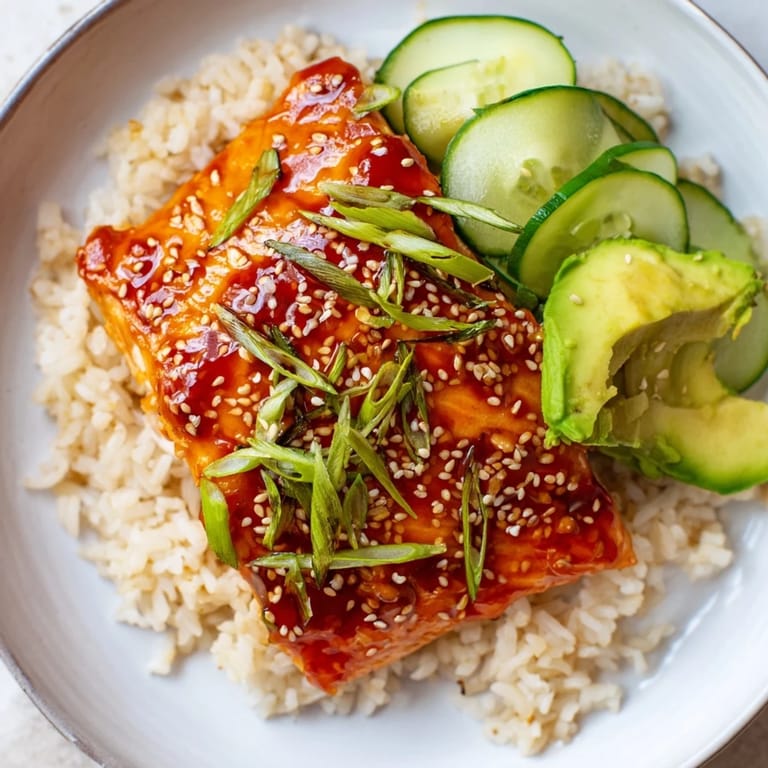
Save This bowl represents something I love about cooking—taking a few humble ingredients and creating something that tastes like it came from somewhere else entirely. Make this when you want dinner to feel like an occasion without the stress.
Recipe FAQs
- → What type of salmon is best for this dish?
Fresh, skinless salmon fillets approximately 150 grams each work best to achieve tender, flaky results.
- → How is the orange-gochujang glaze made?
The glaze blends gochujang, freshly squeezed orange juice, soy sauce, honey, rice vinegar, toasted sesame oil, grated ginger, and minced garlic until smooth.
- → Can I prepare the rice ahead of time?
Yes, cooking and warming short-grain rice in advance helps streamline assembly and maintains fluffy texture when served.
- → What toppings add freshness to the bowl?
Thinly sliced cucumber, ripe avocado, strips of roasted nori, toasted sesame seeds, and scallions provide refreshing crunch and layered flavors.
- → Are there any suitable substitutions for dietary preferences?
Tofu can replace salmon for a vegetarian alternative, and additional vegetables like pickled ginger or shredded carrots can enhance texture and color.