 Save
Save My neighbor came back from Bangkok with stories about street food, and somewhere in the telling, she described a bowl of ramen that tasted nothing like any ramen she'd had before. That conversation stuck with me longer than it should have. A week later, I stood in my kitchen with a jar of miso, a tin of Thai curry paste, and a hunch that maybe I could chase down that flavor myself. What came out of the pot that night wasn't traditional, but it was exactly what I wanted: warm, layered, and impossible to stop eating.
I made this for a friend who was convinced she didn't like anything spicy. She picked out the chili slices, took one careful spoonful, and then finished the entire bowl without looking up. By the time she set down her spoon, she asked if I could write down what I'd done. I didn't have it written down yet, but that night I started keeping notes.
Ingredients
- Vegetable oil: A neutral base that lets the aromatics bloom without competing flavors.
- Onion, finely chopped: Adds natural sweetness to balance the salty, spicy broth.
- Garlic cloves, minced: Essential for that first wave of fragrance when it hits the hot oil.
- Fresh ginger, grated: Brightens everything and cuts through the richness with a clean, sharp note.
- Thai red curry paste: This is where the fusion happens, bringing heat and complexity in one spoonful.
- Chicken broth (low sodium): Lets you control the saltiness, especially once the miso and soy go in.
- White miso paste: Adds umami and a creamy, fermented depth that ties the whole broth together.
- Soy sauce: A salty backbone that supports without overpowering.
- Fish sauce: Just a tablespoon, but it adds a savory undertone that's hard to name and harder to skip.
- Sugar: A small amount rounds out the sharp edges and balances the heat.
- Sesame oil: Finish with this for a nutty aroma that clings to every spoonful.
- Boneless, skinless chicken breasts: Lean, quick cooking, and they soak up the broth as they poach.
- Fresh ramen noodles: Springy and satisfying, they hold onto the broth better than dried, though dried works in a pinch.
- Bok choy, halved: Adds a crisp, mild green that softens just enough in the hot broth.
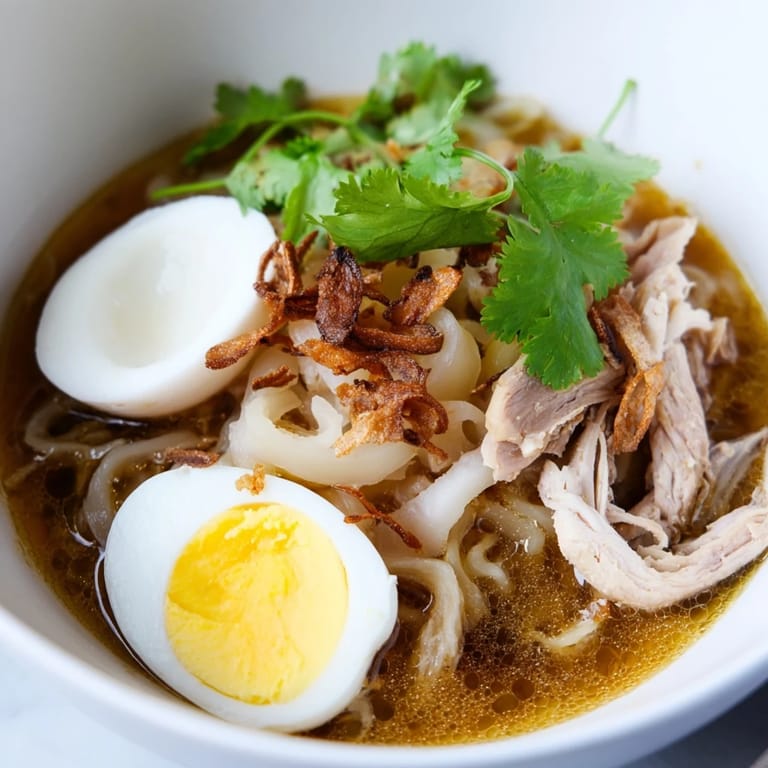
- Large eggs: Soft boiled with jammy yolks that stir into the soup and make everything richer.
- Crispy fried shallots: The crunchy, sweet contrast that makes each bite more interesting.
- Scallions, sliced thin: A fresh, sharp bite that wakes up the other flavors.
- Red chili, sliced: Optional, but it adds color and a little extra kick if you want it.
- Fresh cilantro leaves: Bright, herbaceous, and polarizing, but perfect if you're a fan.
- Lime wedges: A squeeze at the end pulls everything into focus.
Tired of Takeout? 🥡
Get 10 meals you can make faster than delivery arrives. Seriously.
One email. No spam. Unsubscribe anytime.
Instructions
- Sear the chicken:
- Season the chicken breasts with salt and pepper, then sear them in a hot pot with a little oil until golden on both sides. This step adds color and a bit of caramelized flavor that'll carry through the broth.
- Build the aromatics:
- In the same pot, cook the onion until soft, then add garlic and ginger and let them sizzle until your kitchen smells like the start of something good. Stir in the curry paste and let it toast for a minute.
- Simmer the broth:
- Pour in the chicken broth and bring it to a gentle simmer, then return the chicken to the pot. Let it cook through slowly, about 12 to 15 minutes, then pull it out and slice or shred it.
- Finish the broth:
- Whisk in the miso, soy sauce, fish sauce, sugar, and sesame oil until everything dissolves. Keep the heat low so the miso doesn't break.
- Soft boil the eggs:
- Boil water, add the eggs, and set a timer for exactly 7 minutes. Transfer them straight to ice water, peel carefully, and halve them when you're ready to serve.
- Cook the noodles and bok choy:
- Boil the ramen noodles according to the package, and toss in the bok choy during the last 2 minutes. Drain everything together.
- Assemble the bowls:
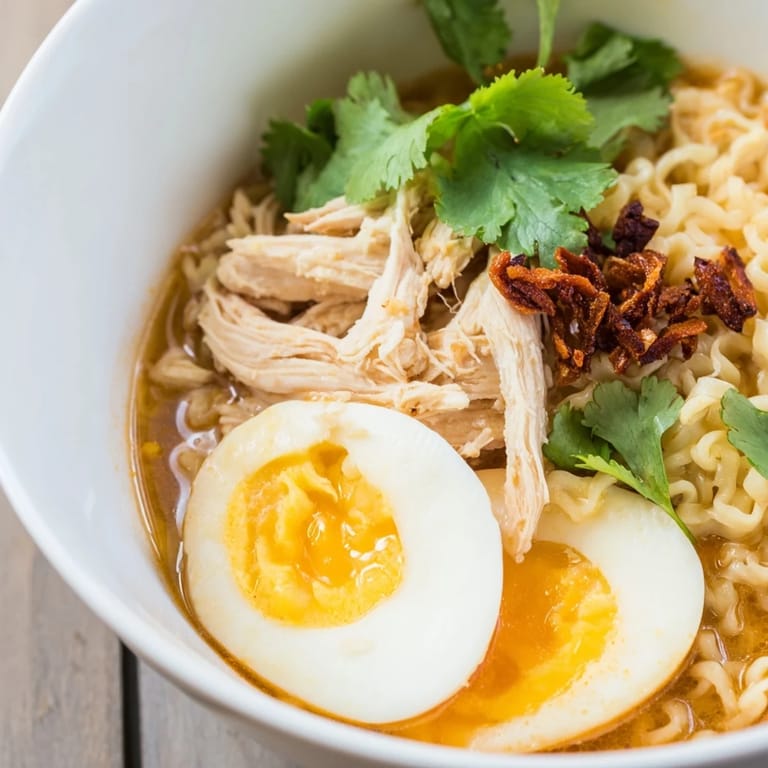
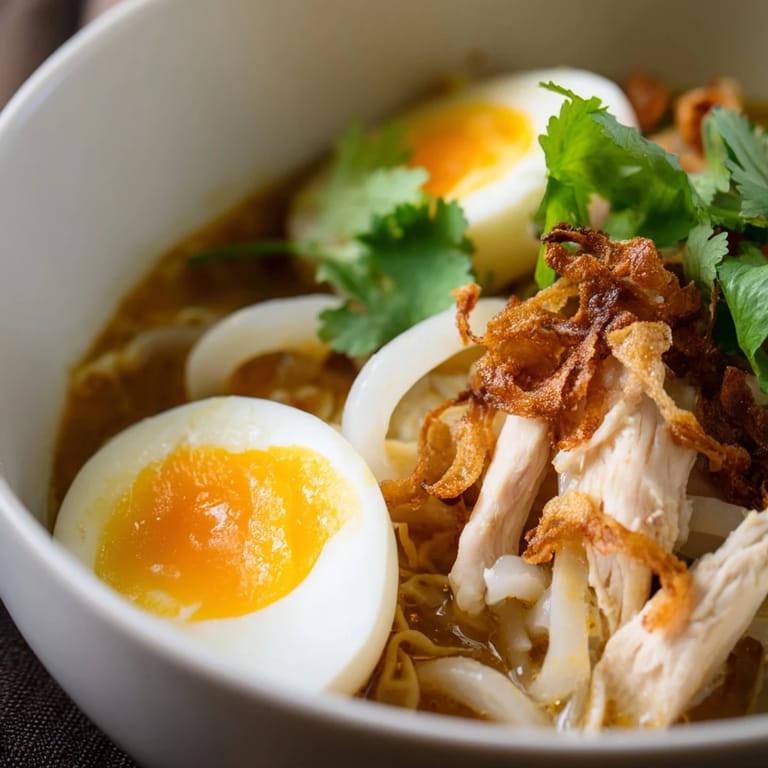
- Divide the noodles and bok choy among bowls, ladle in the hot broth, and top with chicken, eggs, shallots, scallions, chili, and cilantro. Serve with lime wedges on the side.
 Save
Save One night I made this for myself after a long week, and I realized halfway through the bowl that I hadn't checked my phone once. There was something about the way the broth warmed me from the inside, the way the toppings gave me something to focus on with each bite. It became the meal I made when I needed to reset, not just eat.
Making It Your Own
If you want to skip the chicken, swap in firm tofu and use vegetable broth instead. I've also made this with leftover rotisserie chicken when I didn't feel like poaching anything from scratch. You can dial the heat up or down by adjusting the curry paste, and if cilantro isn't your thing, basil or mint work surprisingly well. The beauty of this bowl is that it's flexible enough to match your mood or your pantry.
What to Serve Alongside
This bowl is filling on its own, but sometimes I'll set out a small plate of pickled vegetables or cucumber salad to cut through the richness. A cold, slightly sweet Riesling is my go to drink with this, though iced green tea works just as well. If you're feeding a crowd, consider setting up a topping bar so everyone can build their bowl exactly how they like it.
Storing and Reheating
Store the broth, noodles, and toppings separately if you have leftovers. The noodles can get mushy if they sit in the liquid too long, but they'll crisp back up a bit when you reheat everything together. I reheat the broth gently on the stove, cook fresh noodles if I have them, and add new toppings to keep things bright. The eggs are best made fresh, but the broth keeps for up to three days in the fridge.
- Don't store soft boiled eggs in the broth; keep them separate and slice just before serving.
- If the broth tastes flat after reheating, a splash of soy sauce or lime juice brings it back.
- Crispy shallots lose their crunch in the fridge, so add them right before eating.
 Save
Save This bowl has become one of those recipes I don't need to think about anymore; my hands know what to do. I hope it finds a place in your rotation, too.
Recipe FAQs
- → Can I make this vegetarian?
Yes, substitute vegetable broth for chicken broth, omit the fish sauce, and replace chicken with extra-firm tofu cubes or additional vegetables like mushrooms and carrots.
- → How do I achieve soft-boiled eggs with jammy yolks?
Boil eggs for exactly 7 minutes, then immediately transfer to an ice water bath to stop the cooking process. This timing creates a creamy, runny yolk surrounded by set whites.
- → What's the best way to adjust spice levels?
Control heat by reducing or increasing the Thai red curry paste amount. Alternatively, add fresh sliced chili during assembly so diners can customize their own bowls to preference.
- → Can I prepare components in advance?
Yes, make the broth up to one day ahead and refrigerate. Cook noodles fresh before serving. Prepare soft-boiled eggs and bok choy ahead, storing them separately in the refrigerator.
- → What type of ramen noodles work best?
Fresh ramen noodles provide the best texture and authentic taste, but dried versions work well too. Look for varieties labeled 'ramen' rather than instant noodles for superior quality.
- → How should I store leftover broth?
Store the broth in an airtight container for up to three days in the refrigerator or freeze for up to three months. Reheat gently and avoid boiling, which can break down the miso's beneficial enzymes.