 Save
Save The first time I assembled one of these boards, I wasn't thinking about TikTok trends or wellness—I just needed to feed four hungry people on a Tuesday afternoon with whatever looked good in my crisper drawer. I started with carrots and hummus, added some cheese I'd bought for sandwiches, grabbed a handful of crackers, and suddenly everyone was hovering around the kitchen island before I'd even finished arranging. That's when it clicked: this wasn't just lunch, it was an invitation to slow down and eat together without anyone needing a recipe to follow.
I made this for my neighbor one Saturday when she mentioned she was tired of sad desk lunches, and watching her intentionally pair a piece of gouda with a snap pea felt like witnessing a small discovery. She came back three days later asking what was on the board because she'd apparently been thinking about it. That's the magic of this: it stops being food and starts being experience.
Ingredients
- Baby carrots: Raw sweetness that needs no cooking—buy them pre-peeled if you're short on time, no shame in that.
- Cucumber slices: Keep them cool in ice water before assembling so they stay crisp and refreshing through serving.
- Cherry tomatoes: Pick ones that feel heavy for their size; they'll taste brighter and less watery.
- Bell pepper strips: Use mixed colors because your eyes eat first, and the sweetness varies just enough to make each color feel different.
- Sugar snap peas: These are the surprise converter for people who say they don't like vegetables—their natural sweetness wins everyone over.
- Hummus: The reliable anchor, filling and rich enough that people feel satisfied with a simple veggie-and-dip bite.
- Ranch or Greek yogurt dip: Ranch feels festive and familiar; Greek yogurt dip tastes lighter if that's your mood.
- Cheddar cheese, cubed: Its sharpness cuts through everything nicely; don't buy pre-cubed if you can help it because the edges dry out.
- Mozzarella balls: These creamy little spheres are the luxury moment—they feel elegant without trying.
- Gouda or Swiss cheese, sliced: One brings smokiness, the other brings holes and character; either one makes the board feel thoughtful.
- Whole grain crackers: They hold up to dips and pair with everything; buy gluten-free if needed, and honestly, you might not notice the difference.
- Roasted nuts: Their crunch and salt anchor everything else; toast raw ones yourself if you want them fresher.
- Olives: The savory reminder that not everything needs to be mild or sweet.
- Dried fruit: Apricots bring slight tartness, cranberries bring chew, figs bring luxury—choose what calls to you.
Tired of Takeout? 🥡
Get 10 meals you can make faster than delivery arrives. Seriously.
One email. No spam. Unsubscribe anytime.
Instructions
- Prep your vegetables with intention:
- Wash and dry everything thoroughly—water left on vegetables makes the board weep onto itself and look sad by the time people gather around. Slice cucumbers and peppers, keeping everything relatively uniform so the board reads as organized rather than chaotic.
- Create vegetable zones:
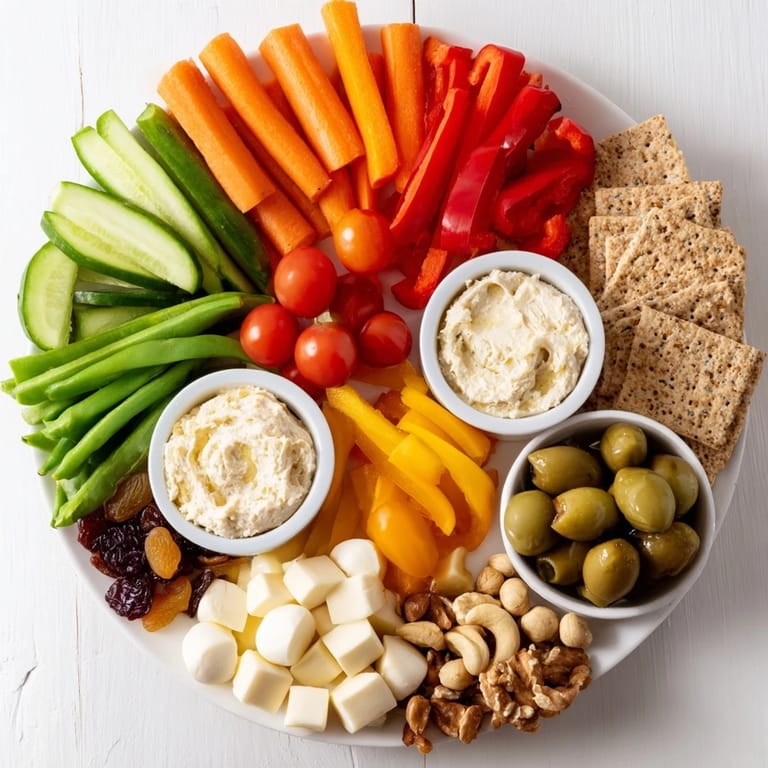
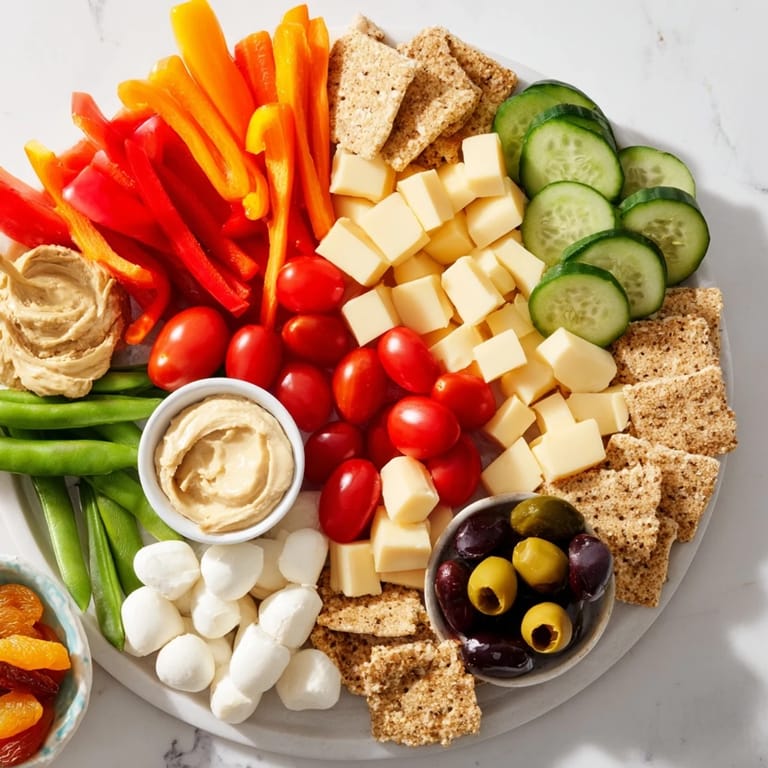
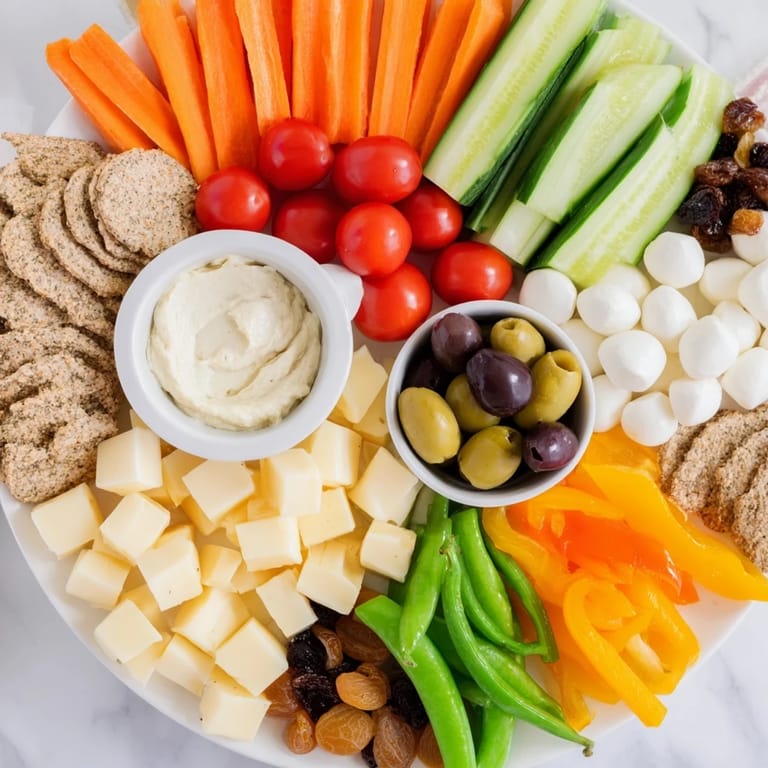
- Arrange carrots in one cluster, tomatoes in another, peppers grouped by color. This makes the board easy to navigate and visually balanced; it's the difference between looking curated and looking like you just dumped things.
- Position your dips as anchors:
- Place small bowls of hummus and ranch in positions that feel natural to reach. They become landmarks people orient around, and small bowls prevent the dips from spreading into everything else.
- Cluster the cheese thoughtfully:
- Group each cheese type together so people can taste and compare if they want. The mozzarella balls scattered throughout create pockets of surprise; they shouldn't all be in one spot.
- Fill the gaps with personality:
- Crackers, nuts, olives, and dried fruit go into the remaining spaces. Don't overstuff—negative space makes a board feel generous rather than overwhelming.
- Chill or serve immediately:
- If you're serving right away, the vegetables stay crispest. If you're waiting, cover loosely with plastic wrap and refrigerate; the board actually gets better after an hour as flavors get closer acquainted.
 Save
Save My family stopped ordering appetizers at restaurants after this became a regular thing. There's something about building your own bites that makes people linger longer and talk more, and that's worth more than any perfectly plated dish I could hand them.
How to Build Your Perfect Bite
The beauty of this board is that there's no wrong way to eat it, but watching people, you start to see patterns. Some folks do veggie-plus-dip, others make little cheese-and-cracker combinations, and the smartest ones dip the mozzarella in ranch. You're creating edible jewelry here, so think about flavors and textures layering together rather than eating things in isolation.
Customization That Actually Matters
The ingredient list is a suggestion, not a rule. If you don't love olives, skip them. If you adore cucumber but have no bell peppers, double the cucumber. The only things you actually need are vegetables for crunch, something creamy to dip into, and cheese for richness. Everything else is texture and flavor riffing.
When to Make This and Why It Works
This is lunch when you're tired of sandwiches, an impressive appetizer when people are coming over, or the thing you assemble on Sunday to pick at throughout the week. It's also proof that the best food doesn't require heat, timing, or stress.
- Make it ahead, cover it, and it waits patiently for whenever you're hungry.
- Double or triple the quantities without changing your actual effort—just need a bigger board.
- If you're feeding vegetarians, you're already there; if you're feeding non-vegetarians, add salami or prosciutto to one corner and suddenly everyone's happy.
 Save
Save This is the kind of food that reminds you why eating matters: it brings people together without pretension, every ingredient tastes like itself, and you get to be the person who made something generous.
Recipe FAQs
- → What vegetables work best on the board?
Fresh, crisp vegetables like baby carrots, cucumbers, cherry tomatoes, bell peppers, and sugar snap peas provide vibrant colors and crunchy textures.
- → Which cheeses complement the platter?
Creamy and mild cheeses such as cheddar, mozzarella balls, gouda, or Swiss add richness and balance to the fresh veggies and dips.
- → Can I make this suitable for gluten-free diets?
Yes, use gluten-free crackers or substitute crunchy nuts and dried fruits to keep the texture varied without gluten.
- → How should I arrange the components on the board?
Group each ingredient type separately for visual appeal: section fresh vegetables, place dips in small bowls, cluster cheeses, then fill gaps with crackers, nuts, olives, and dried fruits.
- → What are good dip options for this board?
Hummus and ranch or Greek yogurt dips provide creamy, flavorful contrasts that pair well with both veggies and cheeses.