 Save
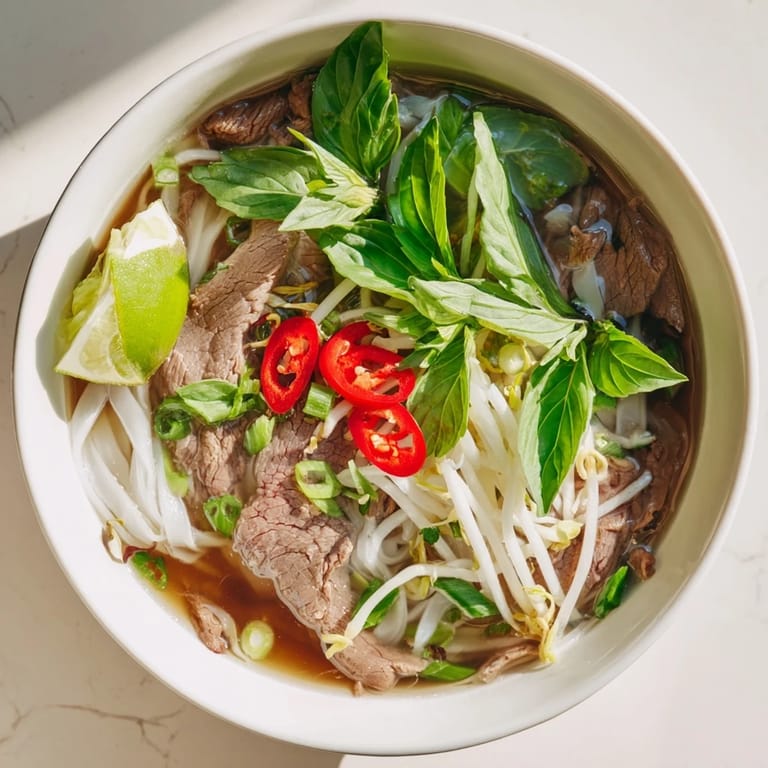
Save The kitchen window was open that evening, and the steam from the pot carried star anise and ginger straight into the backyard. My neighbor called over the fence asking what smelled so good. I told her it was pho, and she looked skeptical—wasn't that supposed to simmer all day? This version doesn't ask for your whole afternoon. It gives you the same warm, layered broth, the same tangle of soft noodles and bright herbs, in about half an hour.
I made this for a friend who'd just moved into a new apartment with nothing but a hot plate and one pot. We sat on her living room floor with bowls balanced on our knees, lime wedges squeezed over the top, Sriracha zigzagged across the surface. She said it tasted like the place we used to go to after late shifts, and I think that's when I realized this recipe had become one I could count on. It doesn't need much, and it gives back more than you'd expect.
Ingredients
- Low-sodium beef or chicken broth: This is your foundation, so use the best you can find—it should taste clean and rich on its own.
- Onion and ginger: Charring them first adds a subtle smokiness that makes the broth taste like it simmered longer than it did.
- Star anise, cinnamon stick, and cloves: These three are non-negotiable; they create that unmistakable pho warmth without overpowering anything.
- Fish sauce and soy sauce: They add depth and a quiet saltiness that balances the sweetness from the sugar.
- Flat rice noodles: Look for bánh phở if you can; they stay tender and slippery, soaking up broth in every bite.
- Beef sirloin or eye round: Slice it as thin as you can manage—the hot broth will cook it the second it hits the bowl.
- Bean sprouts, Thai basil, cilantro, scallions: The fresh crunch and green brightness turn this from soup into something alive.
- Lime wedges: A squeeze right before eating wakes up every flavor in the bowl.
- Hoisin sauce and Sriracha: Keep them on the table so everyone can adjust sweetness and heat to their mood.
Tired of Takeout? 🥡
Get 10 meals you can make faster than delivery arrives. Seriously.
One email. No spam. Unsubscribe anytime.
Instructions
- Build the broth:
- Combine broth, onion, ginger, star anise, cinnamon, and cloves in a large pot and bring everything to a rolling boil. Lower the heat and let it simmer uncovered for twenty minutes, letting the spices bloom and fill your kitchen with that unmistakable aroma.
- Season and strain:
- Stir in fish sauce, soy sauce, sugar, and a pinch of salt, then simmer five minutes more. Strain out all the solids and return the clear, golden broth to the pot, keeping it hot over low heat.
- Prepare the noodles:
- Cook the rice noodles according to the package directions, then drain and divide them evenly among four large bowls. They should be soft but still have a little chew.
- Add the meat:
- Lay thin slices of beef or chicken directly over the noodles in each bowl. The thinner the slices, the more gently they'll cook in the broth.
- Ladle and serve:
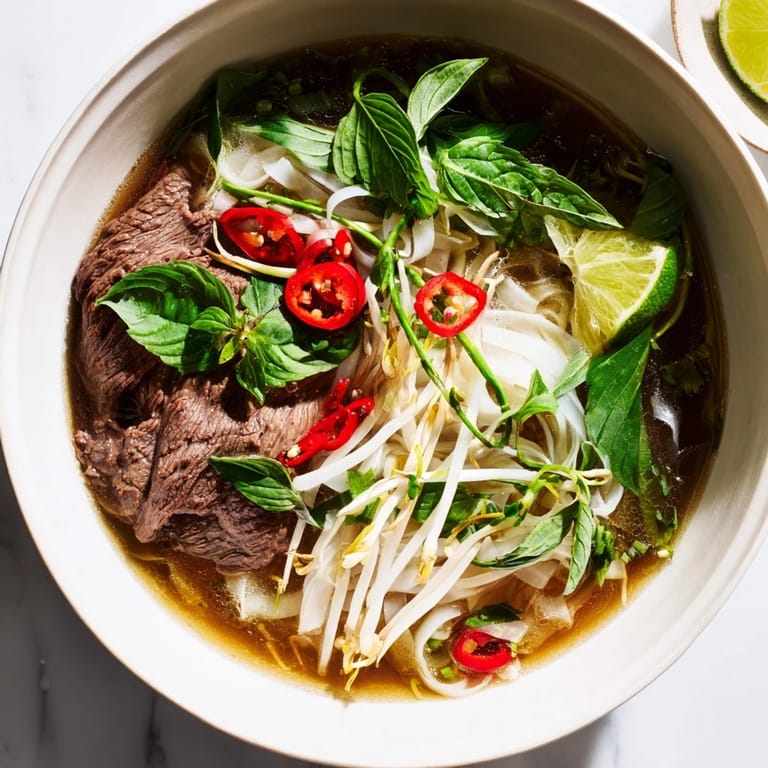
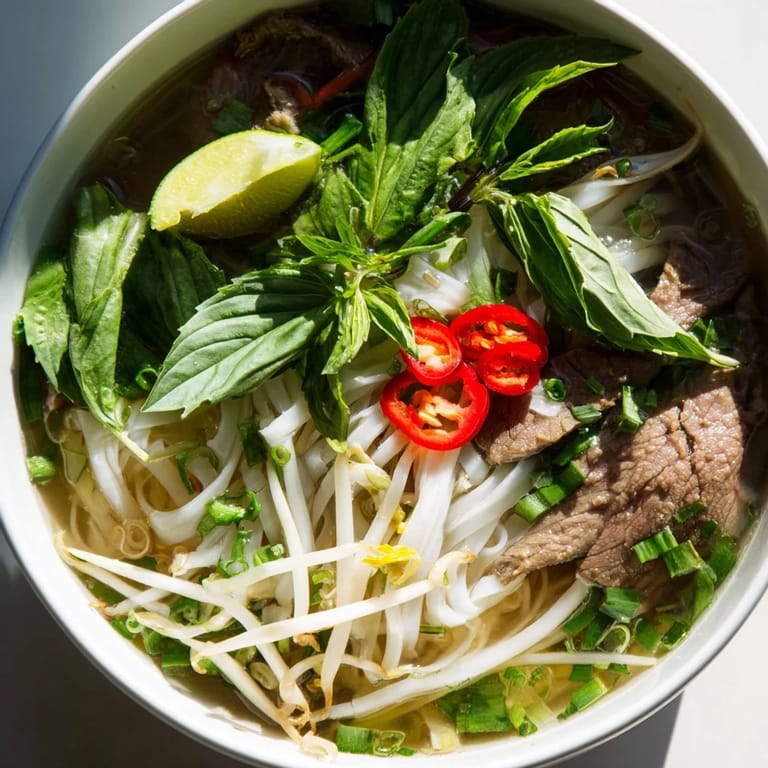
- Pour the hot broth over the meat and noodles, letting the heat cook the beef instantly. Top each bowl with bean sprouts, basil, cilantro, scallions, and chili, and set out lime wedges and sauces on the side.
 Save
Save There was a Sunday when I had too much cilantro and not enough basil, so I threw in some mint and a handful of fried shallots I found in the back of the cupboard. It turned out better than the version I'd been making for months. That's when I stopped worrying about getting it exactly right and started trusting whatever was in the crisper drawer.
Charring the Aromatics
If you have a gas burner or a hot skillet, char the onion and ginger cut-side down until they're blackened in spots. It only takes a few minutes, and the smoky sweetness it adds makes the broth taste like it's been working all day. I forget this step sometimes, and the soup is still good, but when I remember, I can tell the difference in the first sip.
Swapping the Protein
Chicken works just as well as beef, and I've used thinly sliced pork shoulder when that's what I had. For a vegetarian version, swap in firm tofu and use vegetable broth—add a little extra soy sauce and maybe a dash of mushroom powder to keep the umami strong. The herbs and lime will carry most of the flavor anyway.
Serving and Storing
This is best eaten right away, while the noodles are soft and the herbs are still crisp. If you need to make it ahead, keep the broth, noodles, and toppings separate until you're ready to serve. Leftover broth keeps in the fridge for three days and freezes beautifully for up to two months.
- Reheat the broth gently and cook fresh noodles each time for the best texture.
- Store raw sliced meat separately and add it to the bowl just before ladling hot broth over.
- Keep garnishes in a sealed container in the fridge so they stay bright and crunchy.
 Save
Save This recipe has pulled me out of the weeknight dinner rut more times than I can count. It's fast, it's forgiving, and it always feels like more than the sum of its parts.
Recipe FAQs
- → How do I make the broth aromatic?
Simmer whole spices such as star anise, cinnamon, and cloves with ginger and onion in the broth to infuse a rich, fragrant flavor.
- → Can I substitute chicken for beef?
Yes, thinly sliced chicken breast can be used instead of beef, providing a lighter but equally tasty option.
- → What noodles are best for this dish?
Flat rice noodles (bánh phở) are traditional, offering a soft and smooth texture that complements the broth and meat.
- → How should I serve the fresh herbs?
Arrange Thai basil, cilantro, and scallions on the finished dish to add freshness and vibrant aroma with every bite.
- → Any tips for extra flavor?
Lightly charring the onion and ginger before simmering enhances the depth of the broth’s flavor.