 Save
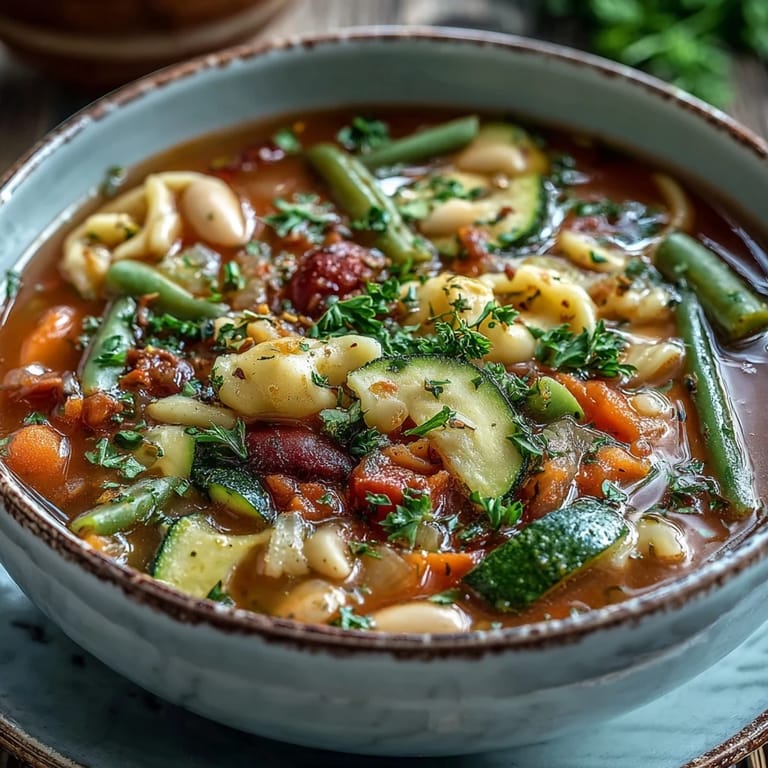
Save The rustle of farmers' market bags one chilly autumn morning led to my first minestrone adventure. I had wandered home with an assortment of vegetables that practically begged to be transformed into something warming and substantial. Standing in my kitchen with rain tapping against the windows, I remembered my Italian neighbor Lucia mentioning her family's soup tradition that sustained generations through cold seasons. That afternoon, my apartment filled with a fragrance so inviting that even my cat abandoned her favorite napping spot to investigate.
Last winter during that unexpected snowstorm, I found myself hosting three stranded neighbors who couldn't make it home. With limited ingredients but a well-stocked pantry, this minestrone became an impromptu dinner party centerpiece. We huddled around my small table, steam rising from our bowls, trading stories as the wind howled outside. Someone brought out a bottle of Chianti they'd been saving, and suddenly we weren't strangers caught in bad weather but friends sharing a feast.
Ingredients
- Olive oil: Use a good quality extra virgin olive oil as its flavor forms the foundation of authentic minestrone, I learned this crucial difference after years of using whatever cooking oil was on hand.
- Vegetables: The classic mirepoix of onions, carrots and celery creates the aromatic base, while zucchini, green beans, and leafy greens add layers of texture and nutrition.
- Tomato paste: This concentrated flavor bomb adds remarkable depth to the broth - I once forgot to add it and immediately noticed the soup lacked that distinctive richness.
- Small pasta: Tiny shapes like ditalini or elbow macaroni disperse throughout the soup perfectly, absorbing just enough broth without becoming mushy.
- Cannellini beans: These creamy white beans provide protein and a velvety texture that complements the vegetables beautifully.
- Herbs: The combination of dried oregano, basil and thyme creates that unmistakable Italian profile, while fresh parsley brightens everything at the finish.
Tired of Takeout? 🥡
Get 10 meals you can make faster than delivery arrives. Seriously.
One email. No spam. Unsubscribe anytime.
Instructions
- Create your flavor foundation:
- Heat olive oil in a large pot over medium heat, then add your diced onion, celery, and carrots. Watch as they begin to soften and release their aromatic magic, about 5 minutes.
- Build the vegetable layers:
- Add garlic, zucchini, and green beans to the pot, stirring occasionally as they mingle with the aromatics. The kitchen will begin filling with an earthy fragrance as the vegetables release their essence.
- Develop the broth:
- Pour in diced tomatoes and vegetable broth, then stir in tomato paste and your dried herbs along with the bay leaf. Let this mixture come to a gentle boil before reducing to a simmer for 15 minutes, allowing all those flavors to harmonize.
- Add substance and texture:
- Stir in your pasta and beans, then continue cooking until the pasta reaches al dente perfection, about 10 minutes. The soup will begin transforming into that hearty consistency that makes minestrone so satisfying.
- Finish with fresh elements:
- Add the spinach or kale and fresh parsley, watching as the greens wilt into the hot soup. Remove the bay leaf before tasting and adjusting seasoning with salt and pepper.
- Serve with care:
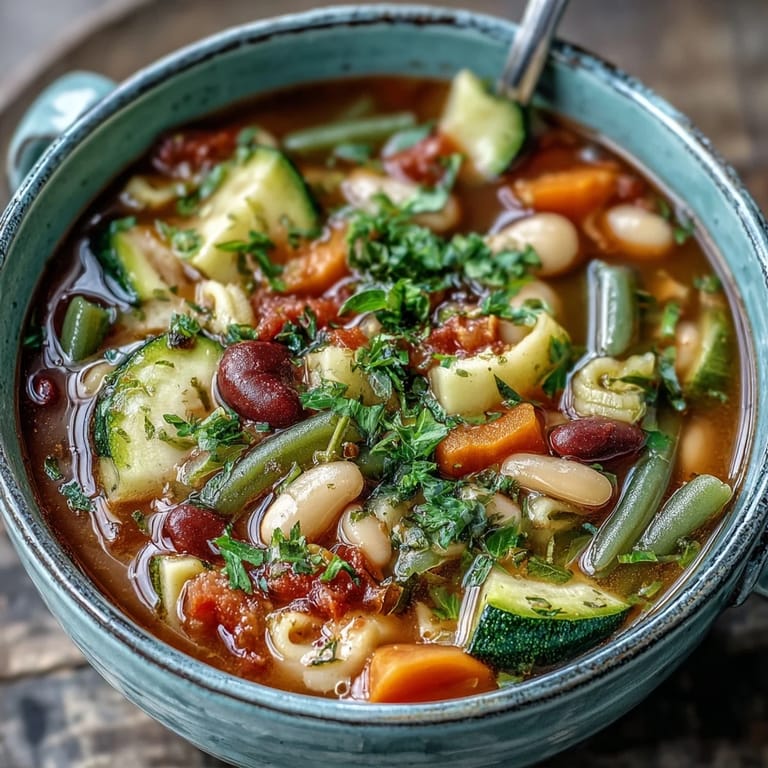
- Ladle this colorful creation into warmed bowls and sprinkle with additional fresh parsley. The steam rising from each bowl carries the promise of comfort in every spoonful.
 Save
Save The first time I served this minestrone to my Italian colleague Marco, I nervously watched as he took his initial spoonful. His eyes closed momentarily before he looked up with a gentle smile and whispered, This tastes like my nonna's kitchen. We sat in comfortable silence for a moment, connected by this simple bowl of vegetables and broth that somehow transported him across an ocean to his childhood home. In that moment, I understood that cooking isnt just about feeding bodies, but sometimes about healing hearts.
Seasonal Adaptations
My summer version replaces winter root vegetables with bell peppers, corn, and fresh tomatoes for a lighter profile that still satisfies. Spring minestrone welcomes asparagus, peas, and tender young greens, while autumn calls for butternut squash, kale, and sometimes a hint of rosemary. The beauty of this recipe is how it evolves with whatever your garden or market provides, creating a calendar of flavors that mark the passing seasons in delicious fashion.
Storage and Meal Prep
After discovering how beautifully minestrone ages, I now intentionally make double batches to enjoy throughout the week. The flavors deepen and meld after a day or two in the refrigerator, creating an even more complex taste profile. For freezing, I portion the soup into containers without the pasta, then add freshly cooked pasta when reheating to maintain that perfect texture.
Serving Suggestions
My favorite way to serve minestrone evolved after watching an elderly woman at a small trattoria in Florence drizzle her soup with a ribbon of peppery olive oil and a light shower of finely grated parmesan. The oil created mesmerizing patterns on the surface while adding richness that transformed the humble soup into something worthy of lingering over.
- A crusty loaf of ciabatta or sourdough bread makes the perfect companion for sopping up the last precious spoonfuls from your bowl.
- For a complete meal that satisfies even hearty appetites, serve alongside a simple salad dressed with lemon juice, olive oil and flaky sea salt.
- Keep garnishes like fresh basil leaves, red pepper flakes, and extra virgin olive oil on the table so everyone can customize their bowl.
 Save
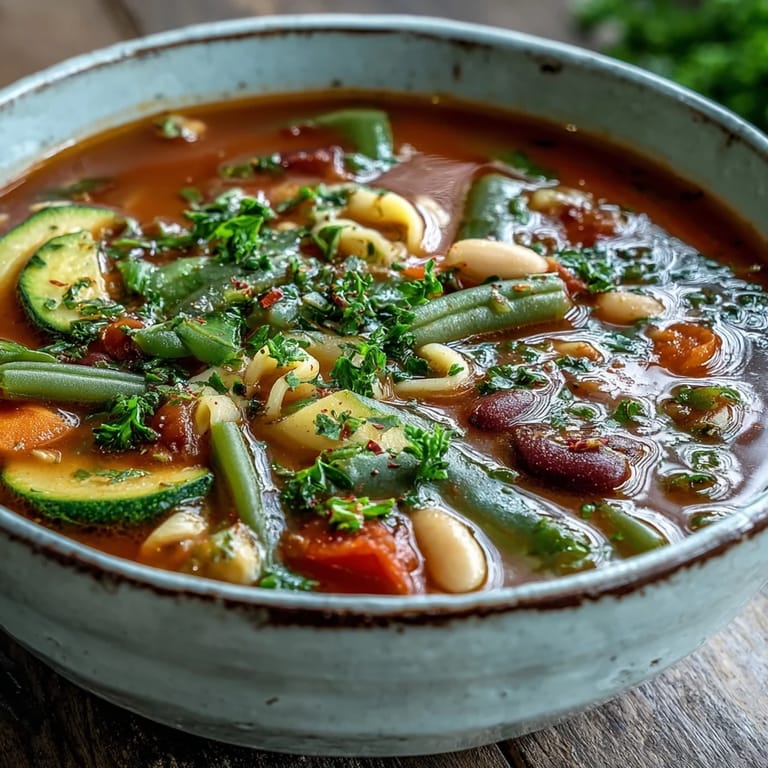
Save Minestrone isn't just a recipe in my kitchen, it's become a ritual of transformation and care. With each pot, I'm reminded that bringing together humble ingredients with attention and patience creates something far greater than the sum of its parts.
Recipe FAQs
- → What vegetables work best in minestrone?
Classic minestrone includes onions, celery, carrots, zucchini, and green beans as the base. You can also add seasonal vegetables like spinach, kale, tomatoes, or bell peppers depending on what's available and fresh.
- → Can I make minestrone gluten-free?
Absolutely. Simply substitute regular pasta with gluten-free pasta varieties like rice-based or corn-based small shapes. Always verify your vegetable broth is certified gluten-free as well.
- → How long does minestrone keep in the refrigerator?
Stored in an airtight container, minestrone stays fresh for 4-5 days in the refrigerator. The flavors often deepen and improve after a day or two. Reheat gently on the stovetetop, adding a splash of broth if needed.
- → Can I freeze minestrone soup?
Yes, minestrone freezes beautifully for up to 3 months. For best results, slightly undercook the pasta before freezing, as it will continue cooking when reheated. Thaw overnight in the refrigerator before warming.
- → What type of pasta is traditional for minestrone?
Small pasta shapes like ditalini, elbow macaroni, shells, or small tubes work perfectly as they cook evenly and fit on the spoon with the vegetables. These shapes hold onto the flavorful broth beautifully.
- → Is minestrone suitable for meal prep?
Minestrone is excellent for meal prep. Make a large batch on Sunday and portion into containers for easy lunches throughout the week. The soup reheats well and often tastes more developed after sitting.