 Save
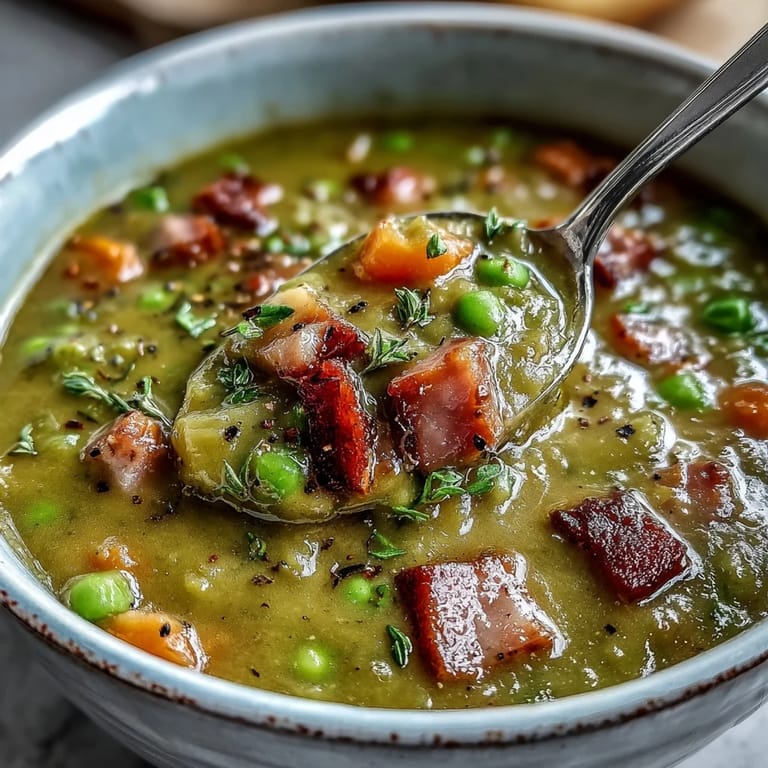
Save The first time I made split pea and ham soup, snow was piling against the windows and the kitchen became our refuge. I'd salvaged a ham bone from Sunday dinner, determined not to let it go to waste. The gentle transformation of those humble split peas into something so luxuriously comforting surprised even me. As the soup simmered, the entire house filled with an aroma that seemed to whisper that everything would be alright.
Last winter, when my neighbor broke her ankle, I brought over a container of this split pea soup. She called me later that evening, voice warm with gratitude, saying it was the first time she felt properly warm since her accident. We ended up sharing soup and stories over the phone that night, and now it's become our little tradition whenever either of us needs comfort.
Ingredients
- Meaty ham bone: The soul of this soup, releasing its smoky essence slowly, teaching me that patience is the secret ingredient in truly memorable cooking.
- Split peas: I learned to rinse these thoroughly and pick through them for any tiny stones, a meditative start to the cooking process that connects me to generations of soup makers before me.
- Mirepoix (onions, carrots, celery): This trinity creates the foundation of flavor, and cutting them into similarly sized pieces ensures they cook evenly and create harmony in each bite.
- Low-sodium broth: Using low-sodium allows you to control the saltiness, especially important since ham brings its own salt to the party.
- Bay leaf: This unassuming leaf works quiet magic, infusing the soup with subtle depth that you'll miss if you skip it.
Tired of Takeout? 🥡
Get 10 meals you can make faster than delivery arrives. Seriously.
One email. No spam. Unsubscribe anytime.
Instructions
- Start with the aromatics:
- Heat a splash of oil in your largest pot and add the diced onion, carrots, and celery, letting them sizzle gently until they soften. You'll know it's right when your kitchen begins to smell like comfort itself.
- Build the flavor base:
- Stir in minced garlic just until fragrant, about a minute, being careful not to let it brown and turn bitter. This brief moment perfumes the vegetables beautifully.
- Combine the main players:
- Add your rinsed split peas, ham bone or diced ham, bay leaf, thyme, broth, and water, giving everything a good stir. The pot will look like a promising beginning.
- The long simmer:
- Bring to a boil, then reduce to a gentle simmer, cover and let time work its magic for about an hour. I love how the kitchen windows steam up, creating a cozy world inside.
- Thicken and finish:
- Remove the lid and continue cooking another 20-30 minutes until the peas break down to your preferred consistency. This is when the soup transforms from separate ingredients into a cohesive, velvety whole.
- Final touches:
- Fish out the bay leaf, remove the ham bone to pick off any meat, and season with black pepper and salt to taste. For extra creaminess, I sometimes take a potato masher to it, creating texture that's both rustic and refined.
 Save
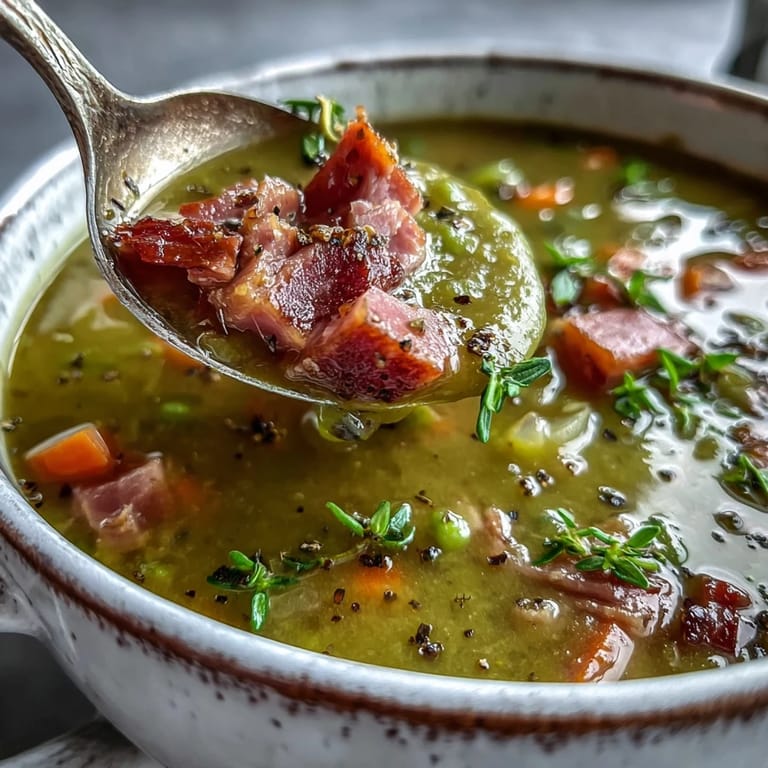
Save On my daughters fourteenth birthday, she surprised me by requesting this soup instead of our usual birthday pizza tradition. She said the smell of it cooking reminded her of snow days when she was little, of board games by the fire and the feeling that time had somehow paused just for us. I hadn't realized until that moment how food becomes woven into our most precious memories.
Make It Your Own
The beauty of this soup lies in its adaptability. When spring arrives, I sometimes stir in fresh peas and mint at the end for brightness. In autumn, I might add a diced apple that melts into the background, adding subtle sweetness. Once, during a power outage, I made it in my fireplace Dutch oven, and the subtle smokiness elevated it to something extraordinary I now try to recreate.
Storage and Reheating
This soup actually improves with time, developing deeper flavor after a day or two in the refrigerator. It thickens considerably when chilled, sometimes becoming almost solid, which alarmed me the first time but now signals success. When reheating, add a splash of water or broth and warm it gently, stirring occasionally to prevent scorching the now-concentrated peas.
Serving Suggestions
While traditionalists might insist on serving this with only crackers, I've discovered it pairs beautifully with unexpected companions. A swirl of tangy Greek yogurt creates pleasant contrast with the earthy peas, while a scattering of crispy fried onions adds textural excitement that elevates the entire experience.
- Toasted sourdough rubbed with a garlic clove makes an outstanding dipper, sturdy enough to stand up to the hearty soup.
- For a complete meal, serve smaller portions in mugs alongside a sharply dressed green salad with apples and walnuts.
- Keep leftover ham bits separate if serving over multiple days, adding them just before eating so they maintain their texture.
 Save
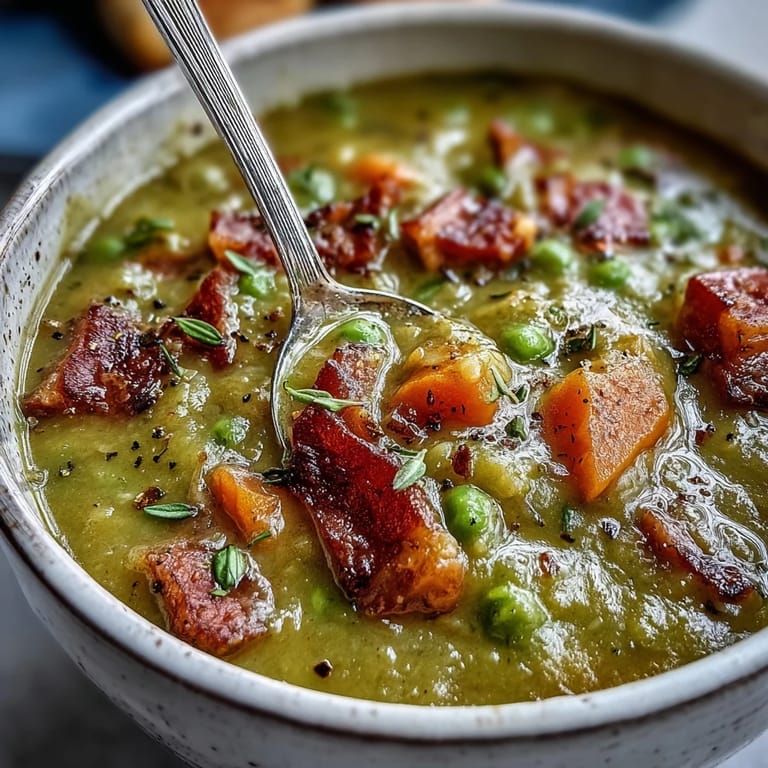
Save This humble soup has taught me that true comfort food isn't just about the taste, but about the memories we create around it. Whether shared with others or savored alone on a quiet evening, each bowl offers nourishment that goes far beyond mere calories.
Recipe FAQs
- → Do I need to soak split peas before cooking?
No soaking required. Dried split peas cook relatively quickly and break down naturally during simmering, creating the soup's characteristic thick texture. Simply rinse and sort them before adding to the pot.
- → Can I make this with a ham bone or diced ham?
Both work beautifully. A meaty ham bone infuses incredible depth as it simmers, while diced ham offers convenience. If using a bone, remove it after cooking and pick off any tender meat to return to the soup.
- → How long does this soup keep in the refrigerator?
Store cooled soup in an airtight container for up to 4 days. The flavors actually improve after a day or two as the ingredients meld together. Reheat gently on the stovetop, adding a splash of broth if needed.
- → Can I freeze split pea soup?
Absolutely. Freeze in portions for up to 3 months. Thaw overnight in the refrigerator and reheat on the stove. The texture may become slightly thicker after freezing—thin with additional broth or water if desired.
- → How can I make this vegetarian?
Omit the ham bone and use vegetable broth instead of chicken broth. Add smoked paprika or liquid smoke to replicate the smoky depth that ham provides. You can also add diced potatoes for extra heartiness.
- → Why is my soup too thin or too thick?
Soup thickness depends on how much the peas break down. If too thick, add more broth or water. For thicker results, continue simmering uncovered to reduce liquid, or mash some peas against the pot's side. An immersion blender creates an ultra-smooth, velvety texture.