 Save
Save The first time I made these neon noodles, I was trying to impress someone who claimed they'd seen everything food could do. I'd been scrolling through videos of molecular gastronomy when I stumbled onto agar-agar, and something clicked—what if I made noodles that actually wobbled and bounced on the plate? The magic happened when I realized the ice water bath created this almost playful resistance, like the noodles were deciding whether to solidify or stay liquid. That moment of piping hot colored gel into cold water felt like controlled chaos in the best way.
I served these at a dinner party where someone's eight-year-old watched the entire plating process and declared them 'alien food in the best way.' That kid ate every single noodle, then asked if we could make them glow in the dark. It became this quiet reminder that food doesn't have to be complicated to be memorable—sometimes it just needs to surprise you.
Ingredients
- Water: The base that carries everything; use filtered water if your tap tastes off, because it becomes part of the final texture.
- Agar-agar powder: This seaweed derivative is your secret—it sets faster and firmer than gelatin, creating that satisfying bounce without any animal products.
- Sugar: Just a tablespoon balances the slight bitterness of agar and keeps the noodles from tasting medicinal.
- Food coloring (neon gel or liquid): Gel colors are more concentrated and won't water down your mixture; if you're committed to natural colors, spirulina green and butterfly pea blue are genuinely stunning.
- Soy sauce: The backbone of the sauce; use tamari if gluten matters to your guests, and honestly, good soy sauce makes a difference here.
- Rice vinegar: Adds brightness without harshness; it's the whisper that makes people wonder what they're tasting.
- Mirin: A touch of sweetness that rounds out the umami, and it catches the light when it glosses the noodles.
- Sesame oil: Just a teaspoon goes a long way; too much and it overpowers, too little and you lose that toasted warmth.
- Fresh ginger: Grate it just before you use it so the oils are still alive in your sauce.
- Scallion: The final brightness that makes people lean in for another bite.
- Sesame seeds (optional): Toasted ones scatter across the top like tiny flavor bombs.
Tired of Takeout? 🥡
Get 10 meals you can make faster than delivery arrives. Seriously.
One email. No spam. Unsubscribe anytime.
Instructions
- Melt the agar-agar:
- Pour water into a saucepan and sprinkle the agar-agar powder over the top while stirring constantly. Bring to a boil over medium heat and keep stirring for about 2-3 minutes until the powder completely dissolves and you can't see any grainy bits—this is when you'll notice the liquid becomes almost translucent.
- Divide and color:
- Remove from heat and pour the hot liquid into separate bowls, one for each color you want. Add just one or two drops of food coloring at first, then mix; you can always add more, but you can't take it back, and the colors intensify as the liquid cools slightly.
- Pipe into noodle shapes:
- Fill a syringe or squeeze bottle with the colored agar mixture and pipe thin strands directly into a bowl of ice water, working quickly before it starts to set in the bottle. Watch as the strands firm up in seconds—it's oddly satisfying. If you don't have a syringe, you can pour into a flat tray, let it cool completely, then cut with a sharp knife into thin, noodle-like strips.
- Set and chill:
- Let the noodles sit in the ice water for 1-2 minutes until they're completely firm, then carefully scoop them out with a fork and rinse gently under cold water. Drain well and refrigerate until you're ready to serve—they'll keep their bounce for hours.
- Make the dipping sauce:
- Whisk together soy sauce, rice vinegar, mirin, sesame oil, ginger, and sugar in a small bowl, stirring until the sugar dissolves completely. Taste as you go, because every soy sauce is slightly different. Stir in the sliced scallion and sesame seeds just before serving so they stay bright.
- Plate and serve:
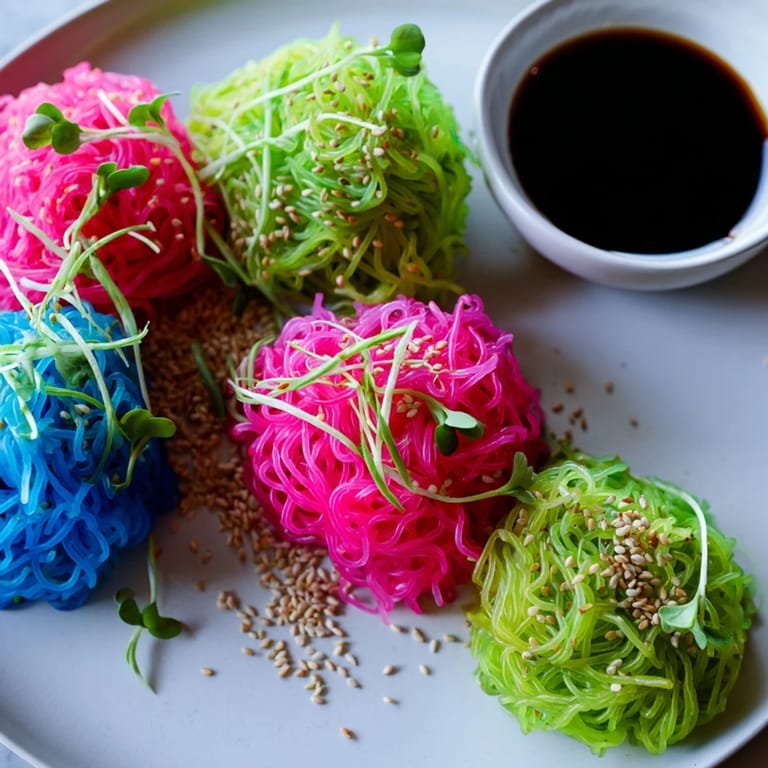
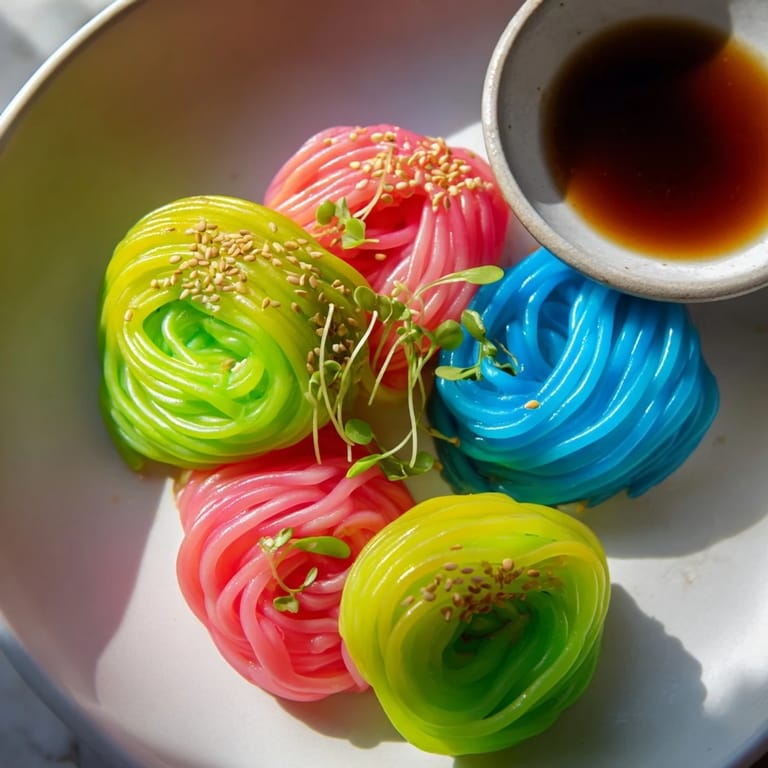
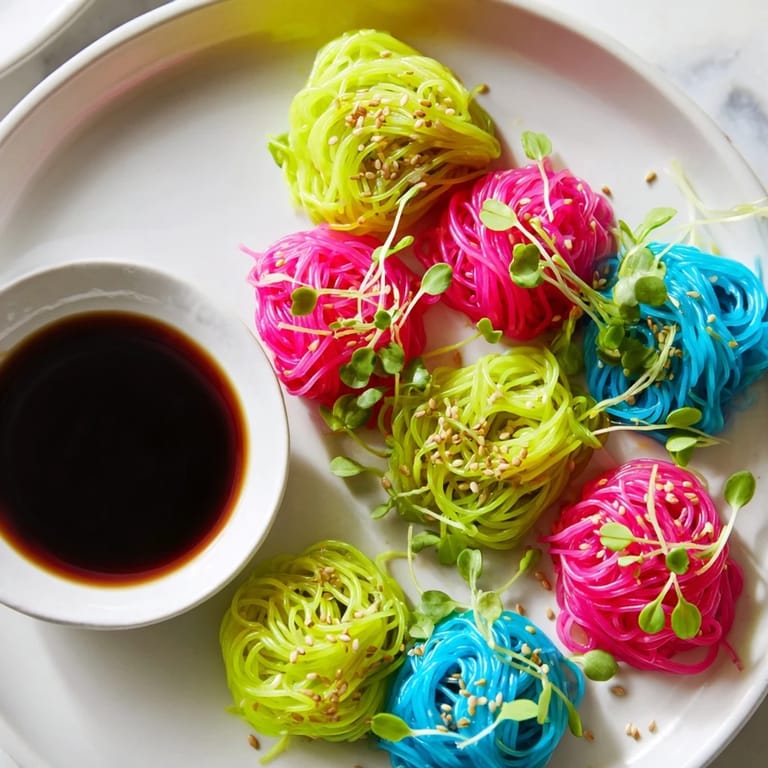
- Gather the chilled noodles into small, loose bundles on a plate or in small bowls, then drizzle or set the sauce alongside. Scatter microgreens or edible flowers on top if you're feeling fancy—they don't change the flavor, but they complete the visual story.
 Save
Save There was this moment during plating when I realized I'd been holding my breath—watching the translucent noodles catch the light, bouncing slightly when I moved the plate. It wasn't just food anymore; it was something between art and a joke I got to tell with my hands. That's when I understood why people spend their careers playing with ingredients instead of just eating them.
Color Magic and Natural Alternatives
Neon gel food coloring creates that electric, almost otherworldly effect that makes these noodles instantly recognizable. But if you want to skip synthetic colors, spirulina powder gives you a deep green that tastes like ocean, butterfly pea flower creates this surreal blue that shifts in light, and beet juice yields a jewel-tone magenta. I've made batches with all three and watched people assume I'd done something more complicated than I actually had. The natural colors are slightly more muted, but they carry flavor with them, which changes the whole experience.
Building a Better Dipping Sauce
The sauce is where you can let your instincts loose. The base of soy, vinegar, and mirin is solid, but the additions are where personality lives—a drop of yuzu juice brings this almost impossible brightness, chili oil adds heat that lingers, or a tiny splash of miso paste deepens everything into umami territory. I learned this by accident when I grabbed what I thought was mirin and it turned out to be a bottle of plum wine; the result was completely different, but equally good. The lesson was that the sauce can bend without breaking, so taste as you adjust and trust what your mouth tells you.
Serving Moments and Pacing
These noodles work brilliantly as an appetizer that makes people pause and stare before they eat, or as a palate cleanser between heavier courses when you want something cooling and light. I've also served them as a side dish alongside grilled fish, where the contrast between hot and cold, familiar and unexpected, creates this nice tension on the plate. The noodles stay bouncy for hours if you keep them refrigerated, so you can make them well ahead—which is my favorite kind of recipe for entertaining.
- Plate them no more than 20 minutes before serving if you want them at peak bounce.
- The sauce can be made up to a day ahead; just don't add the scallions until right before serving.
- If you're making this for a crowd, batch-color the noodles in whatever colors work with your table or theme, and people will think you planned it that way.
 Save
Save Every time I make these, I'm struck by how something so playful can also feel elegant. These neon noodles live in that rare space where technique and joy collide, and that's worth cooking for.
Recipe FAQs
- → How do agar-agar noodles get their bouncy texture?
Agar-agar powder, a seaweed-derived gelatin, solidifies when cooled, giving the noodles their firm yet springy consistency.
- → Can natural food colorings be used instead of artificial gels?
Yes, natural options like spirulina, butterfly pea, or beet juice can create vibrant hues without synthetic dyes.
- → What is the role of the dipping sauce in this dish?
The savory soy-based sauce balances the mild flavor and texture of the agar noodles with tangy, umami-rich notes enhanced by ginger and sesame.
- → Is there a way to make this dish gluten-free?
Using tamari instead of soy sauce ensures the dipping sauce is gluten-free, aligning with dietary considerations.
- → How should the agar-agar noodles be prepared and shaped?
After boiling agar-agar with water and sugar, color the liquid then pipe or pour into ice water or trays to set before cutting into noodle strands.