 Save
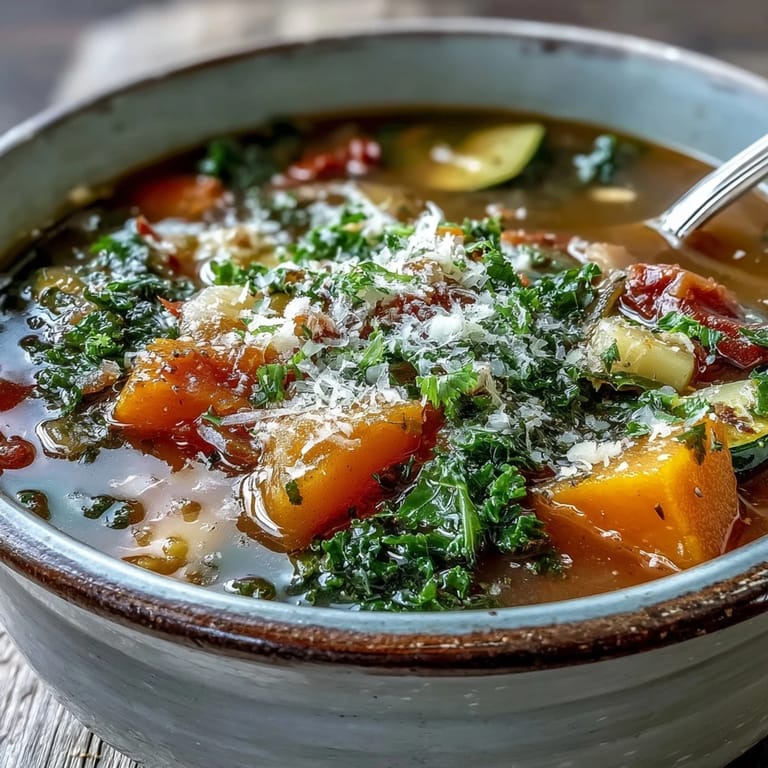
Save The first snow fell early that November, sending me straight to the kitchen with a craving for something hearty and warming. I'd just returned from the farmers' market with my basket full of winter vegetables, their earthy scents mingling in the cold air. As I brushed snowflakes from my coat, I knew a winter minestrone was precisely what the evening called for. The rhythmic chopping of vegetables always centers me when the world outside turns frosty and still.
Last December, when my neighbor broke her ankle, I brought over a pot of this minestrone. Her kitchen table was piled with casseroles and baked goods, but she called later to say the soup was what truly made her feel cared for. We sat at her kitchen table, steam rising from our bowls as she told me stories of her Italian grandmother making something similar. The soup created a bridge between our lives that afternoon, warming more than just our bodies.
Ingredients
- Butternut squash: The natural sweetness it develops as it simmers counterbalances the earthy kale and herbs perfectly.
- Kale: I once substituted spinach in a pinch, but kale holds its texture better through the cooking process and adds that distinctive wintery robustness.
- Cannellini beans: These creamy white beans practically melt in your mouth, adding protein and substance that makes this soup satisfying enough to be a complete meal.
- Small pasta: Little shapes like ditalini catch broth in their crevices, creating perfect little flavor bombs in each bite.
- Herb blend: The combination of oregano, thyme, and rosemary creates that quintessential Italian aroma that fills the whole house as the soup simmers.
Tired of Takeout? 🥡
Get 10 meals you can make faster than delivery arrives. Seriously.
One email. No spam. Unsubscribe anytime.
Instructions
- Create the aromatic base:
- Heat olive oil in a large pot and add the diced onion, carrots, and celery, allowing them to soften and release their flavors. Listen for that gentle sizzle and watch as they become translucent and fragrant.
- Build the flavor foundation:
- Stir in the minced garlic until its aroma rises from the pot, then introduce the butternut squash and zucchini cubes. These vegetables should get a brief introduction to the heat before the liquid joins the party.
- Bring everything to life:
- Pour in those diced tomatoes and vegetable broth, then add your bay leaf and dried herbs. The liquid will begin to take on a golden hue as it bubbles gently.
- Coax out the flavors:
- Reduce to a simmer and cover, allowing the squash to soften until a fork easily pierces it. The patience here pays off in how the flavors meld together.
- Finish with textures:
- Add beans, pasta, and those beautiful green ribbons of kale. The pot will transform into a tapestry of colors as the kale wilts and the pasta plumps up, absorbing all those wonderful flavors.
- Season and serve:
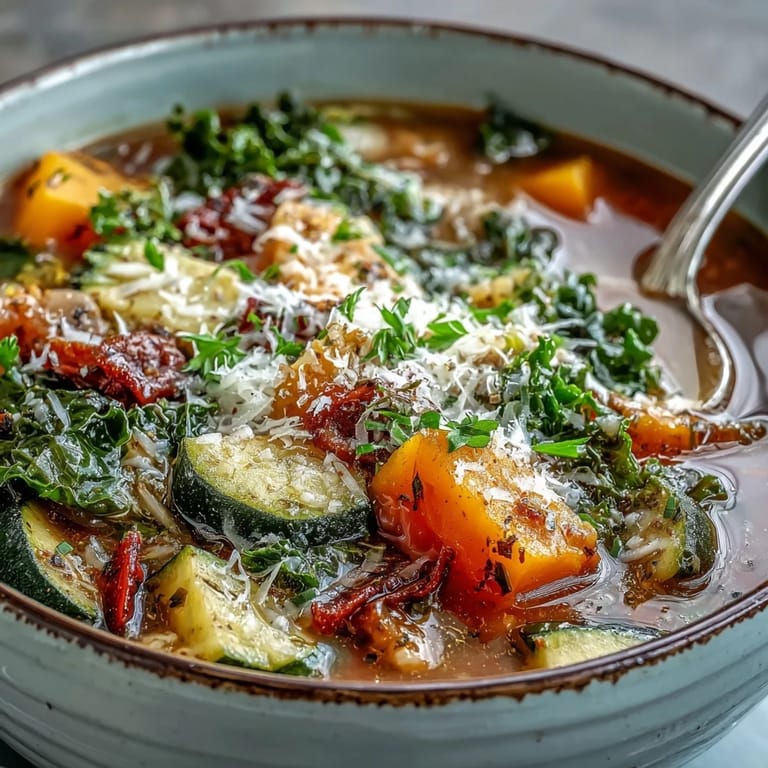
- Remove the bay leaf, then taste and adjust salt and pepper. Ladle into wide bowls while steam rises, inviting everyone to gather around.
 Save
Save One particularly harsh winter evening, the power went out in our neighborhood during a snowstorm. With the gas stove still functioning, I made this minestrone by candlelight. Our house became a refuge for three neighbors who had no heat, and we all huddled around the table, passing crusty bread and sharing stories until well past midnight. The soup seemed to taste even better in the flickering light, as if the simplicity of the moment enhanced every flavor.
Make-Ahead Options
Ive learned through countless Sunday meal preps that this soup actually improves after a day in the refrigerator, as the flavors have time to deepen and meld together. When making it ahead, I often cook the pasta separately and add it only to the portions being served immediately. This prevents the pasta from absorbing too much liquid and becoming overly soft in stored portions, keeping both texture and consistency perfect whether youre enjoying it right away or days later.
Seasonal Adaptations
While I consider this a quintessential winter recipe, Ive adapted it through all four seasons. Spring brings tender asparagus and fresh peas, summer offers sweet corn and tomatoes fresh from the garden, and autumn introduces parsnips and turnips. The soup evolves with the farmers market offerings, becoming almost like a calendar marking the passage of time through flavors and textures. Each season writes its own version of this recipe in my kitchen.
Serving Suggestions
The right accompaniments elevate this soup from merely satisfying to truly memorable. During particularly creative dinner parties, I set up a minestrone bar with small bowls of toppings for guests to customize their own bowls, creating conversation and personal connection through food choices.
- A swirl of good olive oil just before serving creates beautiful golden patterns on the surface and adds richness that transforms each spoonful.
- For non-vegetarians, a small dish of crispy pancetta bits offers a salty, crunchy counterpoint to the tender vegetables.
- Dont underestimate the power of really good bread alongside this soup, ideally a rustic loaf with a crackling crust and chewy interior perfect for sopping up the last flavorful drops.
 Save
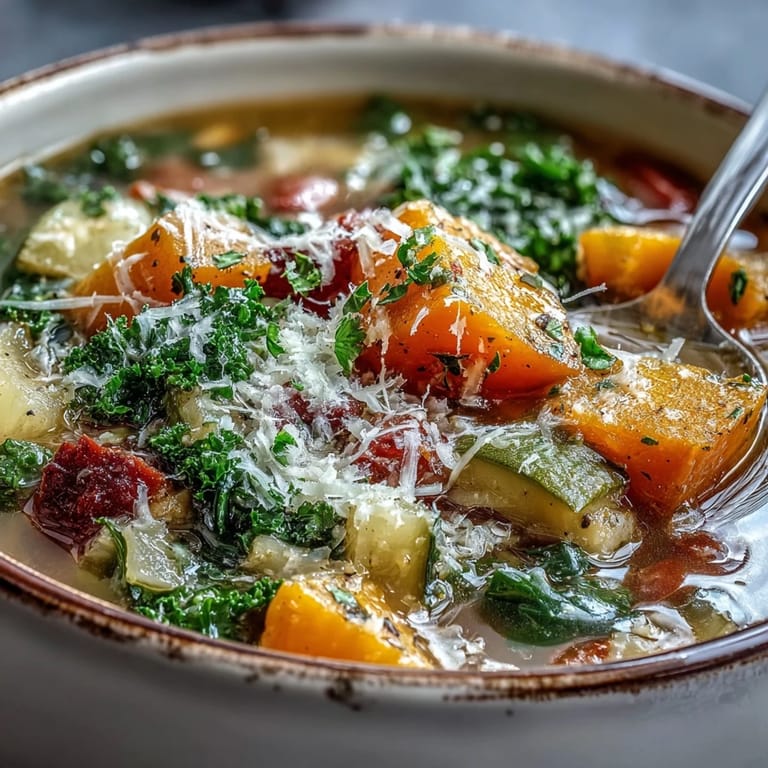
Save This minestrone has taught me that true comfort food isnt just about the taste, but about the way it gathers people together and creates moments of connection. Whether served on a snowy evening or shared with someone who needs nurturing, its a recipe that feeds more than just hunger.
Recipe FAQs
- → Can I make this soup ahead of time?
Yes, the flavors actually improve overnight. Store in the refrigerator for up to 3 days. Add the pasta when reheating to prevent it from becoming mushy.
- → Is this soup freezer-friendly?
You can freeze it for up to 3 months, but omit the pasta before freezing. Cook fresh pasta when reheating for the best texture.
- → What vegetables can I substitute?
Swap kale for spinach or chard. Replace butternut squash with sweet potatoes or acorn squash. Green beans, peas, or diced potatoes also work well.
- → Can I make this in a slow cooker?
Sauté vegetables first, then transfer everything except pasta and kale to your slow cooker. Cook on low for 6-7 hours. Add pasta and kale during the last 20 minutes.
- → How do I make it gluten-free?
Use gluten-free pasta shapes like rice-based macaroni or quinoa pasta. Alternatively, add more beans or rice instead of pasta.
- → What pasta works best?
Small shapes like ditalini, elbow macaroni, shells, or tubetti are traditional. They hold up well in liquid and are easy to scoop.